

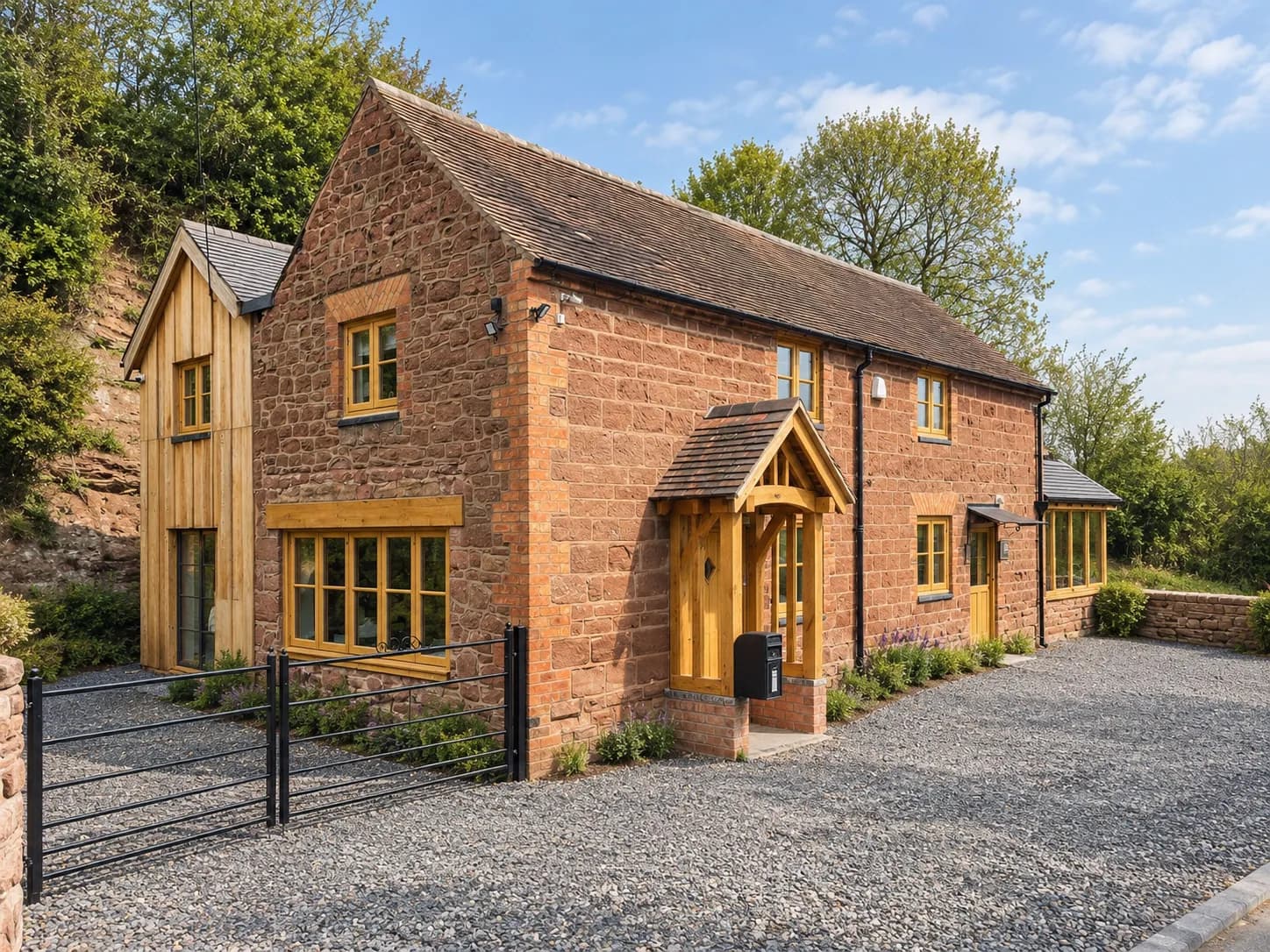
Architectural Elements
Oak Windows & Doors
Oak is the material this studio is built around — windows, doors and frames in European oak for period, listed and rural properties. Drawn to the building rather than chosen from a range.
- Principal timber
- European oak
- Finish
- Oiled, or left bare to silver
- Durability
- Class 2 heartwood — no preservative required
- Where it is wrong
- Painted elevations — see below
- Also specified
- Accoya, sapele
- Basis
- Drawn to the building, not selected from a range
Architectural Intent
Most of what leaves this workshop is oak. It is the timber clients ask for by name, and the reason is nearly always the same one: oak oils beautifully. The grain comes up under oil in a way no paint reproduces and no other common hardwood matches, and it then deepens with age rather than simply wearing. Left bare it silvers instead, weathering to a grey that suits stone and brick and asks nothing of anyone.
The difference between this and buying oak joinery from a range is not the timber — it is the order the work happens in. A range is chosen from. This is drawn to. Every opening is surveyed individually, sections and glazing bars are taken from what survives on the elevation, and the joinery is made to the building rather than the building adjusted to accept a standard size. On a listed property that is not a matter of taste: cutting protected fabric to fit a stock unit is the wrong order of work and the sort of thing that needs consent nobody wants to apply for.
It also means the studio will occasionally tell you not to use oak, which is the section below.
Where Oak Is the Wrong Timber
If it is to be painted, do not use oak. Oak is high in tannin, which bleeds through a painted finish and stains it brown from underneath — worst on south and west elevations, where the timber gets wet and then dries hard. It also moves enough with the seasons that paint cracks at the joints. On a painted listed elevation the timber is never seen at all, so the case for oak disappears and only its drawbacks remain. We specify Accoya there: it holds a painted finish far longer, stays where it is put, and gives the conservation officer the performance case without changing how the elevation reads.
On the widest folding sets, consider Accoya. Oak moves, and on a bifold that movement accumulates across every leaf — four or five leaves, as many meeting edges, and the last one inheriting the sum of everything upstream. Beyond a certain span a dimensionally stable timber is simply the sounder engineering choice, which is why several of the studio’s widest sets are Accoya rather than oak, including a five-leaf run within a stone arch in Shropshire. That is not a lesser specification. It is the span doing the deciding.
And where the building says otherwise. Most Georgian, Victorian and Edwardian windows were slow-grown softwood, painted. Oak is not the period upgrade it is often assumed to be, and a conservation officer may reasonably refuse it on an elevation where nothing was ever oak. The listing decides, not the timber.
Everywhere else — where the oak is meant to be seen, on an oak-framed building, a barn conversion, a front door, an elevation that already carries exposed timber — oak is the right answer, and we build it with its movement designed in rather than argued away.
The Oak Work
Oak runs across the studio’s elements rather than sitting in one of them. Each page below covers the same ground for its own product: where oak is right, where it is not, and how the movement is allowed for.
 Windows
Oak Windows
Where oak is the right window, where Accoya is the better specification, and how the movement is designed for.
Read the specification → Doors
DoorsOak Entrance Doors
Solid European oak, oiled or left to weather, hung to the existing opening rather than the opening altered.
Read the specification → Doors
DoorsOak French Doors
Two leaves closing on each other — the meeting stile is where the craft is.
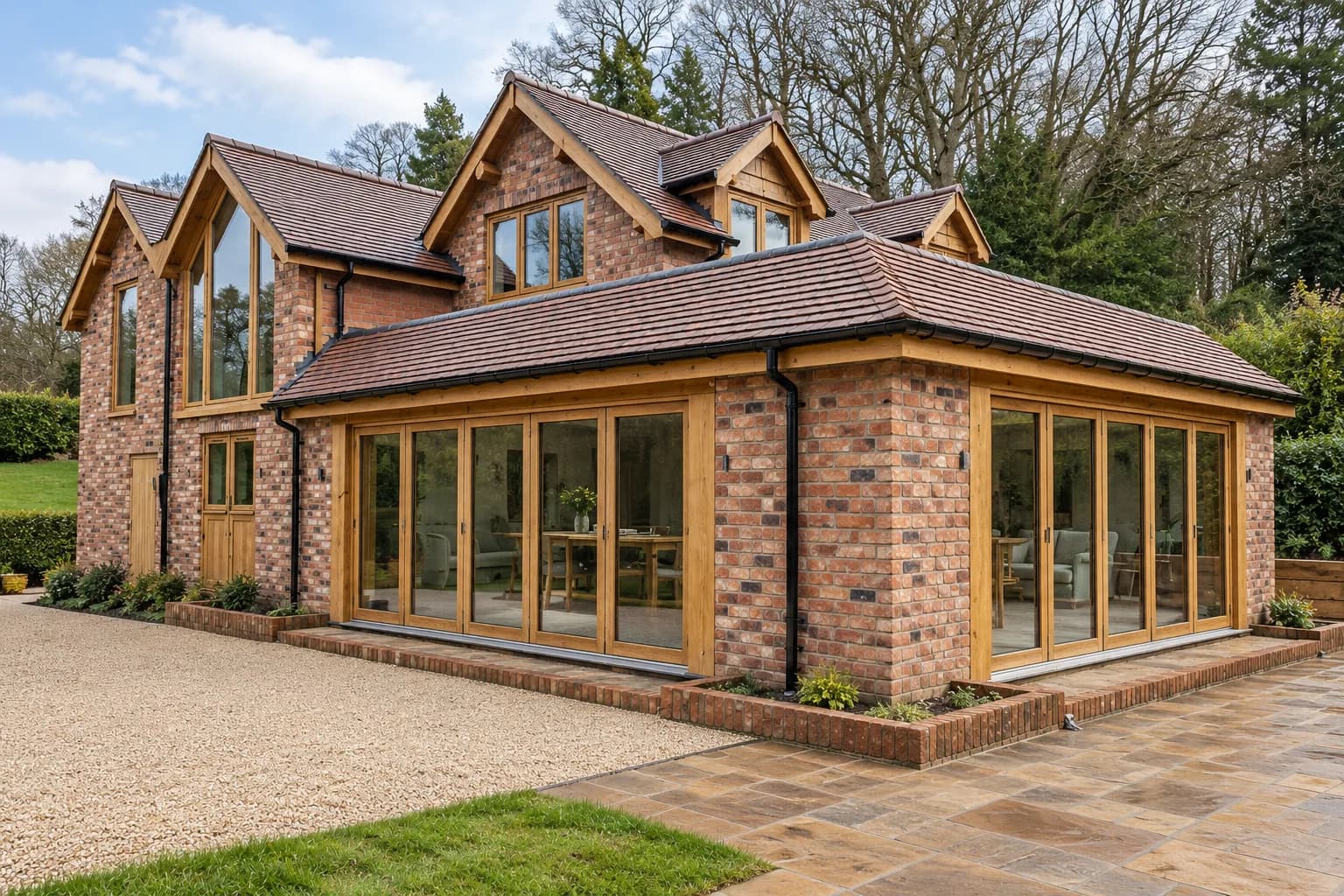 Doors
DoorsOak Bifold Doors
Slim sections on a wide opening, with the seasonal movement designed across every leaf.
 Structures
Oak Porches
Pegged oak frame porches integrated with period and rural properties.
 Structures
Oak Garages
Multi-bay oak frame garages and cart lodges.
 Structures
Oak Orangeries
Oak framed garden rooms and orangeries.
 Structures
Oak Frame Extensions
Oak frame extensions sized to keep the period house dominant.
Selected Projects
Projects where oak was the material the job turned on.
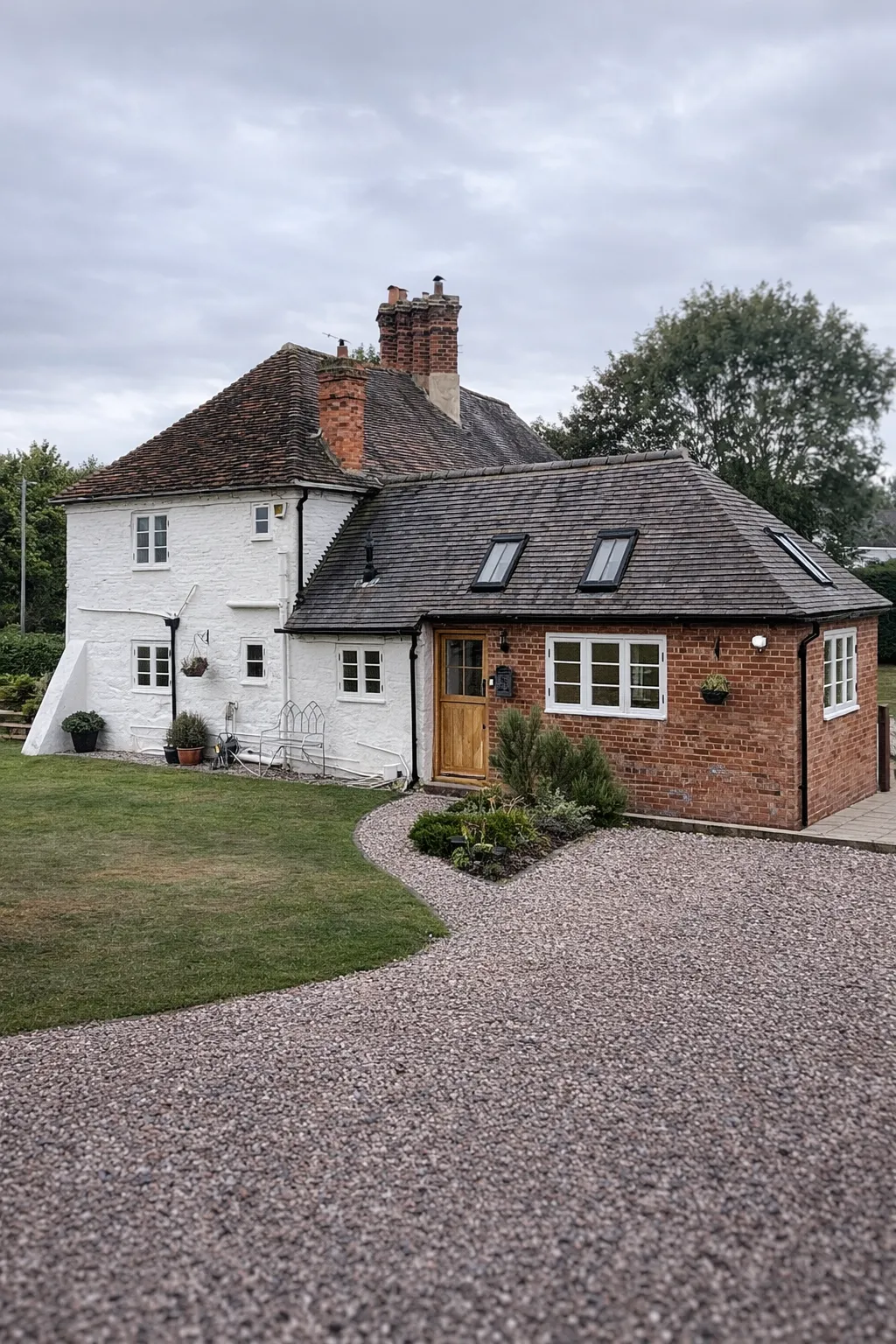 WORCESTERSHIRE
Grade II Listed Farmhouse
Full Joinery Package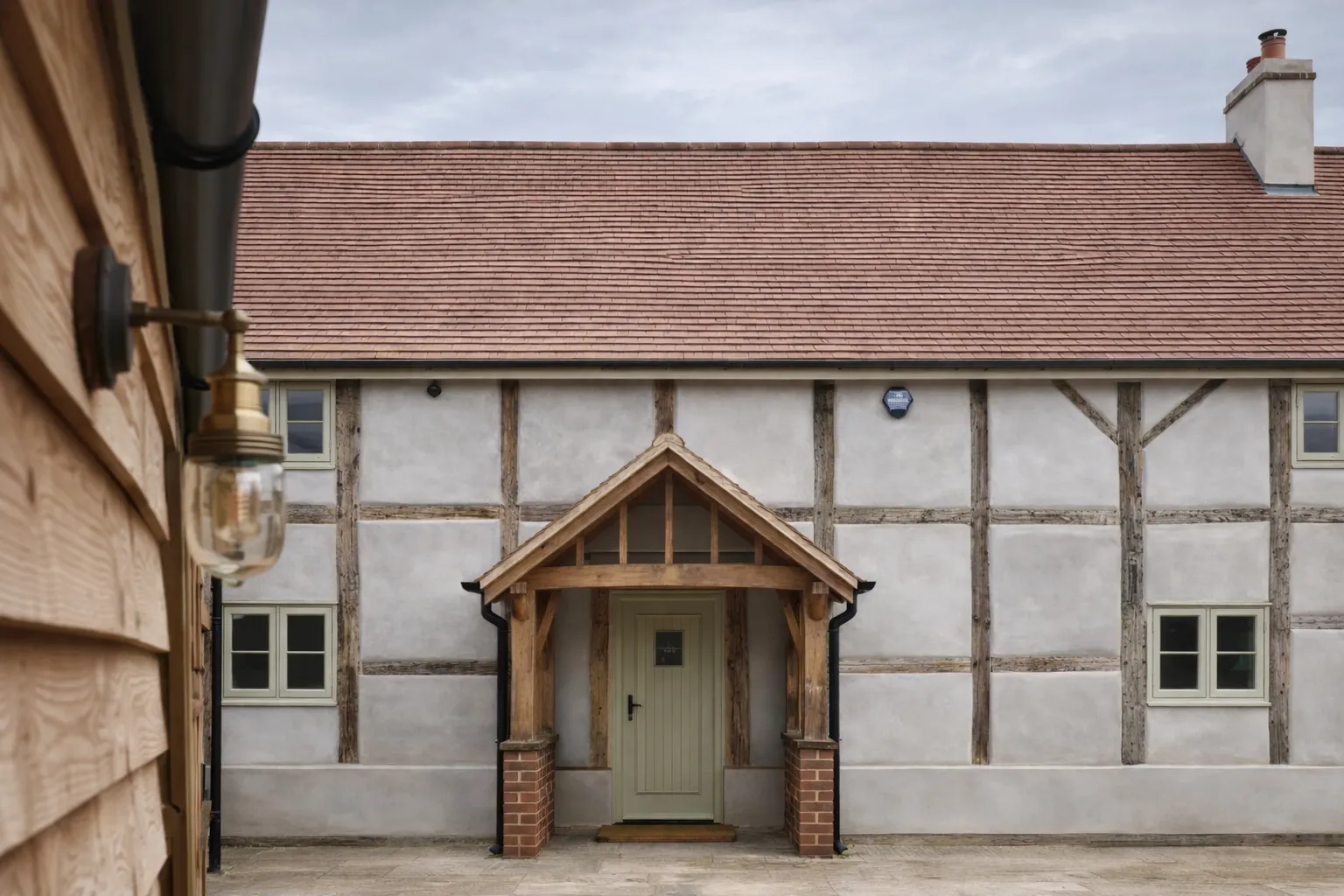 OXFORDSHIRE
Timber-Framed Chilterns Farmhouse
Period Property — Multi-Element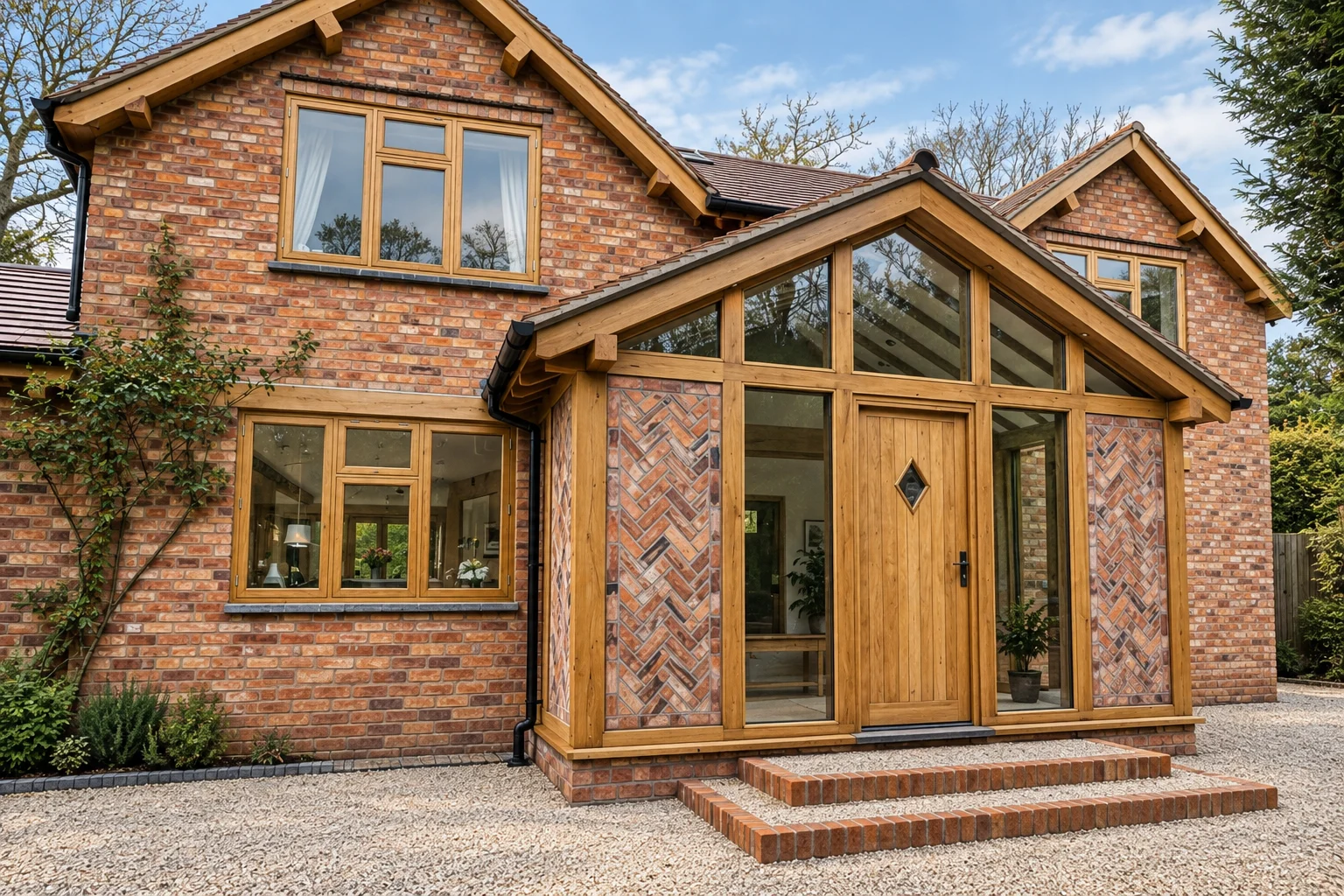 WEST MIDLANDS
Oak Garden Room, Garage & Porches
Architectural Oak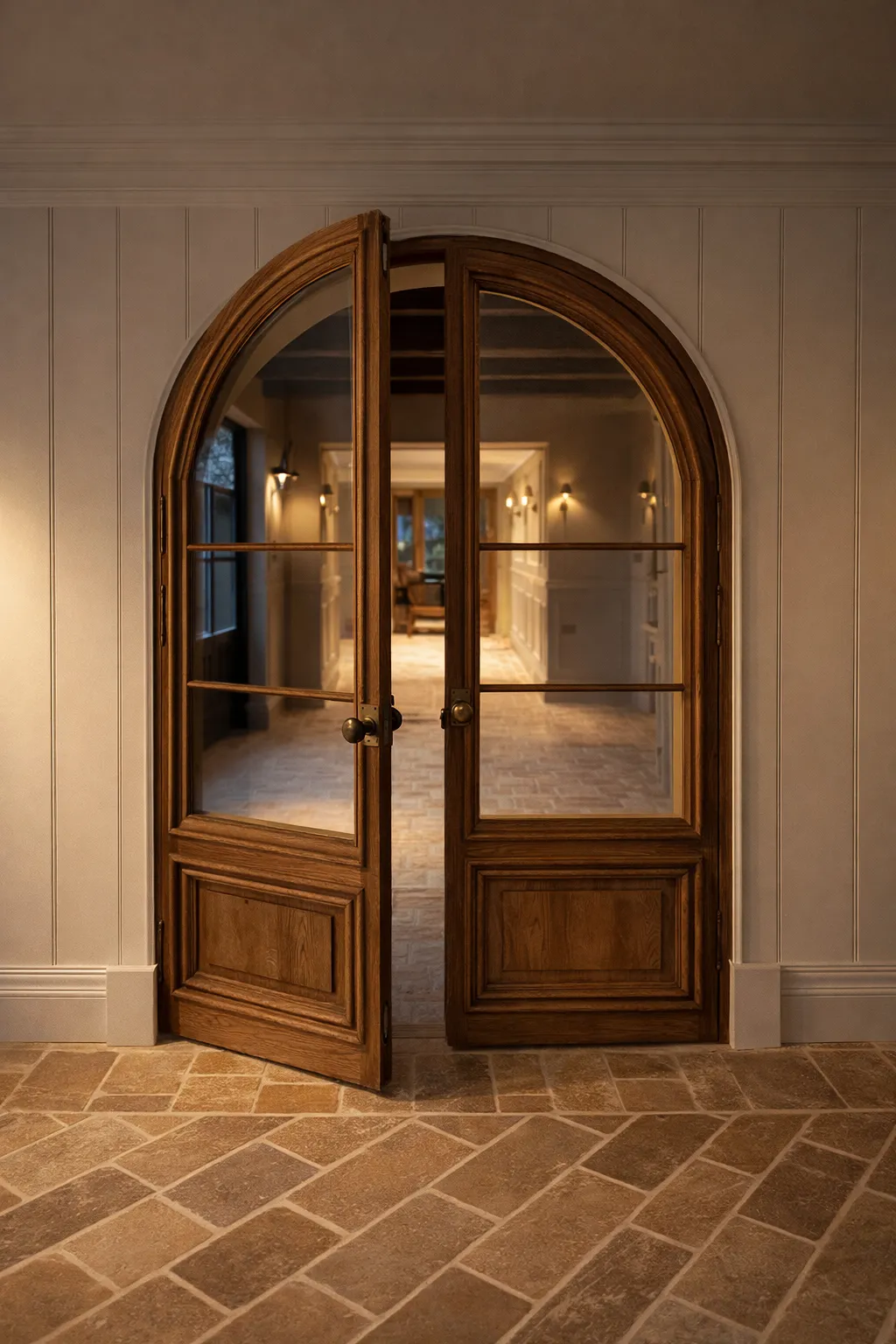 SHROPSHIRE
Oak French Doors & Accoya Casement Windows
Bespoke Door Sets & Windows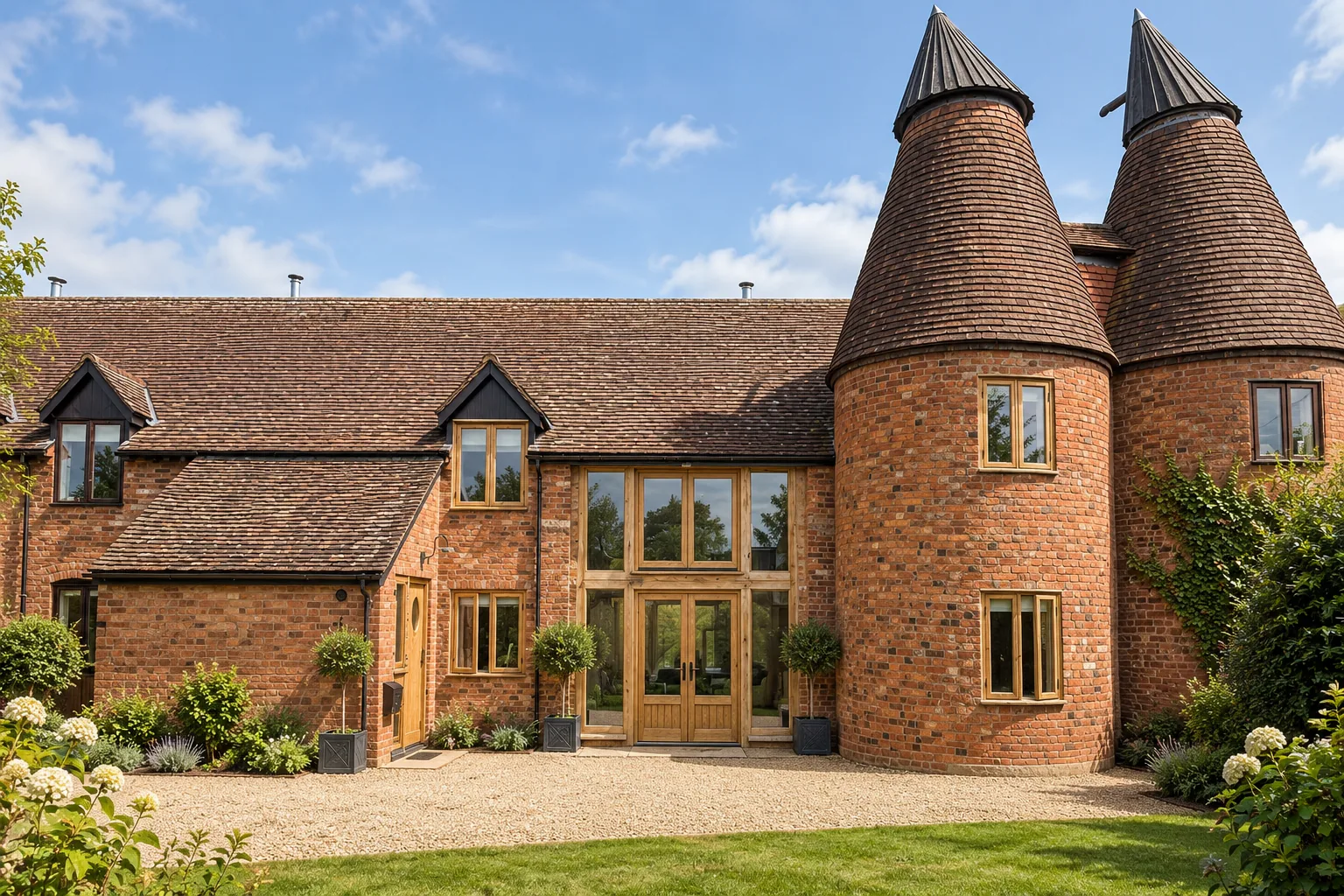 WORCESTERSHIRE
Oak Windows & Bifolds
Oak Windows & Bifolds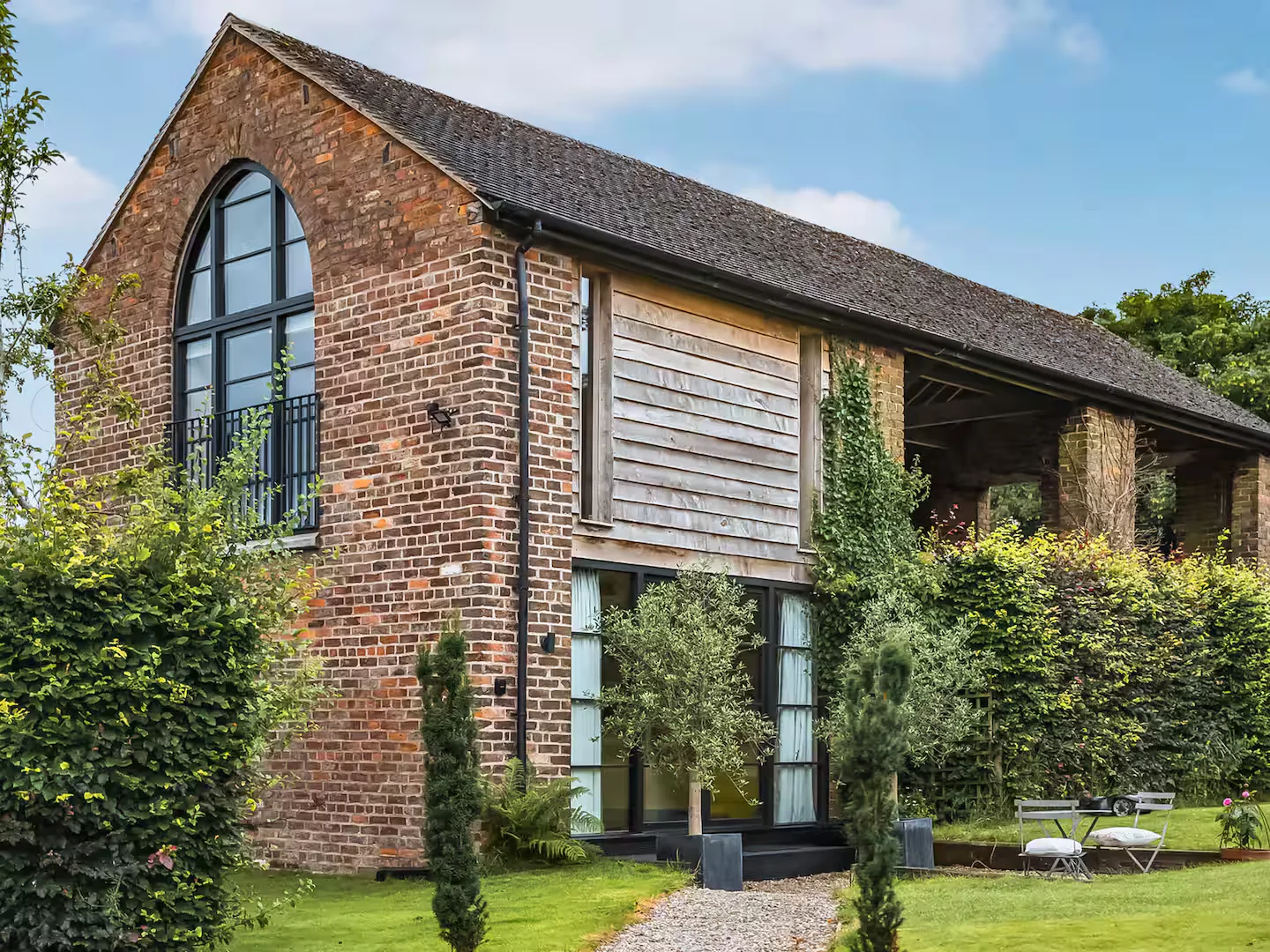 CHESHIRE
Steel-Look Accoya Glazing
Steel-Look Barn Glazing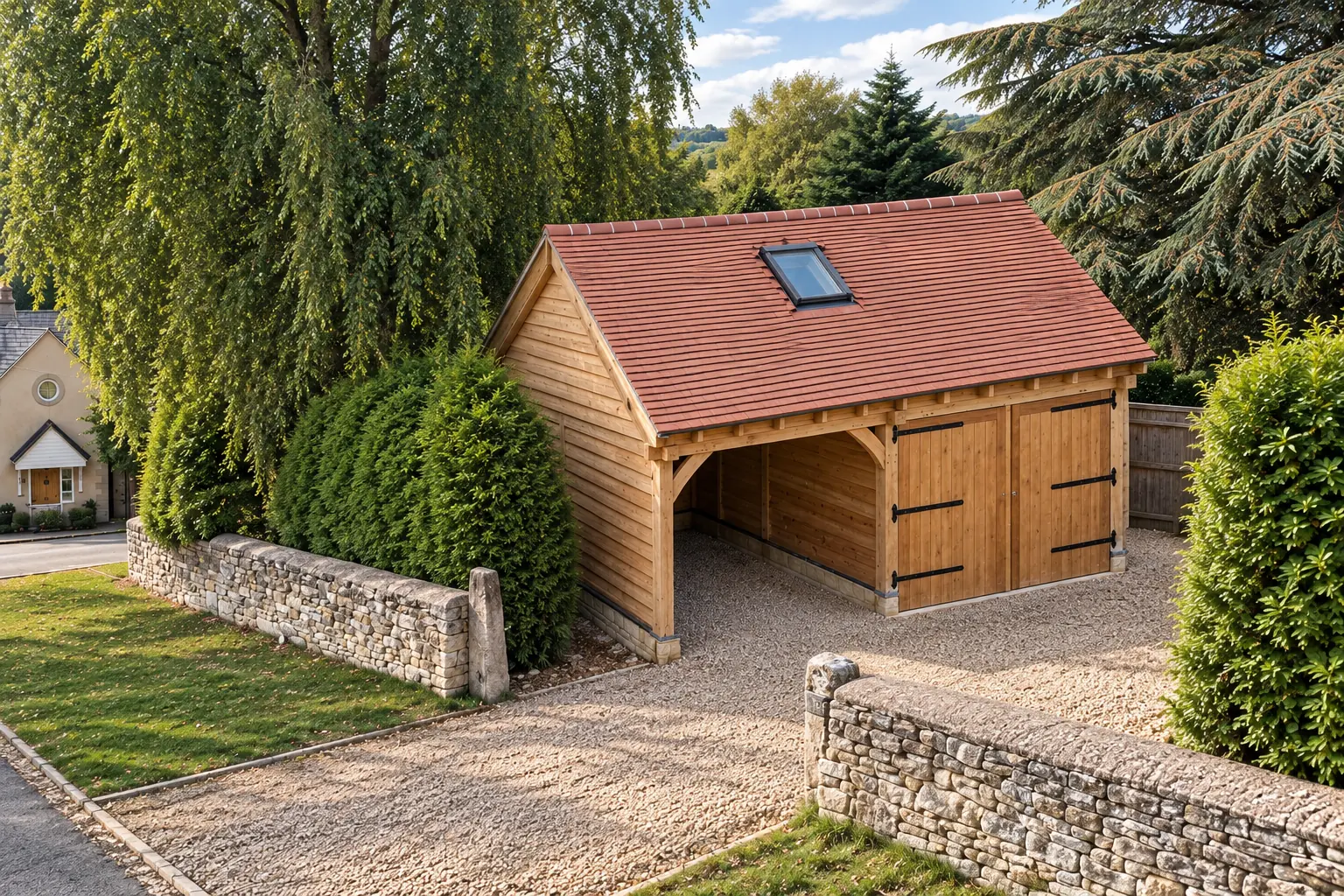 GLOUCESTERSHIRE
Oak-Framed Garage & Sapele Joinery
Oak Garage & Sapele Joinery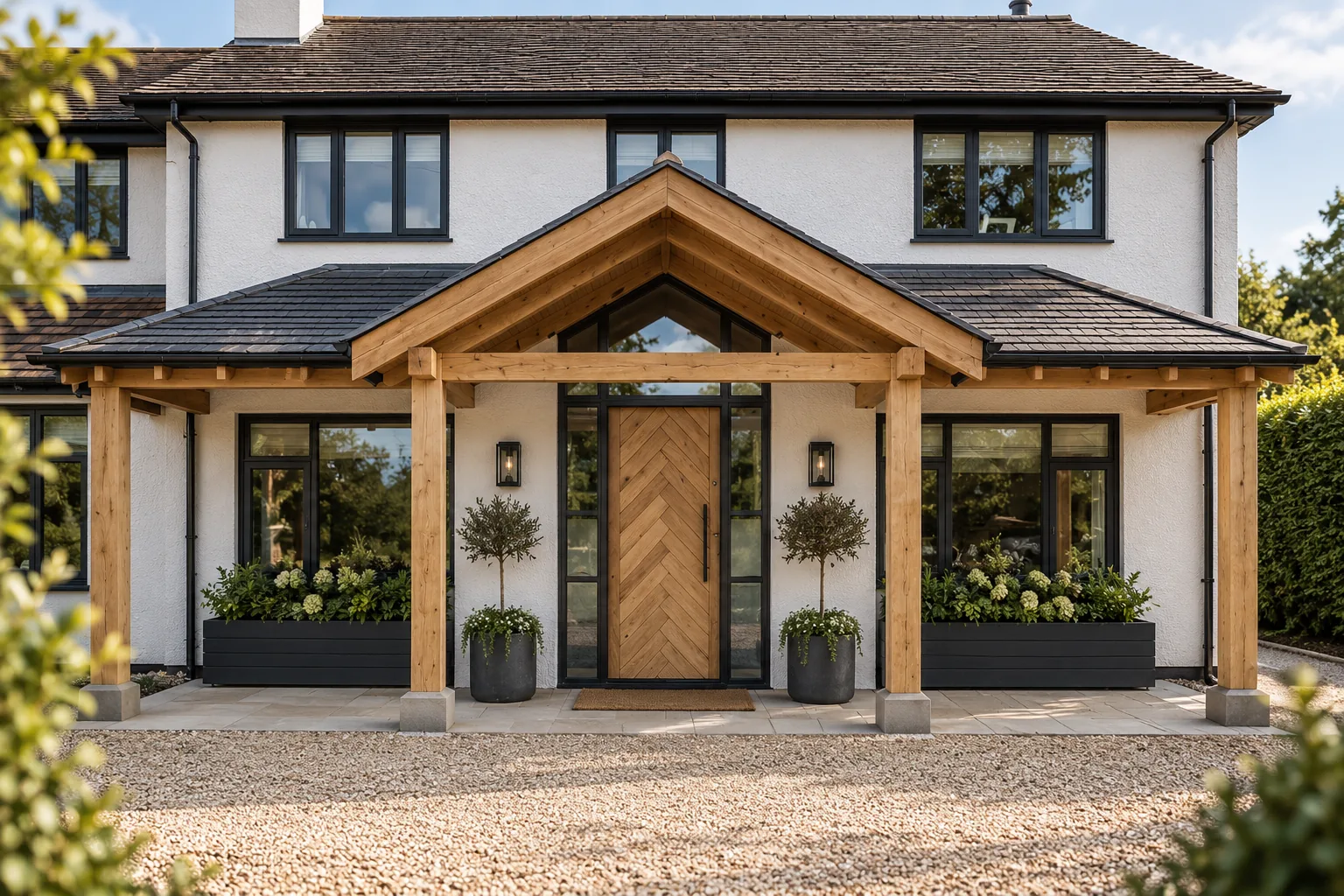 WORCESTERSHIRE
Oak Porch & Herringbone Oak Front Door
Oak Porch & Entrance Door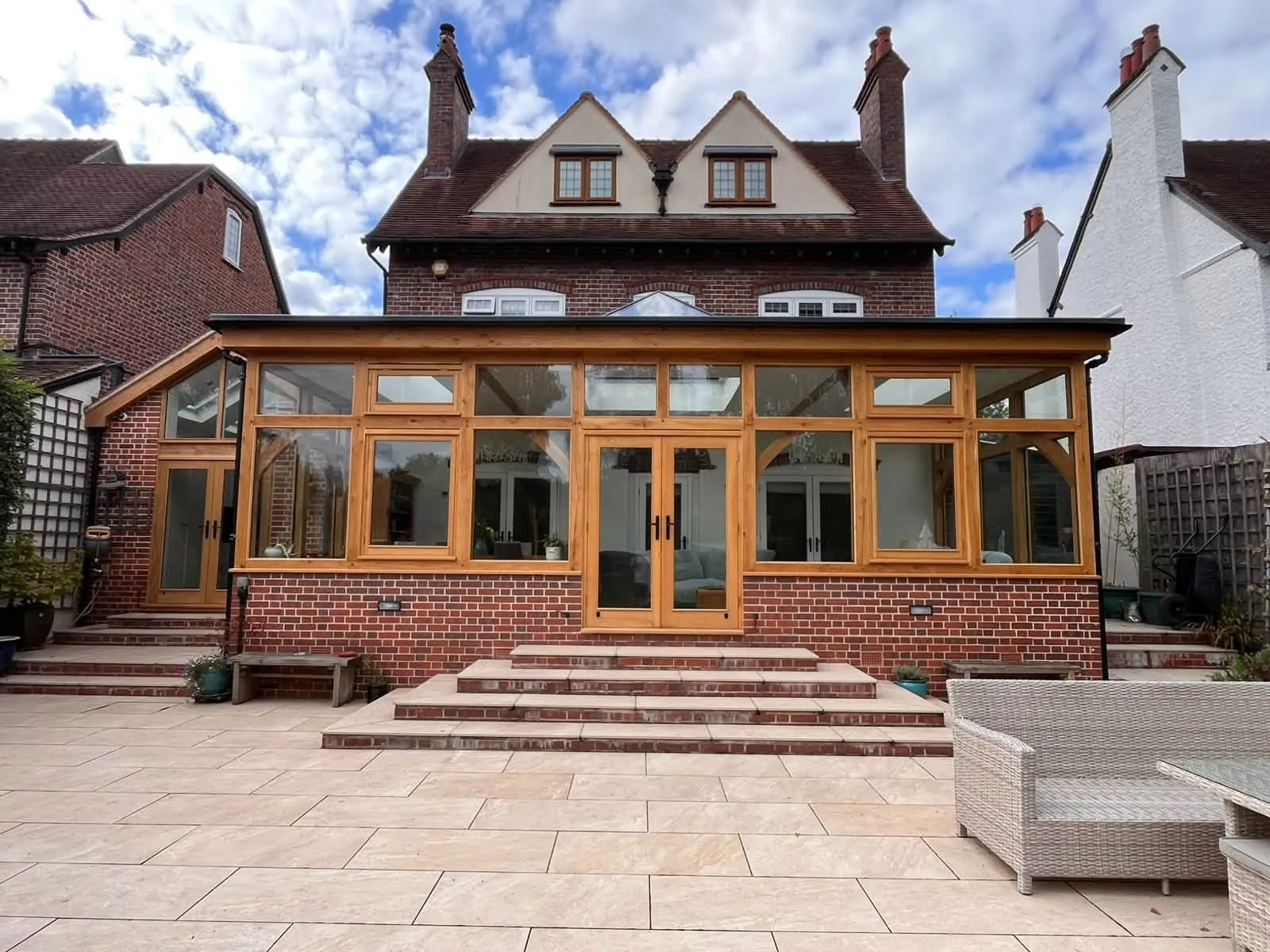 WEST MIDLANDS
Joinery for Oak-Framed Buildings
Ongoing Trade Relationship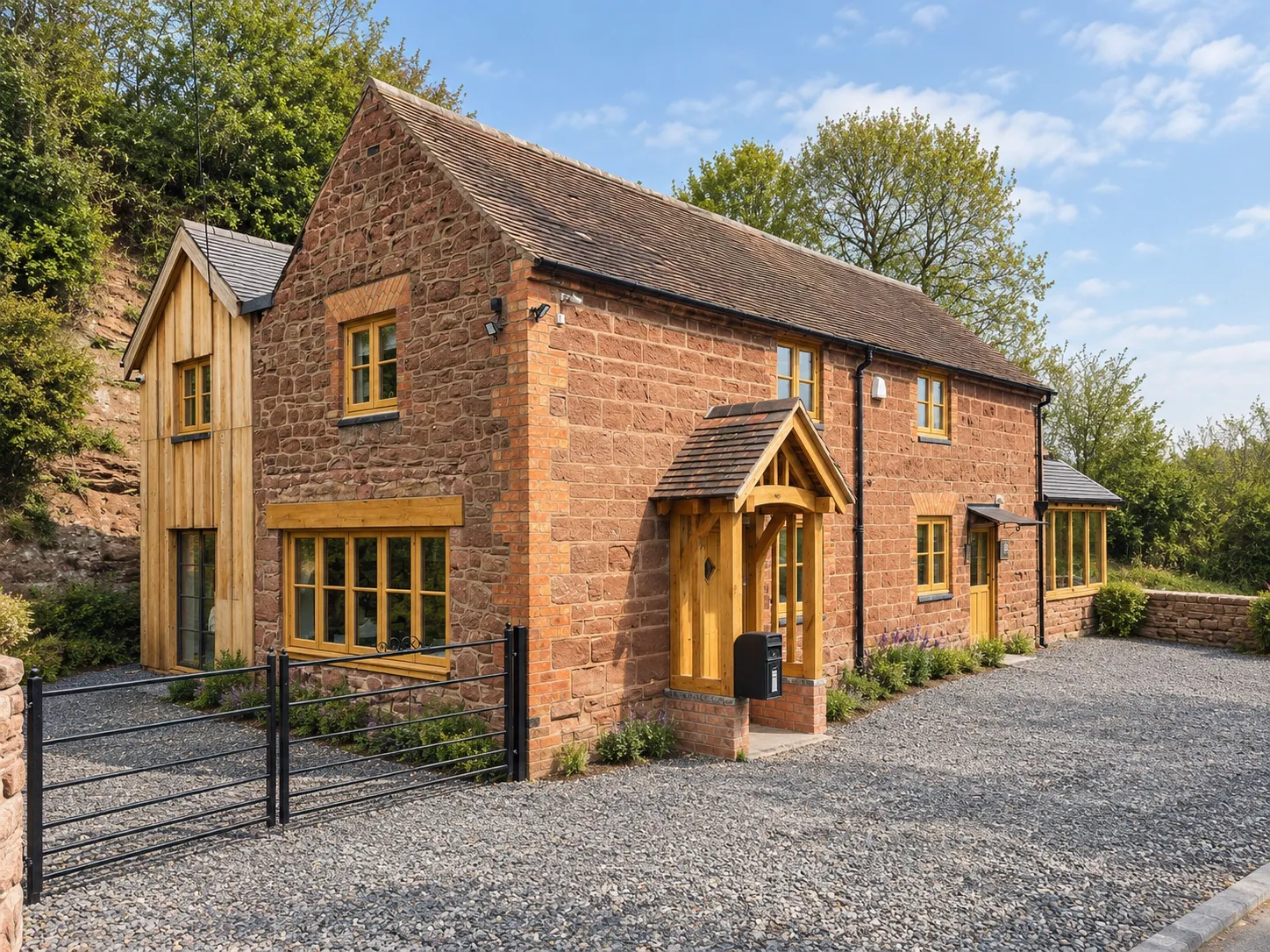 SHROPSHIRE
The Founder’s Own Sandstone Cottage
Founder’s Own Home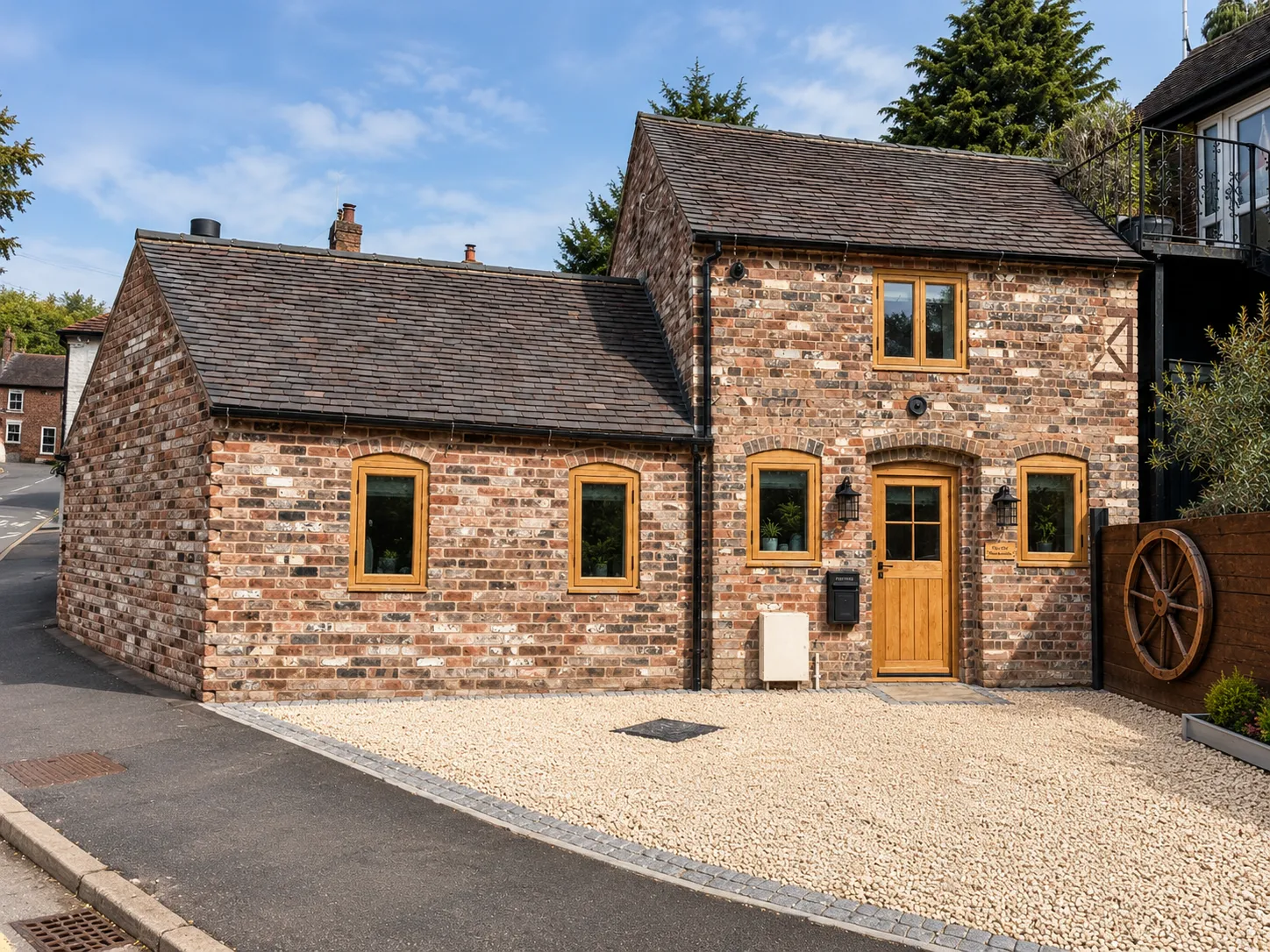 SHROPSHIRE
The Old Blacksmiths Cottage
Holiday Let Conversion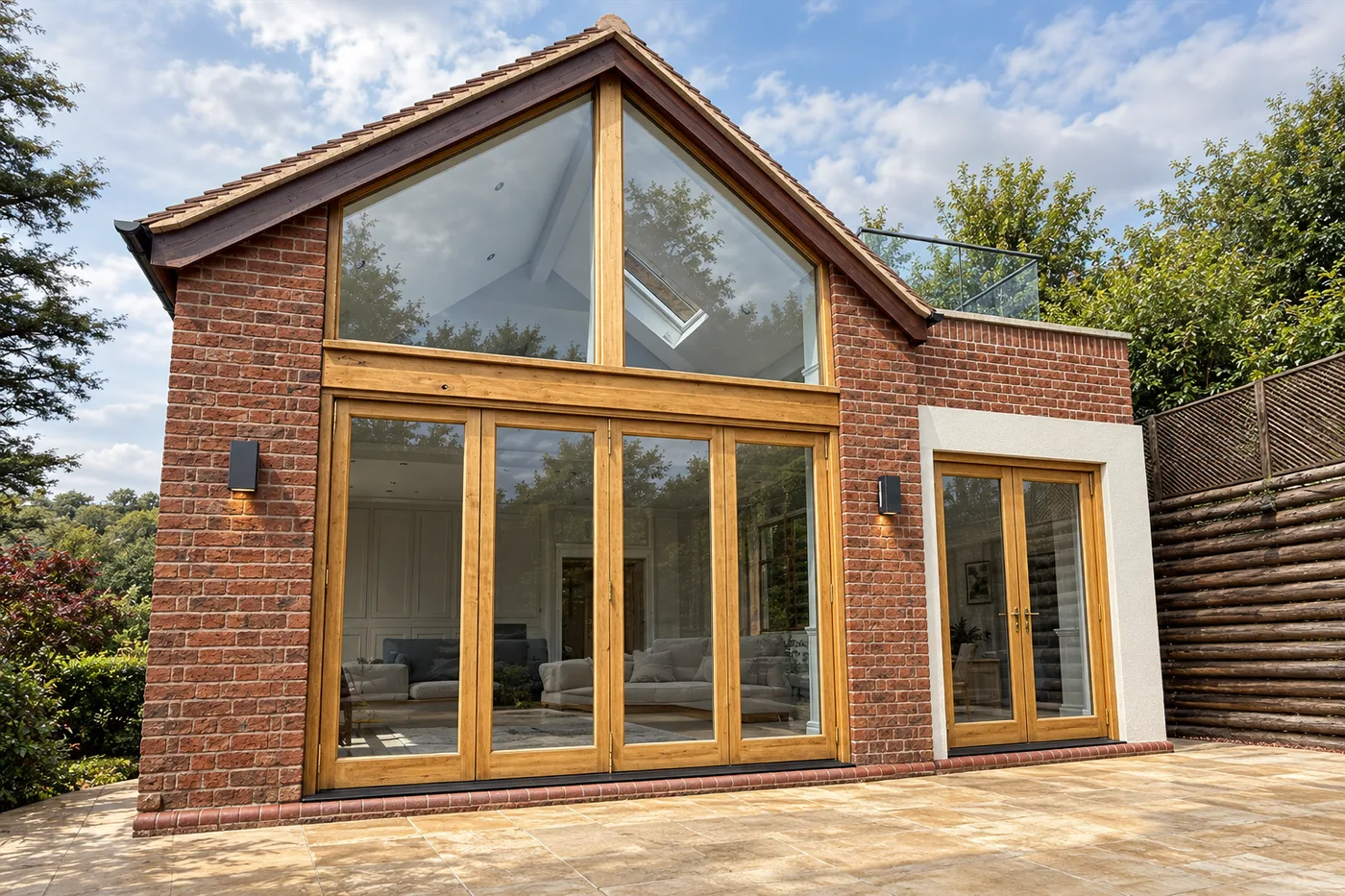 SHROPSHIRE
Oak Glazed Gable, Bifolds & Windows
Oak Glazed Gable & Bifolds
Common Questions
Why does the studio specialise in oak?
Because of how it looks and how it ages. Oak oils beautifully — the grain comes up under oil in a way no paint reproduces and no other common hardwood matches — and it then deepens with age rather than simply wearing. It is also durability class 2 in the heartwood, so it survives outdoors without preservative treatment.
When is oak the wrong choice?
Whenever the joinery is to be painted. Oak is high in tannin, which bleeds through paint and stains it brown from underneath, and it moves enough that paint cracks at the joints. On a painted listed elevation the timber is never seen, so the case for oak disappears and only its drawbacks remain — we specify Accoya there and say why.
Does oak move?
Yes, and anyone who says otherwise is selling something. Accoya moves measurably less. The difference is that we build the oak with that tolerance in mind from the drawing onward — sections sized with a margin, joints cut so seasonal movement closes them rather than opens them, and gaps set for the season the work is hung in.
How is this different from buying from a range?
A range is chosen from; this is drawn to. Every opening is surveyed individually, sections and glazing bars are taken from what survives on the elevation, and the joinery is made to the building rather than the building adjusted to accept a standard size. On a listed property that is not a preference — altering protected fabric to fit a stock unit is the sort of thing that needs consent nobody wants to apply for.
Do you work outside oak?
Regularly. Accoya for painted and conservation work where dimensional stability matters more than the timber being seen, and sapele where the brief calls for it. The material follows the building and the brief; oak is what we specialise in, not what we sell regardless.
Will oak joinery get listed building consent?
It depends on the building rather than on the timber. Where original joinery was oak and remains exposed, oak is the correct match. Where the surviving windows are painted softwood — most Georgian, Victorian and Edwardian work — oak is not period-correct and a conservation officer may reasonably refuse it. We write the specification as the document consent will be granted against.
Related Authority
Considering oak for your building?
The studio surveys the building before it specifies anything, and will say if oak is the wrong timber for what you are trying to do.
Start a Project →