
Timber Windows
Traditional Casement Windows
The side-hung timber casement is the workhorse window of the cottage and rural home — simpler than a sash, older than both sash and stormproof, and right across a huge range of period property.
The side-hung casement
A traditional casement is a side-hung opening light set in a timber frame, often alongside fixed lights and divided by glazing bars or, on older and rural properties, set with leaded lights. It predates the sliding sash and remains the correct window for cottages, farmhouses, and much rural and vernacular property. What makes it read correctly is the slimness of the sections and the way the glazing is divided — fine bars or leaded quarries proportioned to the opening, not a heavy modern frame.
Detailed to the property
Traditional casements are specified to the building: timber and finish to the property, glazing from clear or slim-profile units to leaded lights where they are original or appropriate, and ironmongery — peg stays and casement fasteners — to the period. Where a flat, flush face is the defining period detail, the flush casement is the right specification; where the property calls for a simpler side-hung casement with leaded or barred glazing, this is it. On a listed building the detailing is specified to satisfy consent and matched to the elevation.
- Suits
- Cottages · farmhouses · rural & vernacular period homes
- Type
- Side-hung opening lights, often with fixed lights alongside
- Glazing
- Glazing bars or leaded lights; slim-profile DG where suitable
- Sections
- Slim, proportioned to the opening — not a heavy modern frame
- Ironmongery
- Peg stays & casement fasteners, to the period
Common Questions
What is a traditional casement window?
A side-hung opening light set in a timber frame, often with fixed lights alongside and divided by glazing bars or leaded lights — the older and simpler alternative to the sliding sash, correct for cottages and rural property.
What is the difference between a traditional and a flush casement?
A flush casement is defined by its sash sitting flush with the frame for a flat plane — a specific period detail. A traditional casement is the broader side-hung casement, often with leaded or barred glazing, suited to rural and vernacular homes.
Can traditional casements have leaded lights?
Yes. Leaded lights — small panes set in lead cames — are used where they are original or appropriate to the property, and are a common detail on older and rural casements.
Can a traditional casement be double-glazed?
Slim-profile double-glazed units can be used where the property and any consent allow; on the most sensitive elevations, traditional single glazing or leaded lights may be required instead.
Selected Projects
Where traditional casement windows formed part of the commission — each linked to the full project.
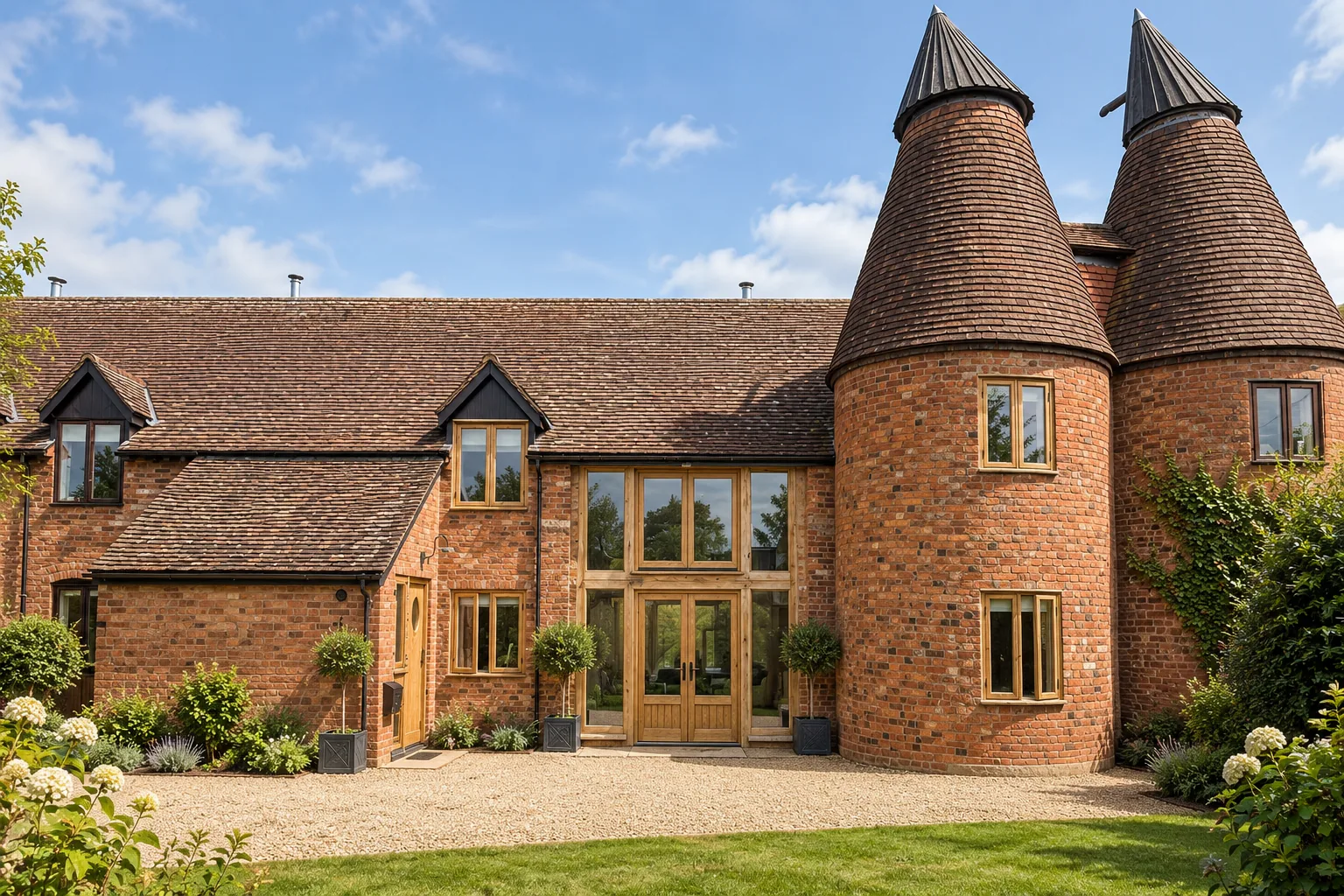 WORCESTERSHIRE
Oak Windows & Bifolds
Casements to a single section and detailing family across barn, dormers and kilns, so openings of very different sizes and ages read as one set.
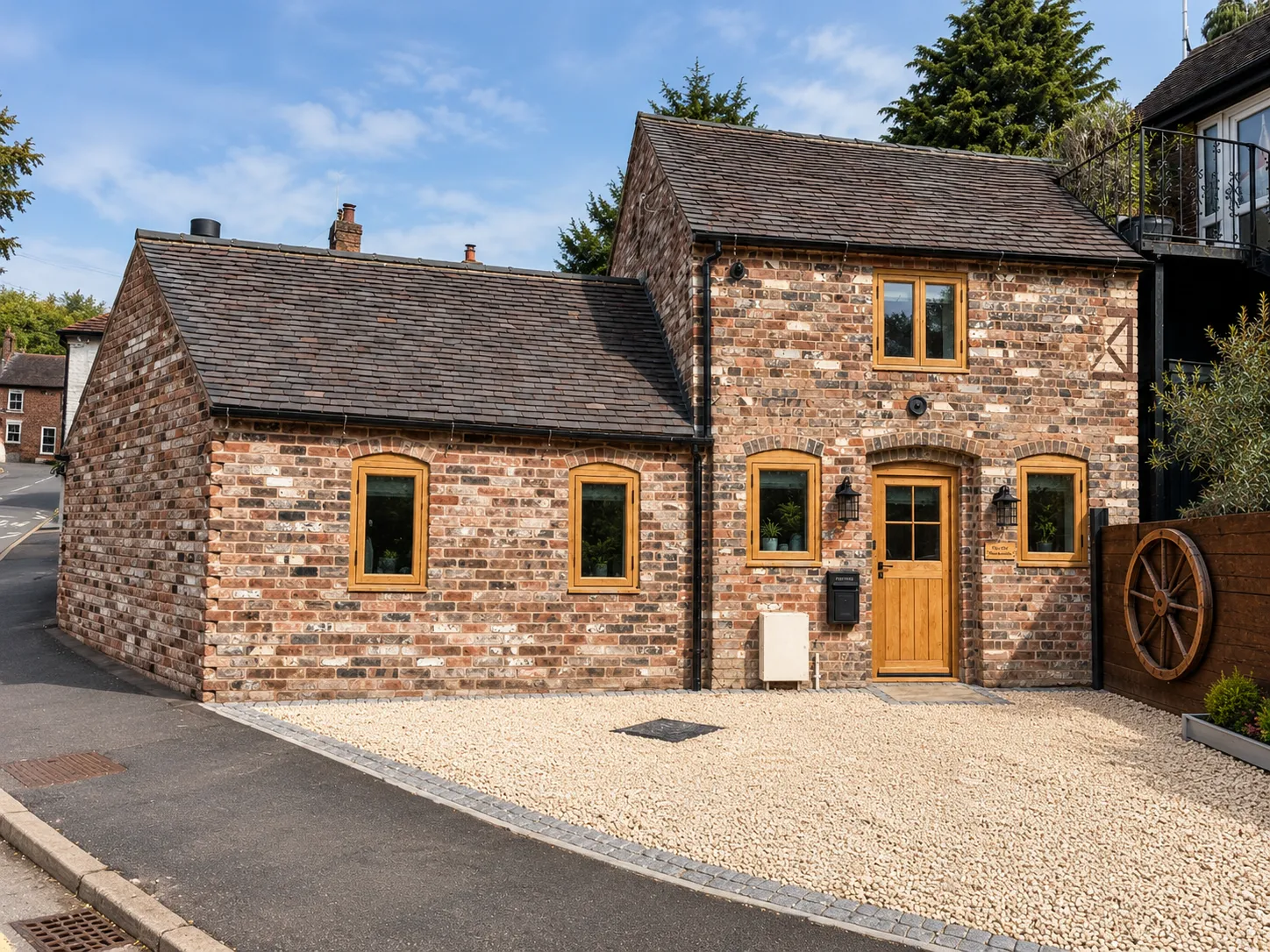 SHROPSHIRE
The Old Blacksmiths Cottage
Casements whose frames follow the arched brick heads of the ground-floor openings, sitting tight to the curve.
Considering traditional casement windows for a period or rural property? The conversation starts here.
Start a Project →