

Oak Frame Buildings
Oak Orangeries
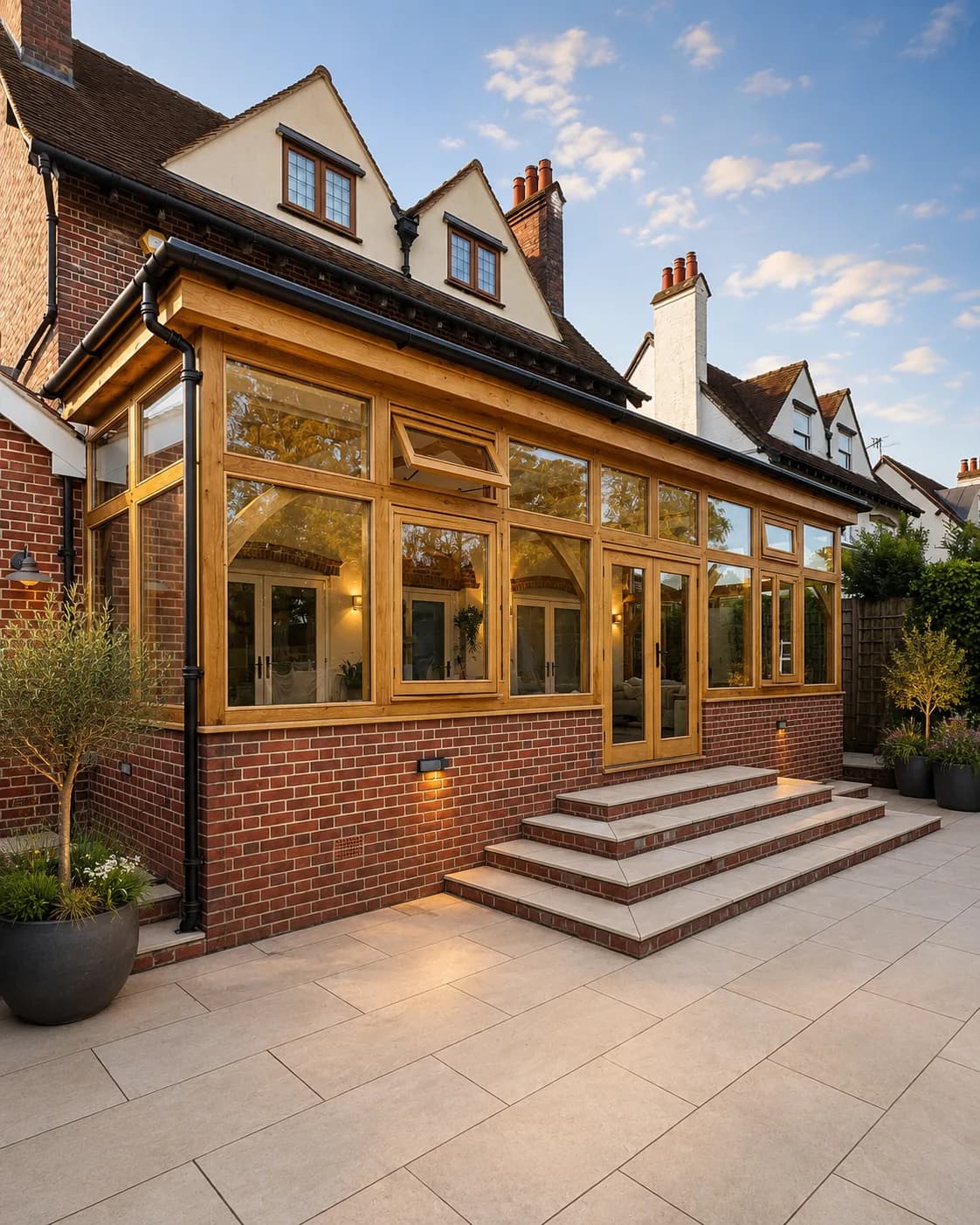
An orangery is not a conservatory with a better name. Done properly it is a glazed oak room on a masonry base, with the weight and proportion of architecture rather than the lightness of a garden-centre add-on.
Architecture, not a conservatory
An oak frame orangery sits between a conservatory and a masonry room: a structural oak frame, usually on a brick or stone base, carrying generous glazing and very often a roof lantern that brings light down into the centre of the room. The oak gives it the section and weight a thin aluminium or uPVC conservatory lacks, so it reads as part of the house. The frame is green or appropriately specified oak, jointed traditionally, and the glazing is detailed to the building rather than to a standard conservatory system.
Detailed to the period house
The orangery is proportioned and detailed to the property it joins — the base coursed to match, the glazing divided to suit the elevation, the lantern proportioned to the roof. Performance is designed in through the glazing specification and the base. On a listed or significant property the orangery is specified to satisfy consent and judged against the building’s significance, the same discipline as any heritage work. The aim is a room that looks built, not bolted on.
- Suits
- Period properties · garden-facing rooms
- What it is
- Glazed oak structure on a masonry base, often with a roof lantern
- Versus conservatory
- Oak section & weight; reads as architecture, not an add-on
- Frame
- Traditionally jointed oak; glazing detailed to the building
- On listed property
- Specified to satisfy consent, judged against significance
Common Questions
What is the difference between an orangery and a conservatory?
An orangery is a glazed oak structure on a masonry base, often with a roof lantern, with the section and weight of architecture; a conservatory is typically a lighter, mostly glazed add-on. The orangery reads as part of the house.
Does an oak orangery have a glazed roof?
Usually it has a roof lantern — a raised glazed section that brings light into the centre of the room — set within a more solid roof, rather than the fully glazed roof of a conservatory.
Can an oak orangery be built on a listed property?
Yes. It is specified to satisfy listed building consent, proportioned and detailed to the property, and judged against the building’s significance.
Is an orangery warm enough to use year-round?
Performance is designed in through the glazing specification, the masonry base, and the roof, so an orangery is built to be a usable room rather than a seasonal one.
Selected Projects
Where oak orangeries formed part of the commission — each linked to the full project.
 WEST MIDLANDS
Joinery for Oak-Framed Buildings
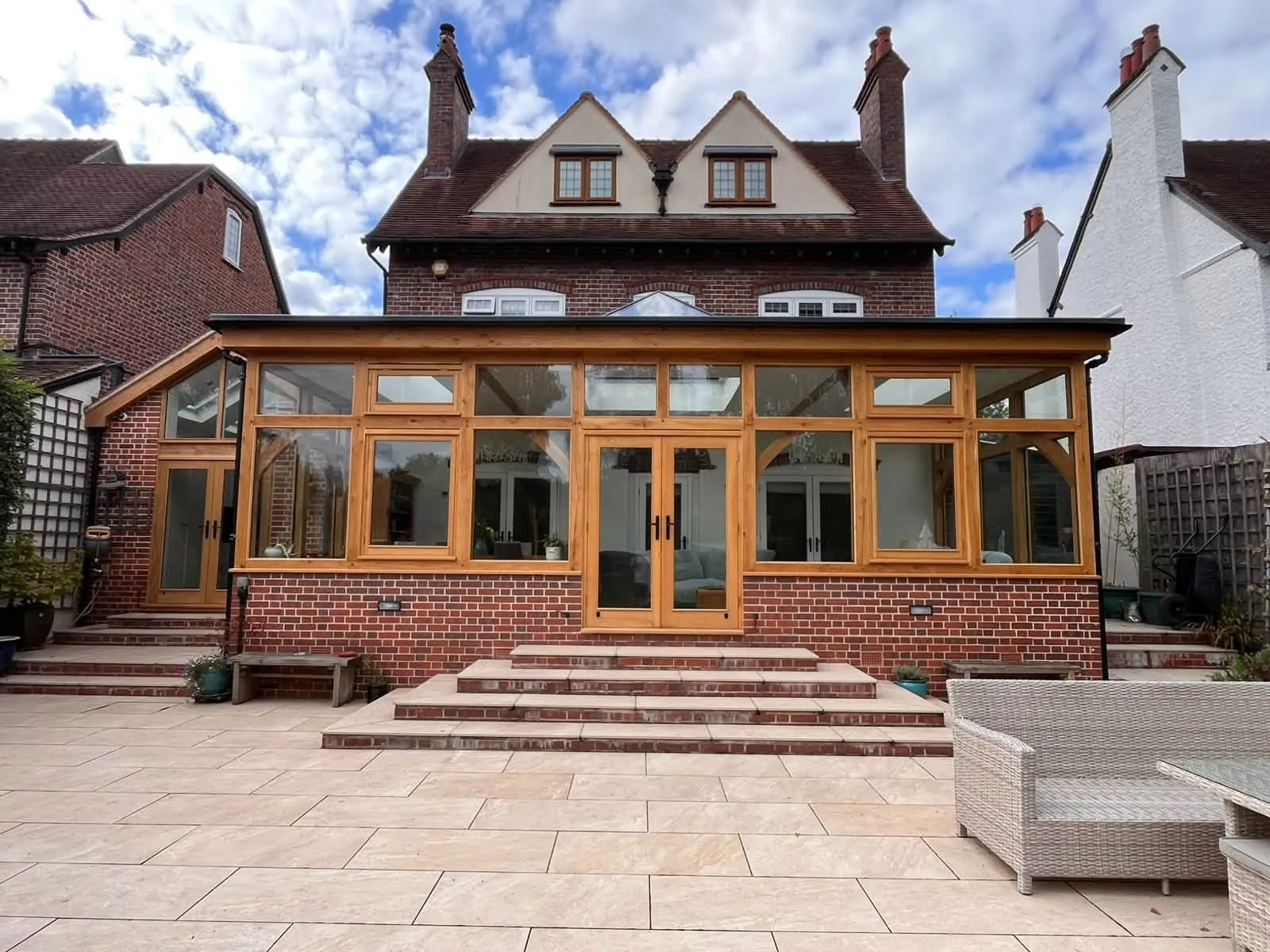
Oak windows and French door sets filling an orangery frame under a glazed lantern — a run of openings that has to hold a consistent sightline right along an elevation, because an orangery is read as one glazed wall rather than as a set of windows.
 SHROPSHIRE
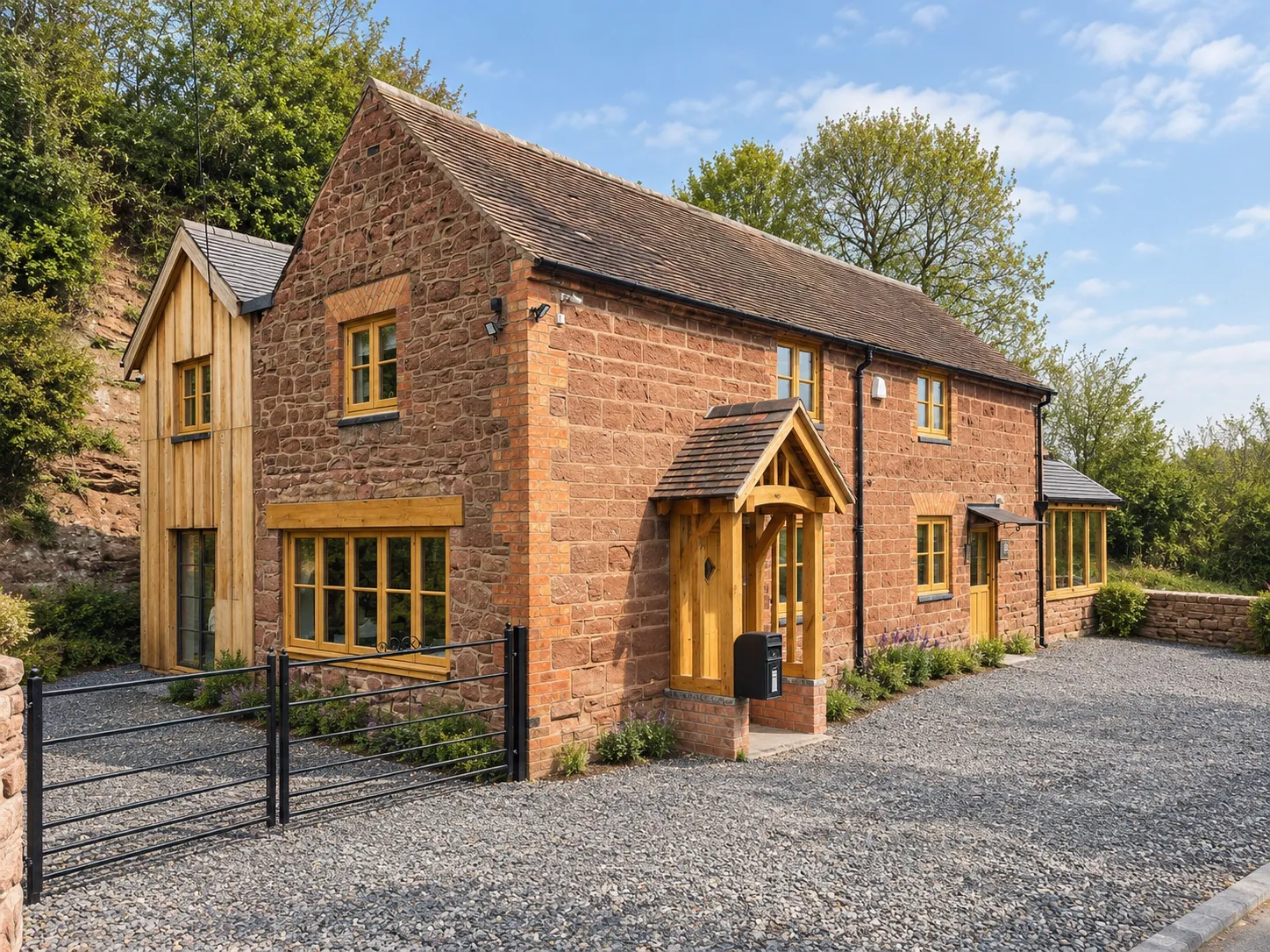
The Founder’s Own Sandstone Cottage
An oak-framed orangery on a brick plinth beneath a roof lantern, opening the back of the house to the garden.
Considering oak orangeries for a period or rural property? The conversation starts here.
Start a Project →