
We Are Woodland
Studio
Architectural joinery practice led by founder Chris Holland. Established 2002. Based in Shropshire.
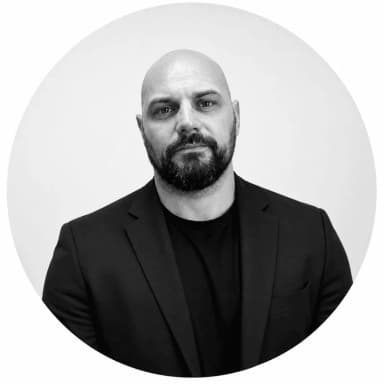
Chris Holland — Founder
I’m Chris Holland, founder of We Are Woodland. The studio was established in 2002 and operates from a workshop at Hatchery Farm in rural Shropshire. Projects are delivered across Shropshire, the West Midlands, Worcestershire, Herefordshire, Staffordshire, Warwickshire, the Cotswolds, Gloucestershire, Oxfordshire and Cheshire — and beyond, where the building justifies the journey.
The practice has worked in architectural joinery for period and rural properties since 2002. Heritage homes, listed buildings, farmhouses, rural manors, and the kind of architecturally significant residential property where the joinery has to be considered at the architectural level — not chosen from a catalogue. Door sets, timber windows, entrance structures, oak frame structures, and full architectural joinery packages: each treated as an architectural intervention rather than a product supplied. Typical scope ranges from single-element commissions to whole-house joinery packages, often as part of a wider renovation or restoration programme. The brief I take is the building, not the order.
The work is shaped by what’s already there. Proportion, conservation context, material performance, and architectural intent are the starting conditions of every project — not constraints to work around. For listed building work, that means working within consent processes and treating conservation officers as collaborators rather than obstacles. For non-listed period work, it means a discipline of period-correct specification that doesn’t relax just because consent isn’t required. A Cotswold cottage, a Shropshire farmhouse, a Grade II Edwardian villa, a rural manor — the standard is the same. Decisions get made at the architectural level first, the joinery level second, the catalogue level not at all.
The studio works at peer level with architects, conservation specifiers, and project teams where they are involved — reading a schedule and contributing architectural specification, not just executing what’s drawn. Where the client comes direct, the studio takes the full architectural brief: from conservation context through to ironmongery selection, with founder-led work on the strategic stages and the studio’s own workshop holding manufacture. The engagement reads at the level the project demands.
We Are Woodland operates as a design-led studio and working workshop in one — not a product company supplying from a catalogue. Strategic stages — consultation, architectural review, design development, specification — are founder-led, directly. Manufacture happens in the studio’s own workshop. Installation is handled by trained teams who have worked with the studio over multiple projects. The structure is honest about who does what when, because clients spending the kind of money this work involves deserve clarity on operational reality, not generic claims about delivery. Founded in 2002, the studio has earned the right to work this way — and holds the discipline to keep working this way.
— Chris Holland, Founder, We Are Woodland
The Studio
The studio is a working workshop — design and manufacture under one roof at Hatchery Farm in Upper Farmcote, near Bridgnorth, in rural Shropshire. One place, one business: the drawing happens here and the making happens here, not split across a design office and a separate factory. The location is deliberate — proximity to the working timber tradition, distance from the price-inflated southeast markets, and a working environment that reflects the studio’s register. The workshop is a real place — open to visiting architects, conservation officers, and clients where the project benefits from it. The studio comes to the project; clients come to the workshop where it matters.
Common Questions
A short set of the questions most often asked about the studio. Each answered in the studio’s own terms.
When was We Are Woodland founded, and by whom?
We Are Woodland was founded in 2002 by Chris Holland and has operated continuously as an architectural joinery studio since. The studio practice is led by the founder; strategic stages of every project — consultation, architectural review, design development, specification — are founder-led directly.
Where is the studio based, and where does it work?
The studio operates from a workshop at Hatchery Farm in Upper Farmcote, near Bridgnorth, in rural Shropshire. Projects are delivered across Shropshire, the West Midlands, Worcestershire, Herefordshire, Staffordshire, Warwickshire, the Cotswolds, Gloucestershire, Oxfordshire and Cheshire — and beyond, where the building justifies the journey.
What kinds of properties does the studio work on?
Period and rural properties. Heritage homes, listed buildings, farmhouses, rural manors, and architecturally significant residential properties where the joinery has to be considered at the architectural level. Georgian, Victorian, Edwardian, Arts-and-Crafts, and earlier vernacular property all feature regularly. Contemporary work is delivered via Urban Designed — the studio's subordinate contemporary collection.
Does the studio work on listed buildings?
Yes — heritage and listed building work is a specialism within the practice. The studio works within consent processes and treats conservation officers as collaborators rather than obstacles. Like-for-like specification, period-correct moulding profiles, traditional putty glazing, and ironmongery selected to match what has already been accepted on equivalent listed properties are standard practice.
How does the studio engage with architects and conservation specifiers?
At peer level. Where architects are leading the project, the studio reads schedules and contributes architectural specification rather than executing without input. Where the client comes direct, the studio takes the full architectural brief — conservation context through to ironmongery selection. The engagement reads at the level the project demands.
Is We Are Woodland a manufacturer or a design studio?
Both — and one business. We Are Woodland is a design-led studio and a working workshop under one roof: each commission is designed as an architectural intervention, then made in the studio's own workshop at Hatchery Farm — not supplied as a product from a catalogue. Design and manufacture happen in the same place, by the same business. Installation is handled by trained teams who have worked with the studio over multiple projects.
The work the studio delivers is visible across the Architectural Elements catalogue and the Projects archive — door sets, timber windows, entrance structures, heritage joinery, oak structures, and full architectural joinery packages, designed and made for period and rural properties. The Process page sets out how the studio engages: founder-led on consultation, design, and specification; made in the studio’s own workshop; installed by trained teams. The Journal carries longer-form architectural commentary on heritage work, material decisions, and the way specification gets made.
Onward
Process
How the studio engages — five stages from consultation to installation.
Architectural Elements
The seven categories that define the studio's working practice.
Projects
Recently completed work, in architectural context.
Journal
Long-form commentary on heritage joinery, material decisions, and specification.