
Architectural Elements
Oak Frame Buildings
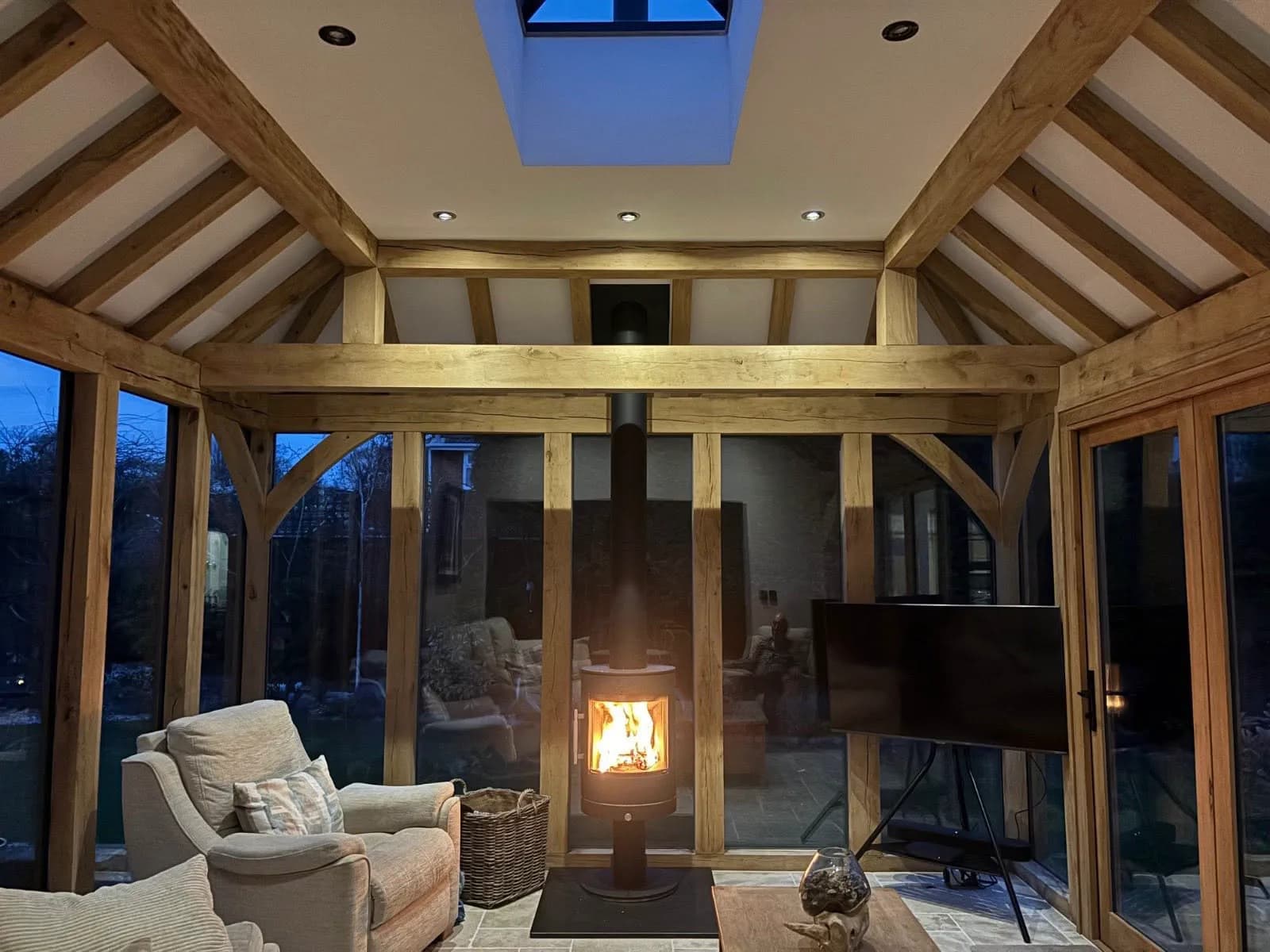
Oak porches, garages, orangeries, and frame extensions designed to belong to the building they join.
- Structures
- Oak porches · garages · orangeries · frame extensions
- Material
- Green oak · air-dried oak
- Construction
- Pegged mortise-and-tenon oak frame
- Specialism
- Architectural integration with period & rural property
- Contexts
- Period, listed & conservation properties
- Areas
- Shropshire · West Midlands · Worcestershire · Cotswolds · Cheshire
Architectural Intent
An oak structure is added to a building, which is exactly why most of them sit wrong. A porch, a garage, an orangery, or a frame extension is a new volume against an existing elevation — and if it is designed as a product rather than as architecture, it reads as an addition no matter how good the timber. We Are Woodland designs oak structures to belong to the building they join.
The studio works in four oak disciplines: porches, garages, orangeries, and frame extensions. Each is drawn to the proportions of the host building — roof pitch, ridge height, bay rhythm, the way the frame meets the wall and the ground. Green oak and seasoned oak are specified for what they do structurally and how they weather, not for a rustic effect. The joints are the structure: pegged mortise-and-tenon work that carries the load and is meant to be seen.
Across period farmhouses, rural manors, cottages, and listed properties in Shropshire, the West Midlands, and the Cotswolds, the test is the same. An oak structure that looks inevitable — as though the building always had it — rather than one that announces itself as a recent addition.
Variants
Four oak disciplines below, each treated as architecture rather than a product line. Porches, garages, orangeries, and frame extensions are drawn to the host building’s proportions — roof pitch, ridge height, and the way the frame meets the existing wall — not selected from a range of standard structures.
 01
01Oak Porches
Oak frame porches integrated with period and rural properties.
 02
02Oak Garages
Multi-bay oak frame garages for period and rural contexts.
 03
03Oak Orangeries
Oak frame orangeries, repositioned away from the garden-centre register.
 04
04Oak Frame Extensions
Oak frame extensions designed as part of the architecture, not bolted on.
Selected Projects
Selected projects where an oak structure was the central architectural decision — a porch, garage, orangery, or frame extension drawn to the host building.
- Oak Porch & Herringbone Oak Front DoorWORCESTERSHIRE · Oak Porch & Entrance Door
- Oak-Framed Garage & Sapele JoineryGLOUCESTERSHIRE · Oak Garage & Sapele Joinery
- Steel-Look Accoya GlazingCHESHIRE · Steel-Look Barn Glazing
- Timber-Framed Chilterns FarmhouseOXFORDSHIRE · Period Property — Multi-Element
- Oak Garden Room, Garage & PorchesWEST MIDLANDS · Architectural Oak
Material and Performance
Oak is specified for what it does, not for how it looks doing it. Green (fresh-sawn) oak is the structural default for frames: it is worked while it still holds moisture, then moves and settles into its joints as it dries — which is why a green oak frame is pegged, not glued or bolted, and why fine shakes in the surface are evidence of the material behaving correctly, not a fault. Air-dried oak is specified where movement must be limited, typically where the frame meets glazing or fine joinery.
The frame is the building, so it is engineered as one: post and beam sizes to the spans and loads, pegged mortise-and-tenon joints, and bracing detailed to the architecture rather than hidden. Where an oak structure meets a period or listed property, the junction is the hard part — flashing, weathering, and the line where new oak meets old masonry are detailed so the structure protects the building rather than trapping water against it.
Left to weather, oak silvers and lasts for the long life of the building. The structure earns its longevity from the material and the joint, not from coatings.
Common Questions
What oak structures do you make?
Four disciplines: oak porches, oak garages, oak orangeries, and oak frame extensions. Each is designed to the proportions of the host building rather than offered as a standard structure — roof pitch, ridge height, and the way the frame meets the existing wall are drawn from the property, not a catalogue.
Green oak or air-dried oak — what is the difference?
Green (fresh-sawn) oak is the structural default for frames: it is worked while it still holds moisture, then moves and settles into its pegged joints as it dries. Air-dried oak is specified where movement must be limited — typically where the frame meets glazing or fine joinery. The choice is structural, made frame by frame.
Will an oak frame crack as it dries?
Fine surface shakes are normal and expected: green oak moves as it dries, and the frame is pegged — not glued or bolted — precisely so it can. These shakes are evidence of the material behaving correctly, not a structural fault. The frame is engineered for that movement from the start.
Do you build oak structures for listed or period properties?
Yes. Where an oak porch, garage, orangery, or extension joins a period or listed property, the structure is designed to the host building and, where consent applies, specified to what it requires. The junction between new oak and old masonry — flashing, weathering, and the meeting line — is where the detailing matters most, and is treated as part of the design.
Do you need planning permission for an oak structure?
Often, yes — and on listed or conservation properties, listed building consent as well. The studio designs to the property's planning context and works to consent where it applies, rather than treating it as an afterthought. The structure is drawn to suit both the building and what permission allows.
Which areas do you cover?
We Are Woodland is an architectural joinery studio based near Bridgnorth in Shropshire. The studio works across Shropshire, the West Midlands, Worcestershire, the Cotswolds, and Cheshire, and elsewhere in the UK where the building justifies the journey.
Related Authority
Authority content on oak frame design, material decisions, and integration with period property — written by the studio.
Considering an oak structure for your property? The conversation starts here.
Start a Project →