

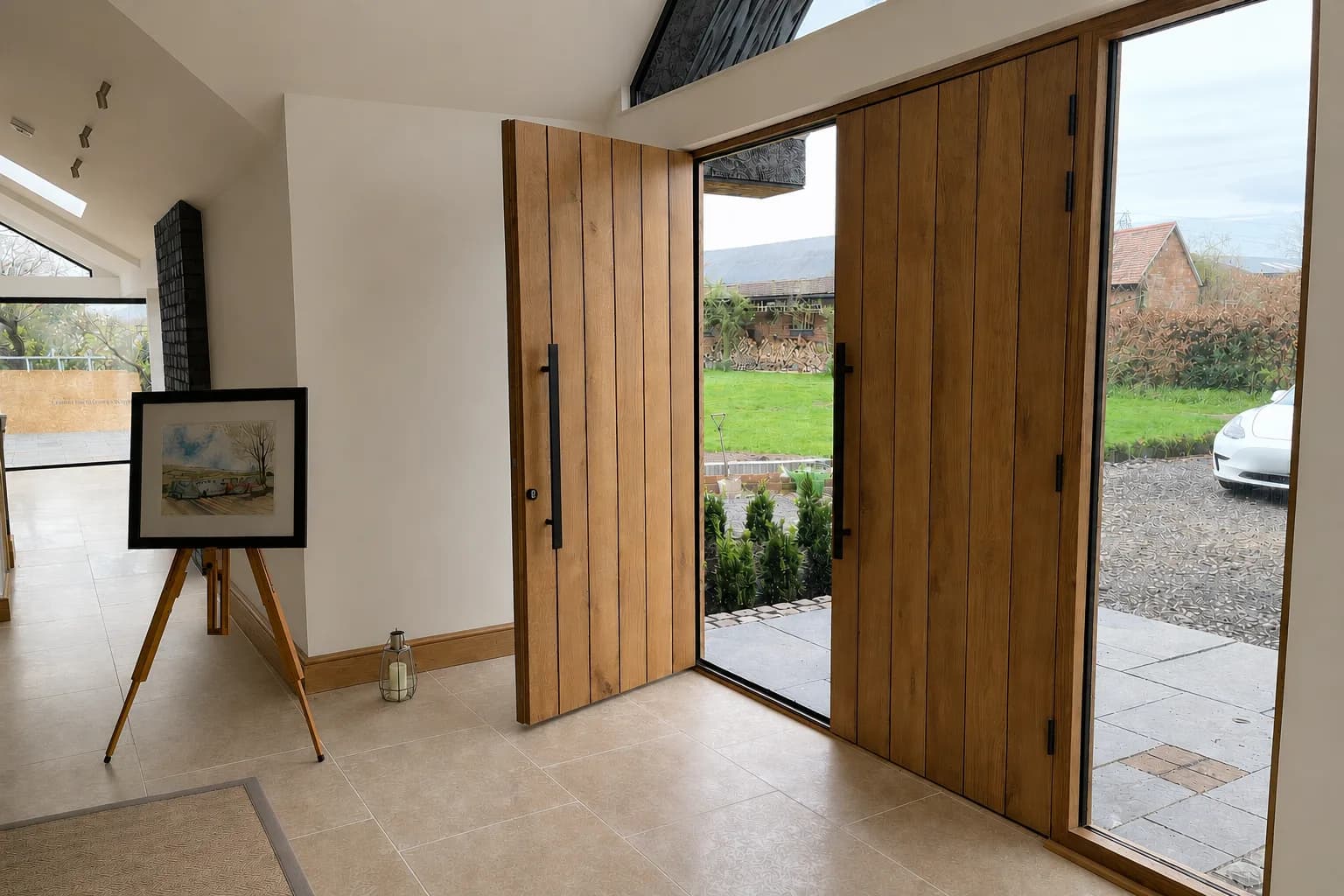
Architectural Elements
Bespoke Timber Doors
Period, farmhouse, stable, French, and bi-fold timber door systems designed for properties where the door is part of the architecture.
- Pricing
- From the drawing — opening, timber, glazing and ironmongery set the figure
- Door types
- Period · Farmhouse · Stable · French · Bi-fold
- Timber
- Oak · Accoya · sapele · idigbo
- Specialism
- Period & rural property; listed-building & conservation work
- Scope of supply
- Full assembly — leaf, frame, architrave, threshold, weather seal, ironmongery
- Areas
- Shropshire · West Midlands · Worcestershire · Cotswolds · Cheshire
Architectural Intent
Most front doors fail because the wrong question was asked first. The brief is treated as “we need a new front door” rather than “what door belongs on this elevation, in this period, in this conservation context.” We Are Woodland starts at the architectural question and works back to the door.
The studio designs and makes door systems for Victorian, Georgian, Edwardian, and Arts-and-Crafts period properties, for rural farmhouses and cottages, and for listed buildings where conservation consent shapes the specification. Period proportions, period-correct moulding profiles, conservation-grade glazing where the property requires it, and ironmongery selected for the architectural register — not picked from a catalogue. The variants below are the studio’s working categories: each treated as an architectural discipline in its own right.
The result is a door that reads as if it has always been there. On a Shropshire farmhouse, a Cotswold cottage, a Grade II listed Edwardian villa, or a rural manor — the test is the same. A door that looks like a question was asked of the building before it was asked of the catalogue.
— Chris Holland, Founder, We Are Woodland
Variants
Five working categories below. Each treated as its own design discipline within the broader specialism — proportions, mouldings, and detailing specific to the architectural register the door is being made for. A Georgian period door is not a Victorian one. A working stable door is not a French door. Each variant carries its own architectural rules.
 01
01Period Doors
Designed for Georgian, Victorian, and Edwardian period properties.
 02
02Farmhouse Doors
Traditional farmhouse entrances and ledge-and-brace doors for rural property contexts.
 03
03Stable Doors
Two-leaf stable doors for cottages, kitchens, and rural property entrances.
 04
04French Doors
Period-appropriate French doors for garden rooms, kitchens, and rear elevations.
 05
05Oak French Doors
Oak French door sets for period and rural homes, detailed so the pair still meets true through a wet winter.
 06
06Oak Entrance Doors
Solid European oak front doors, oiled or left to weather, with the movement designed in from the drawing onward.
 07
07Bi-fold Doors
Bi-fold timber door systems for period property extensions and garden-facing elevations.
 08
08Oak Bifold Doors
Oak bifolds where the timber is meant to be seen — and a straight answer on the runs where Accoya is the sounder specification.
Selected Projects
Selected projects where door specification was the central architectural decision — or one of several treated together as a coherent intervention. Each linked to the full project page.
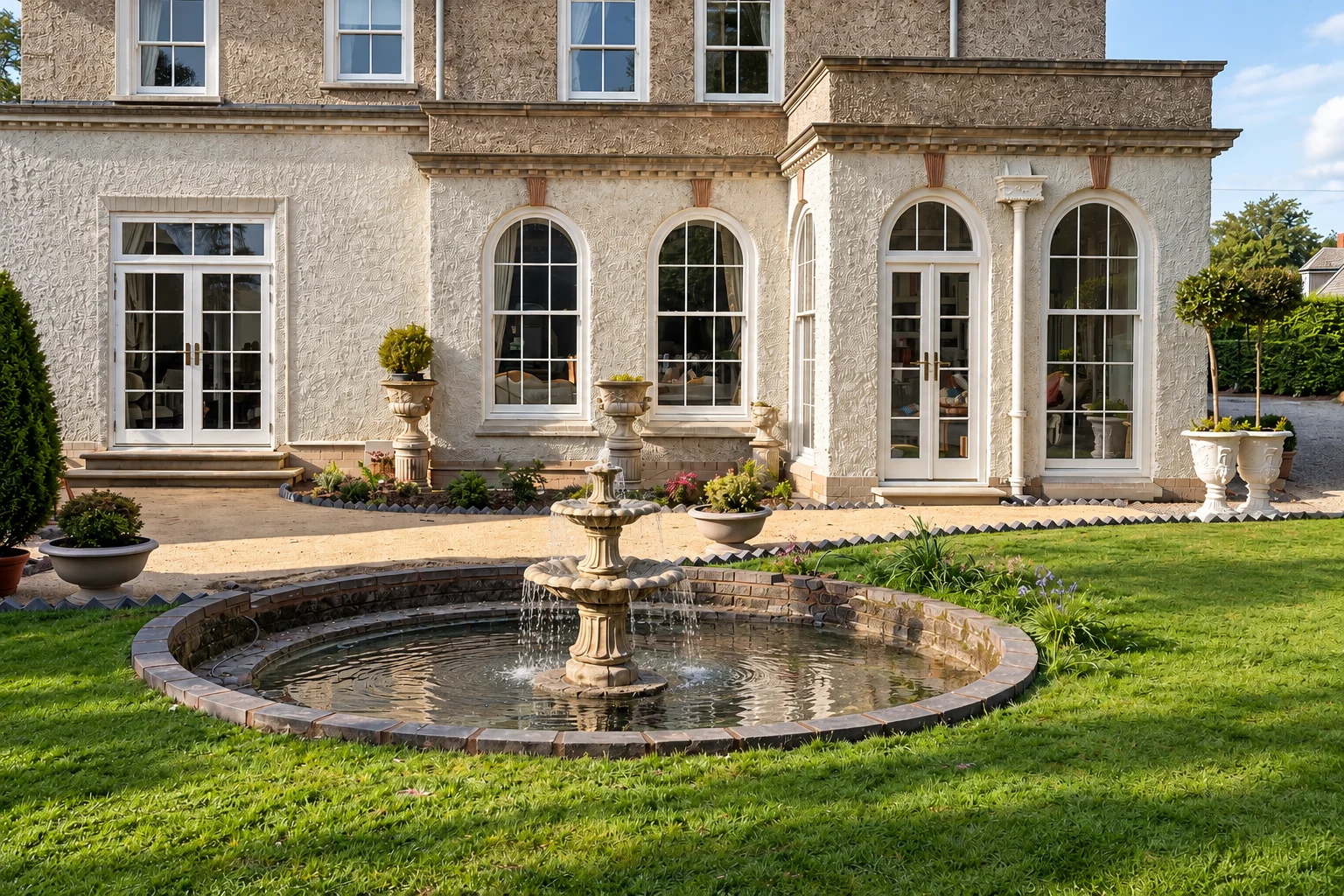 WORCESTERSHIRE
Arched-Top Sash Windows & French Doors
Sash Windows & French Doors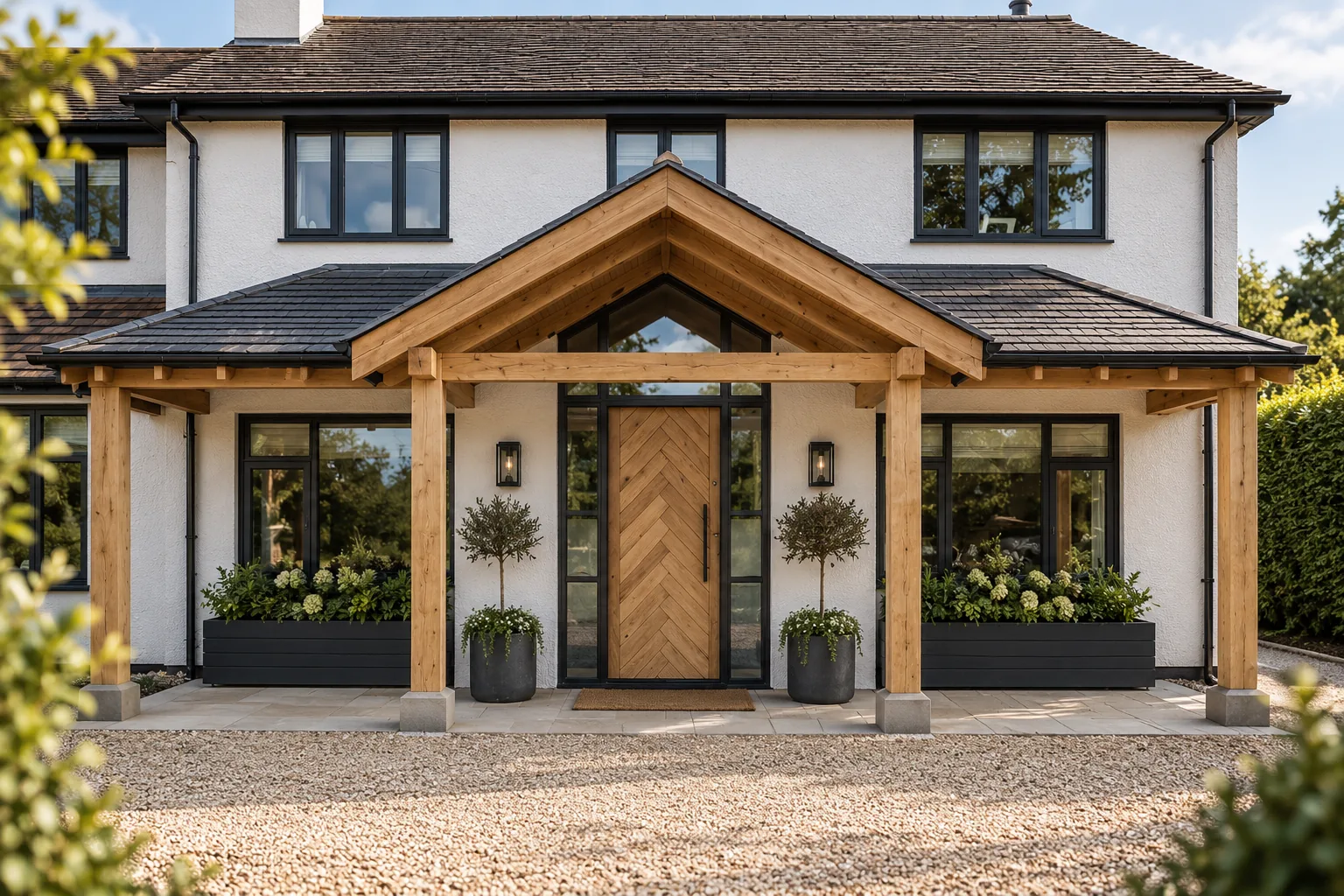 WORCESTERSHIRE
Oak Porch & Herringbone Oak Front Door
Oak Porch & Entrance Door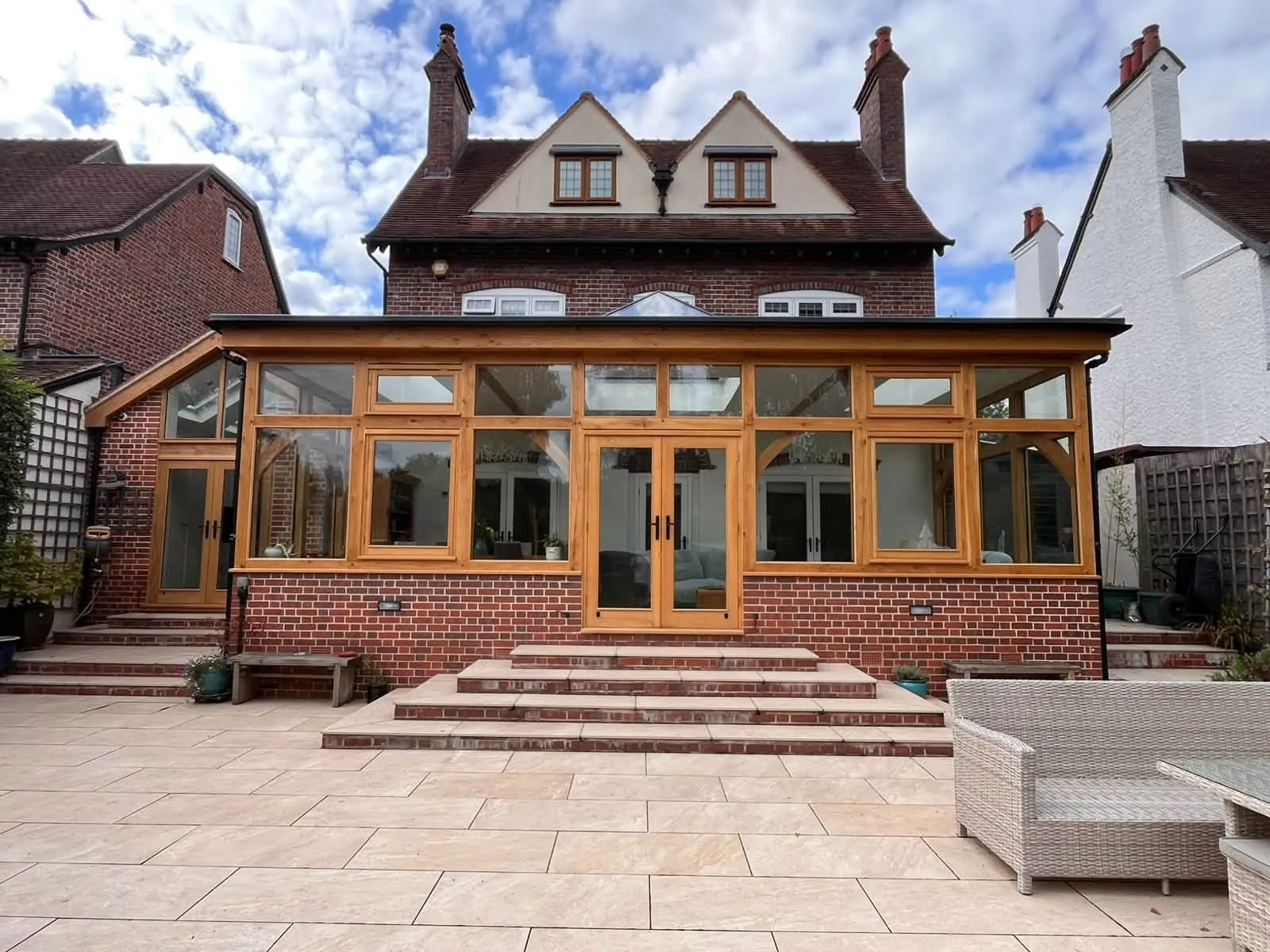 WEST MIDLANDS
Joinery for Oak-Framed Buildings
Ongoing Trade Relationship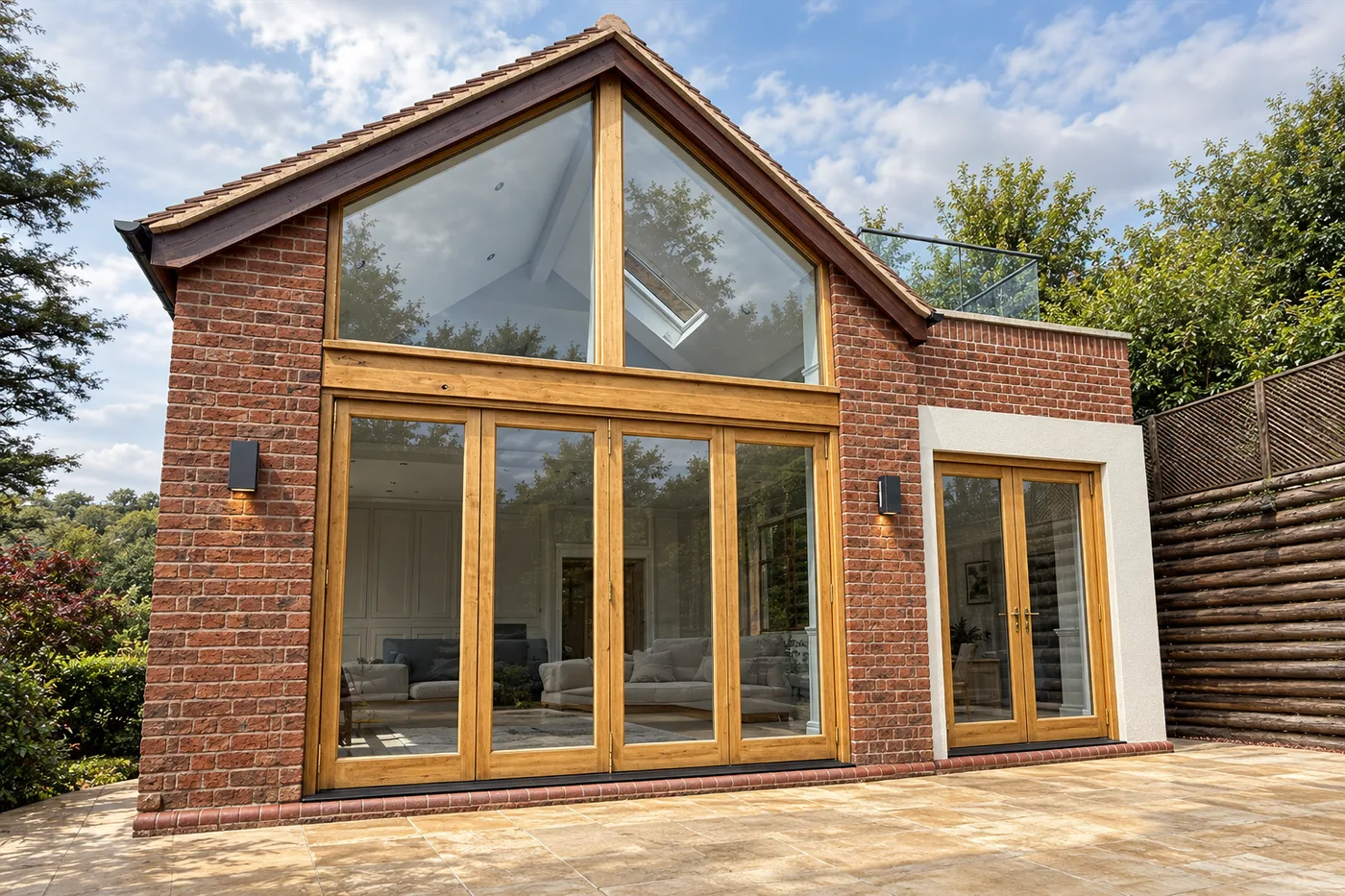 SHROPSHIRE
Oak Glazed Gable, Bifolds & Windows
Oak Glazed Gable & Bifolds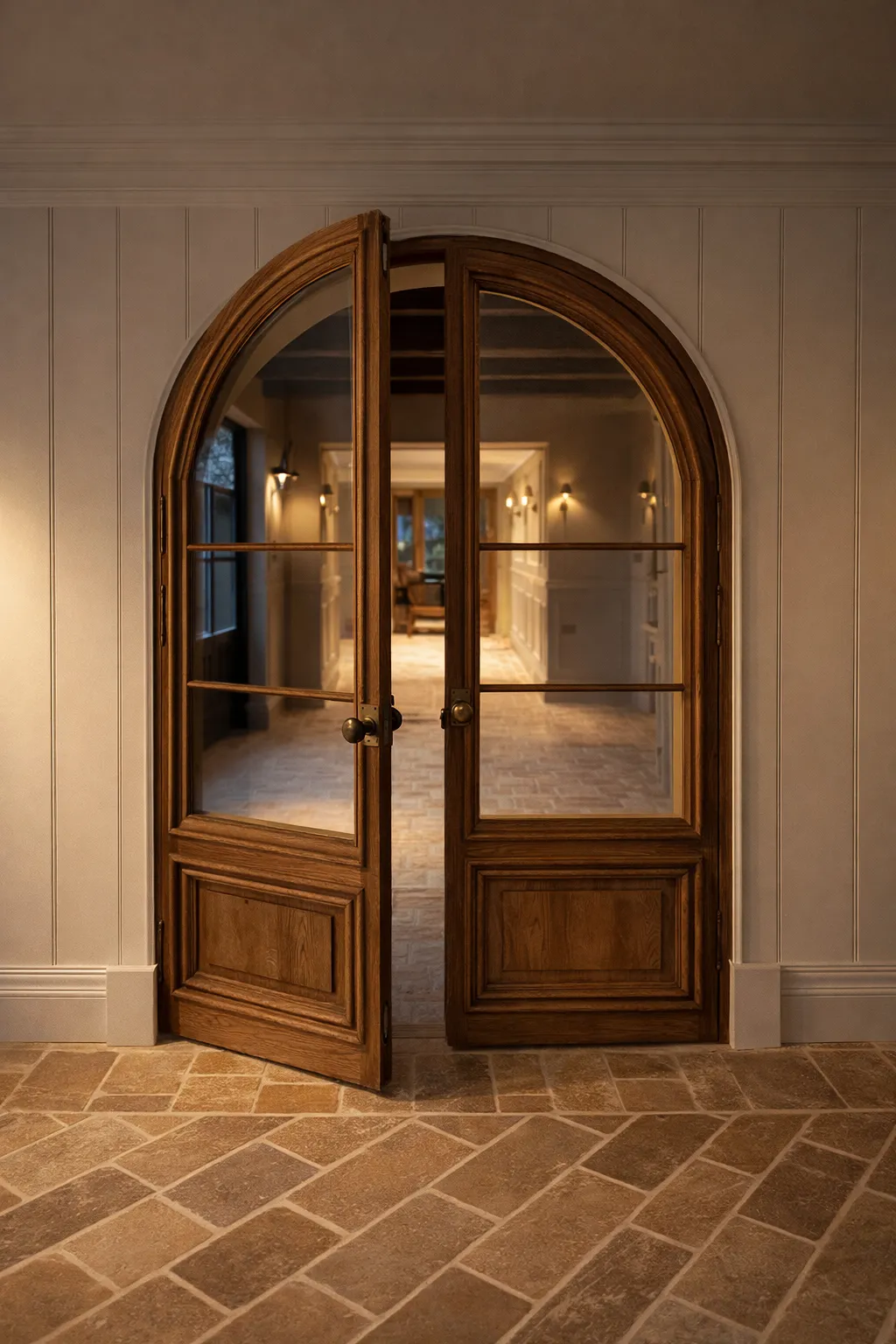 SHROPSHIRE
Oak French Doors & Accoya Casement Windows
Bespoke Door Sets & Windows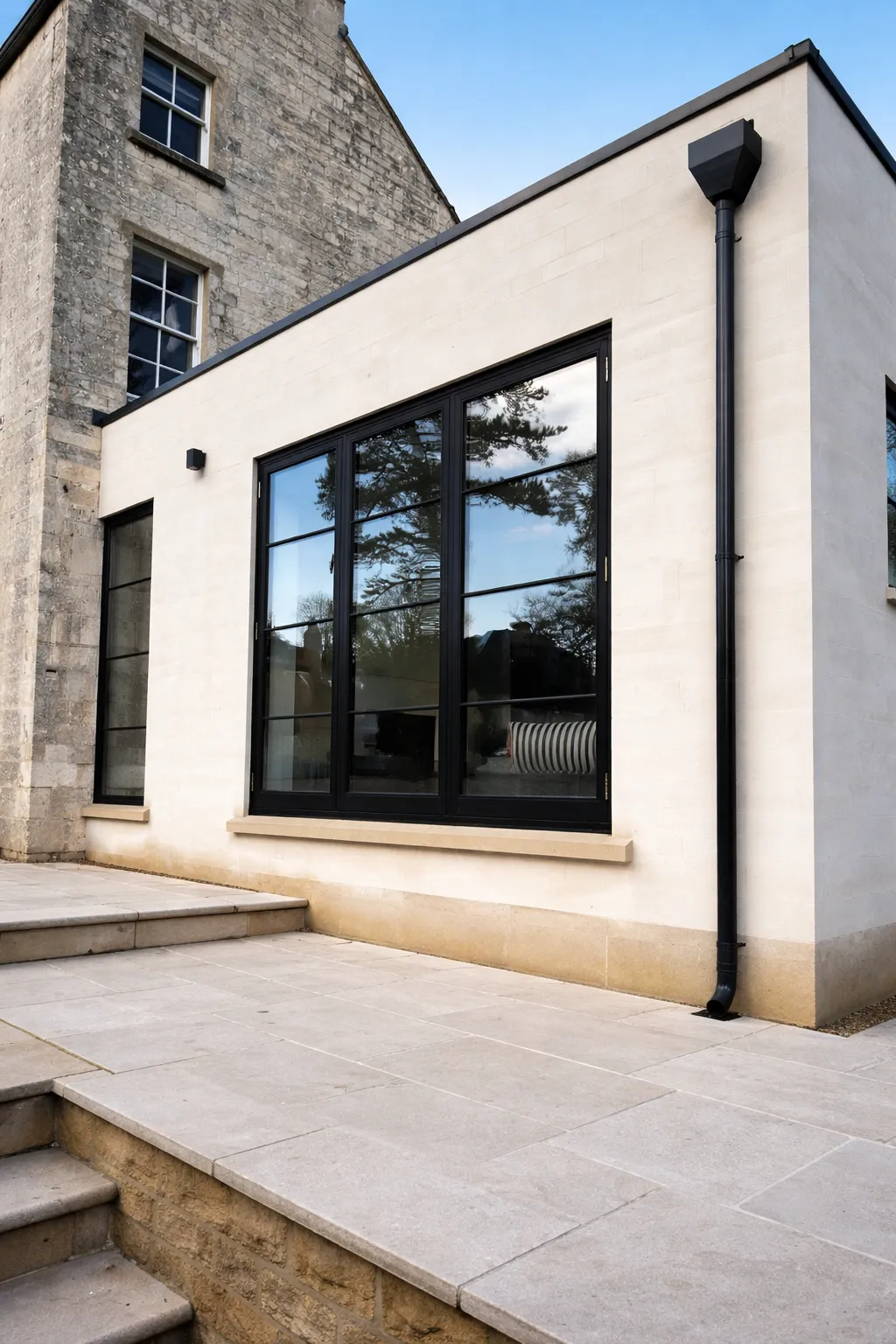 GLOUCESTERSHIRE
Contemporary Steel-Look Casements
Contemporary — Cotswolds AONB
Material and Performance
Material selection is an architectural decision, not a stock-list choice. Oak is the default for period and rural work where weight, grain, and longevity match the building. Accoya is specified where stability and paint-line performance matter more than grain visibility — typically painted Victorian or Edwardian doors, or anywhere the door faces direct weather on an exposed elevation. European hardwoods (sapele, idigbo) appear where budget, paint finish, or specific conservation guidance shapes the brief.
Listed building work runs to its own rules. Like-for-like specification, period-correct moulding profiles, traditional putty glazing on glazed leaves, and ironmongery selected to match what conservation officers have already accepted on equivalent properties. The studio works with conservation officers as collaborators, not as obstacles — a discipline that comes from twenty-plus years of period and rural work in Shropshire and across the West Midlands.
Ironmongery and frame are part of the door, not finishing items. Most period doors fail because the frame was never specified at the architectural level — a door fitted into a wrong frame reads as wrong even when the door itself is correct. The studio specifies the full assembly: door leaf, frame, architrave, threshold, weather seal, and ironmongery — pulls, hinges, knobs, escutcheons, locks, weatherboard — as one coherent specification. On listed work, ironmongery is often where the conservation officer’s attention lands first; on period work outside listed context, the same standard applies by discipline rather than requirement. The brief covers everything the joinery touches, and stops at the wall.
Performance is not a feature list. A well-specified timber door, made for the building it sits on, will outlast most of the alternatives by a factor measured in decades. The architecture earns the longevity, not the marketing.
Related Authority
Authority content on door specification, conservation context, and material decisions — written by the studio.
Common Questions
How much does a bespoke door set cost?
A door set is priced from its drawing rather than from a list. The size of the opening, whether sidelights and a fanlight form part of the assembly, the timber, the glazing and the ironmongery all move the figure, so the studio gives an indication once it knows what the building needs. Pricing covers the full assembly, not the door leaf alone. Smaller architecturally-aligned projects are considered case-by-case.
Oak or Accoya — and what timber do you use?
Oak is the default for period and rural work, where its weight, grain, and longevity match the building. Accoya is specified where stability and paint-line performance matter more than grain visibility — typically painted Victorian or Edwardian doors, or any door facing direct weather on an exposed elevation. European hardwoods such as sapele and idigbo appear where budget, paint finish, or specific conservation guidance shapes the brief. Material selection is treated as an architectural decision, not a stock-list choice.
Can you make doors for a Grade II listed building?
Yes. Listed building work runs to its own rules: like-for-like specification, period-correct moulding profiles, traditional putty glazing on glazed leaves, and ironmongery selected to match what conservation officers have already accepted on equivalent properties. The studio works with conservation officers as collaborators rather than obstacles — a discipline drawn from twenty-plus years of period and rural work across Shropshire and the West Midlands.
What is included in a door set — just the door?
The full assembly, not the leaf alone. We Are Woodland specifies the door leaf, frame, architrave, threshold, weather seal, and ironmongery — pulls, hinges, knobs, escutcheons, locks, and weatherboard — as one coherent specification. Most period doors fail because the frame was never specified at the architectural level: a correct door in the wrong frame still reads as wrong. The brief covers everything the joinery touches, and stops at the wall.
Which door styles suit a Georgian, Victorian, or Edwardian property?
Each period carries its own proportions and moulding profiles — a Georgian door is not a Victorian one. We Are Woodland designs period doors for Georgian, Victorian, Edwardian, and Arts-and-Crafts properties, alongside farmhouse, stable, French, and bi-fold sets for rural and cottage contexts. The style follows the elevation, period, and conservation context rather than a catalogue.
Which areas do you cover?
We Are Woodland is an architectural joinery studio based at Hatchery Farm, near Bridgnorth in Shropshire. The studio works across Shropshire, the West Midlands, Worcestershire, the Cotswolds, and Cheshire — and elsewhere in the UK where the building justifies the journey.
Door sets are priced from the drawing, not from a list. Larger commissions — full entrance assemblies, multi-element specifications, or whole-house joinery — scale accordingly. Smaller architecturally-aligned projects considered case-by-case.
Start a Project sets the conversation in the right place: scope, property, conservation context, and what the building actually needs.
Start a Project →