

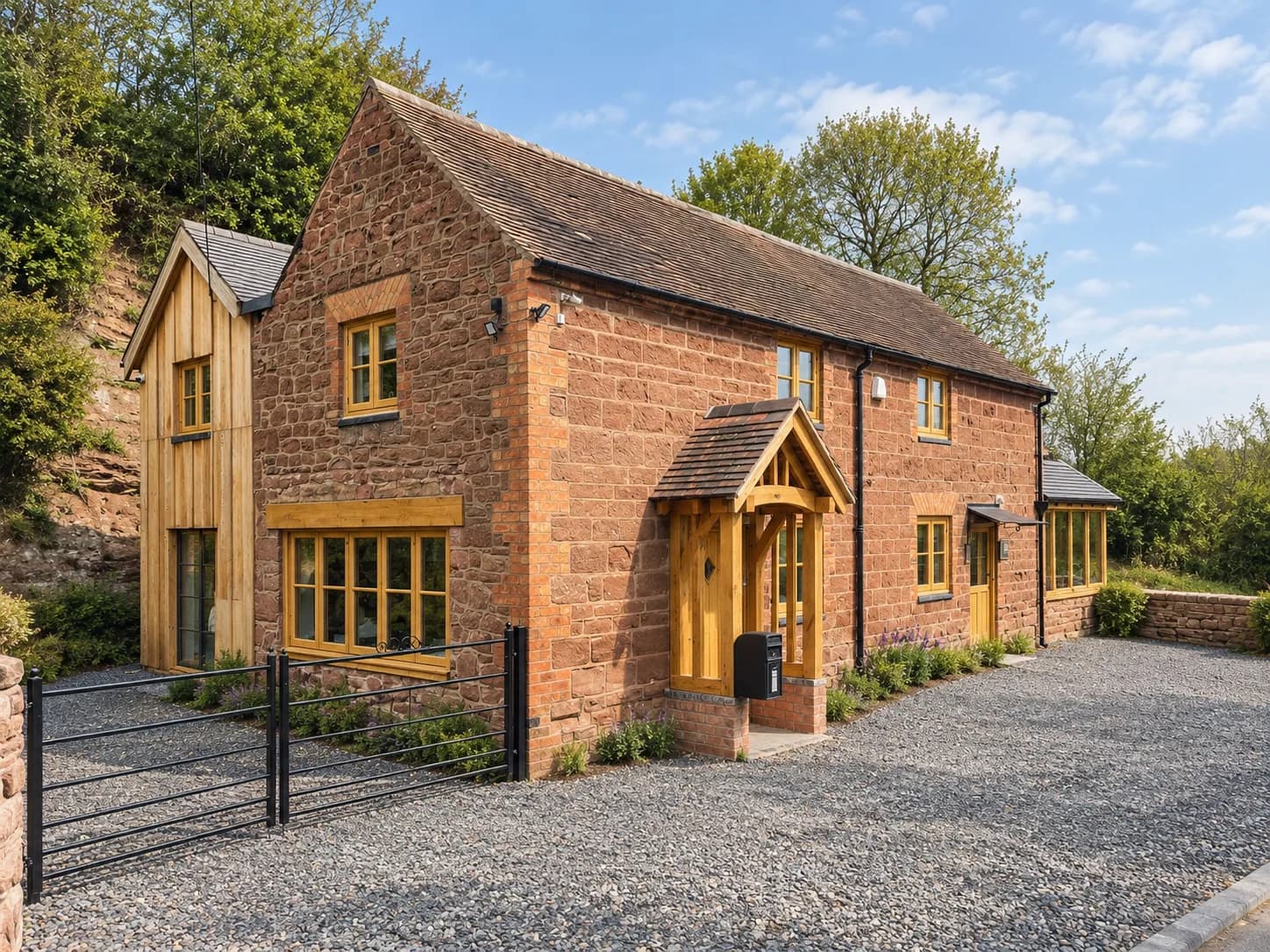
Timber Windows
Oak Windows
Oak is the timber clients ask for by name. It is the right window in some situations and the wrong one in others, and the difference usually comes down to one question: is the window going to be painted?
When oak is the right window
Oak earns its place where the timber is meant to be seen. On an oak-framed building, a barn conversion, or an elevation that already carries exposed oak in its structure, an oak window belongs to the building in a way a painted one never will — the same timber, moving and weathering at the same rate, silvering to the same grey over its first years. Left unpainted and oiled, or left bare to weather, the grain is the finish.
It is also a durable timber on its own terms. European oak is rated durability class 2, which means the heartwood resists decay without preservative treatment — a genuine advantage on an exposed elevation, and the reason oak windows two centuries old are still in service. Specified properly, an oak window is a window you will not think about again.
When it is not
If the window is to be painted, oak is usually the wrong specification and we will say so. Two reasons, both practical. Oak moves — it shrinks, checks and shifts as it gives up moisture, and paint over a moving substrate cracks at the joints. And oak is high in tannin, which bleeds through a painted finish and stains it brown from underneath, particularly on south and west elevations where the wood gets wet and then dries hard.
On a painted listed elevation the timber is not seen at all, so the argument for oak disappears and only its drawbacks remain. That is why the studio specifies Accoya for most painted conservation work: modified timber holds a painted finish for far longer, stays where it is put, and gives the conservation officer the performance case without changing how the elevation reads. Choosing oak for a painted window is paying a premium for a disadvantage.
European oak, and why the species matters
European oak is the traditional choice for British joinery and the one specified here. It is tighter in grain than American white oak, warmer in colour, and it weathers to the silver-grey people picture when they ask for an oak window. American white oak is straighter and cheaper, and it reads differently — paler, blander, and less like the timber in the building it is joining.
Air-dried or kiln-dried matters as much as species. Oak for external joinery is brought down to a moisture content appropriate to its use before a section is cut, because a window made from timber that is still drying will move after it is hung, not before.
Designing for movement
Oak moves, and a well-made oak window is one that was drawn expecting it to. Sections are sized with a margin the timber can take up, joints are cut so seasonal movement closes them rather than opens them, and glazing is bedded so the glass is not asked to restrain the frame. Quarter-sawn stock is specified where stability matters most, because it moves less across its width than through-and-through boards.
Some movement is not a fault to be engineered out but a characteristic to be allowed for. Surface checks along the grain are normal in oak and do not affect performance. A window that has been detailed to expect them stays square; one that has not will bind within a season.
- Timber
- European oak — tighter grain and warmer colour than American white oak
- Best suited to
- Oak-framed buildings, barn conversions, elevations with exposed oak
- Finish
- Oiled, or left bare to silver — not painted
- Durability
- Class 2 heartwood — no preservative treatment required
- If it is to be painted
- Accoya is usually specified instead — see below
- Glazing
- Traditional putty bars or slim-profile double glazing
Common Questions
Are oak windows worth the extra cost?
Where the timber is seen, yes — an oak window on an oak-framed or barn-converted building belongs to it in a way a painted window does not, and class 2 durability means it needs no preservative treatment. Where the window will be painted, no: you are paying a premium for a timber nobody will see, and inheriting movement and tannin staining with it.
Can oak windows be painted?
They can, but it is rarely the right decision. Oak is high in tannin, which bleeds through paint and stains it brown from underneath, and it moves enough that paint cracks at the joints. A tannin-blocking primer helps and does not solve it. If the specification calls for a painted window, Accoya will hold that finish far longer.
Oak or Accoya for windows?
Oak where the timber is exposed and meant to be seen. Accoya where the window is painted — it is dimensionally stable, holds a painted finish, and resists the movement that throws a casement or sash out of true. On a painted listed elevation the timber is invisible, so the case for oak disappears while its drawbacks remain.
Will oak windows warp or crack?
Oak moves, and surface checks along the grain are normal rather than a defect. A window drawn to expect that movement — sections sized with a margin, joints cut so seasonal movement closes them, quarter-sawn stock where stability matters — stays square. One detailed as though oak were stable will bind within a season.
Do oak windows need treating?
European oak heartwood is durability class 2 and does not require preservative treatment to survive outdoors. An oil finish is a choice about appearance rather than protection: oiled, the colour is held; left bare, the window silvers to grey over its first years and then stays there.
Are oak windows suitable for a listed building?
It depends entirely on what the building already has. Where original joinery was oak and remains exposed, oak is the correct match and the case writes itself. Where the surviving windows are painted softwood — which is most Georgian, Victorian and Edwardian work — oak is not period-correct and a conservation officer may reasonably refuse it. The listing, not the timber, decides.
Selected Projects
Where oak windows formed part of the commission — each linked to the full project.
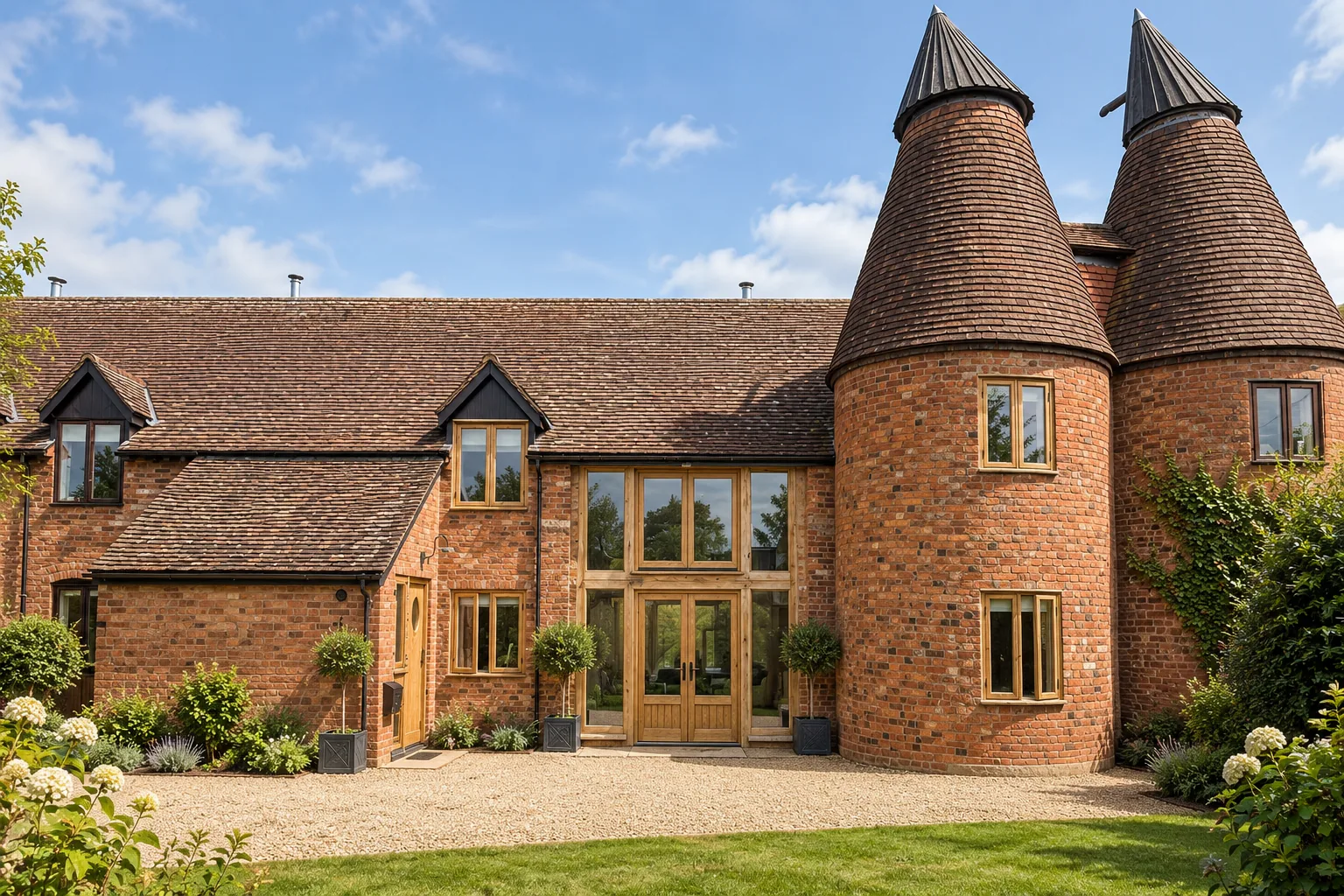 WORCESTERSHIRE
Oak Windows & Bifolds
European oak casements throughout the range, left unpainted so the timber is the finish — including curved heads to the kiln openings, measured to the brickwork so the window sits into the round tower rather than being punched through it.
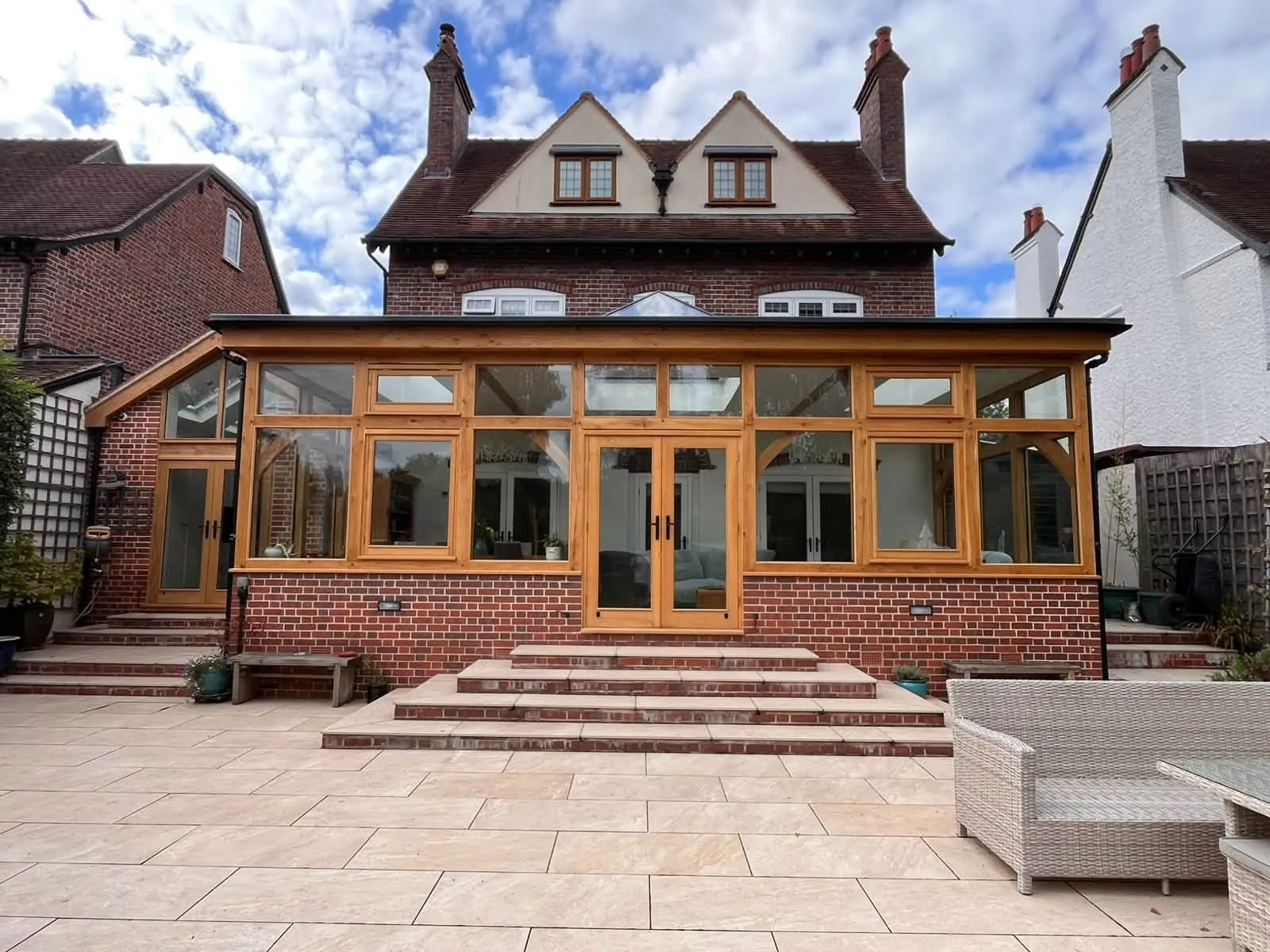 WEST MIDLANDS
Joinery for Oak-Framed Buildings
Oak windows surveyed off the standing frame and drawn to openings that are neither square nor finished moving, with sections kept fine enough that the frame remains the architecture.
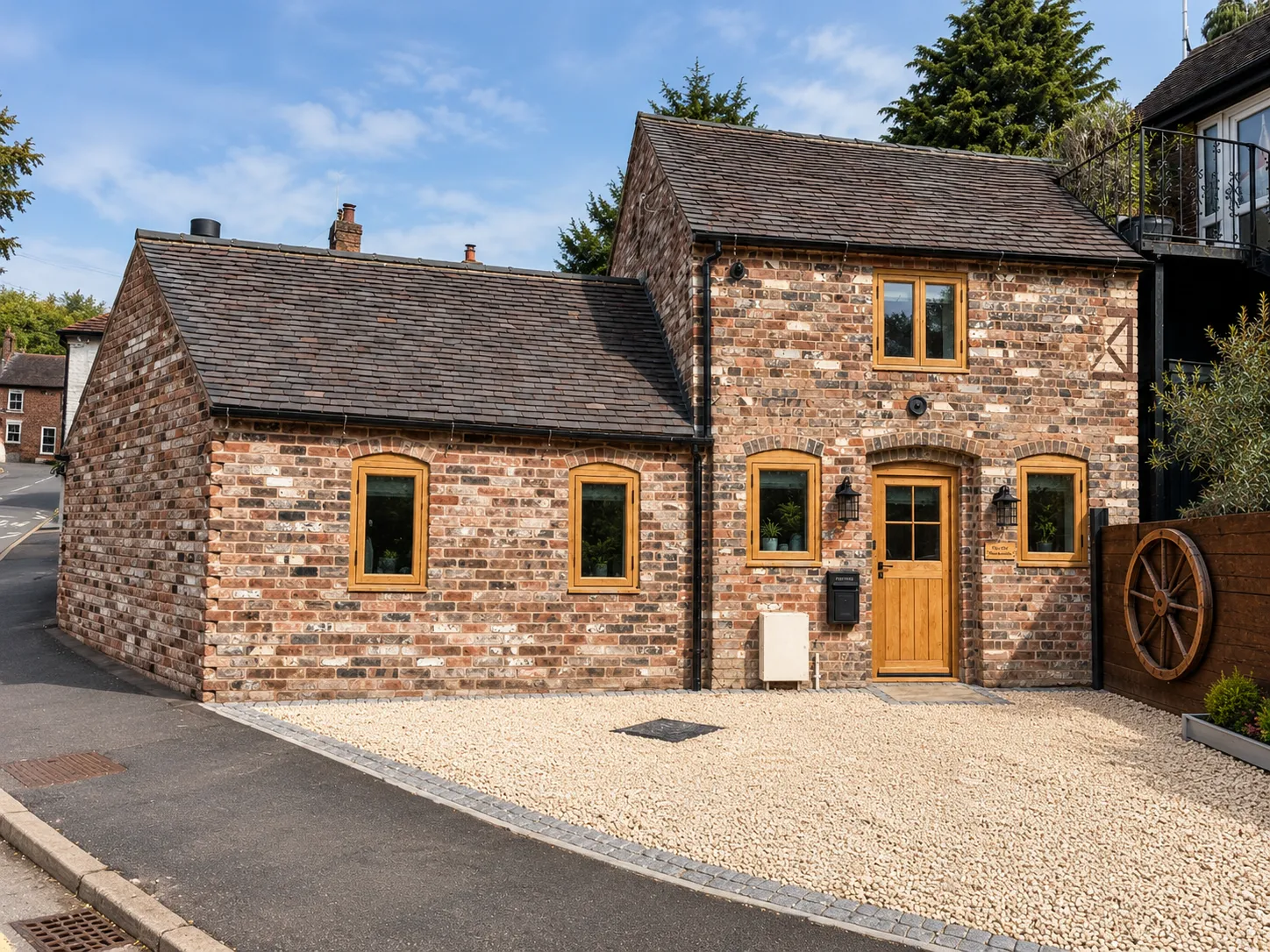 SHROPSHIRE
The Old Blacksmiths Cottage
Oak casements made to the openings in old brickwork, with oak window boards finishing each one inside.
Considering oak windows for a period or rural property? The conversation starts here.
Start a Project →