

WORCESTERSHIRE
Grade II Listed Farmhouse — Conservation Joinery & Flush Casement Windows, Worcestershire
(The Greenway Project)
A full joinery package for a Grade II listed farmhouse — windows, two entrance assemblies and a rear garden elevation specified as a single conservation-led intervention.
Project Facts
- Location
- Bromsgrove, Worcestershire
- Property
- Grade II Listed Farmhouse
- Scope
- Full Joinery Package — Architectural Timber Windows, Entrance Structures, rear glazing
- Materials
- European oak entrance and stable doors, Accoya flush casement windows, Accoya steel-look Crittall-style french doors, traditional putty glazing, From The Anvil Avon ironmongery in Beeswax
- Listed status
- Grade II
- Year completed
- 2025
Architectural Context
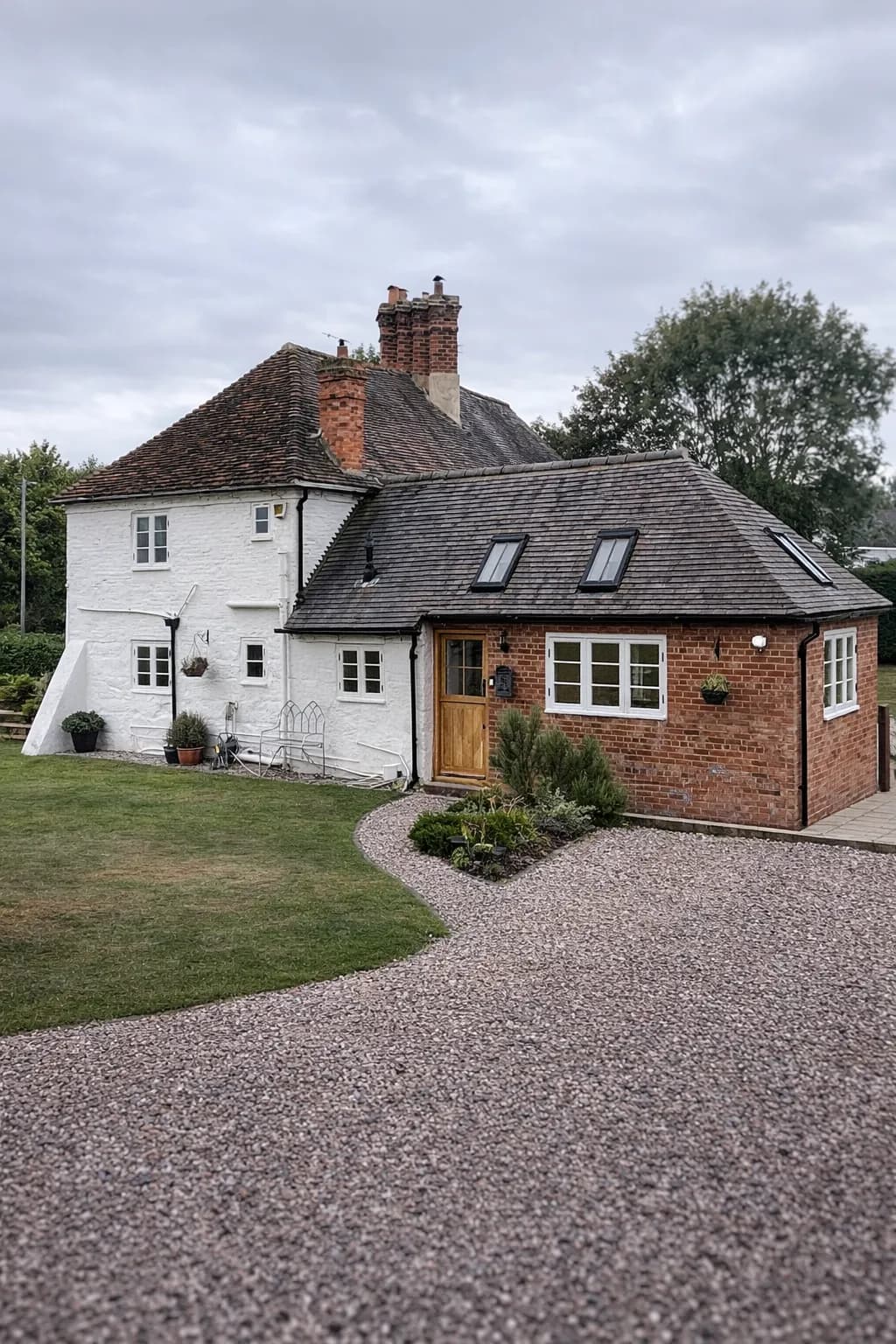
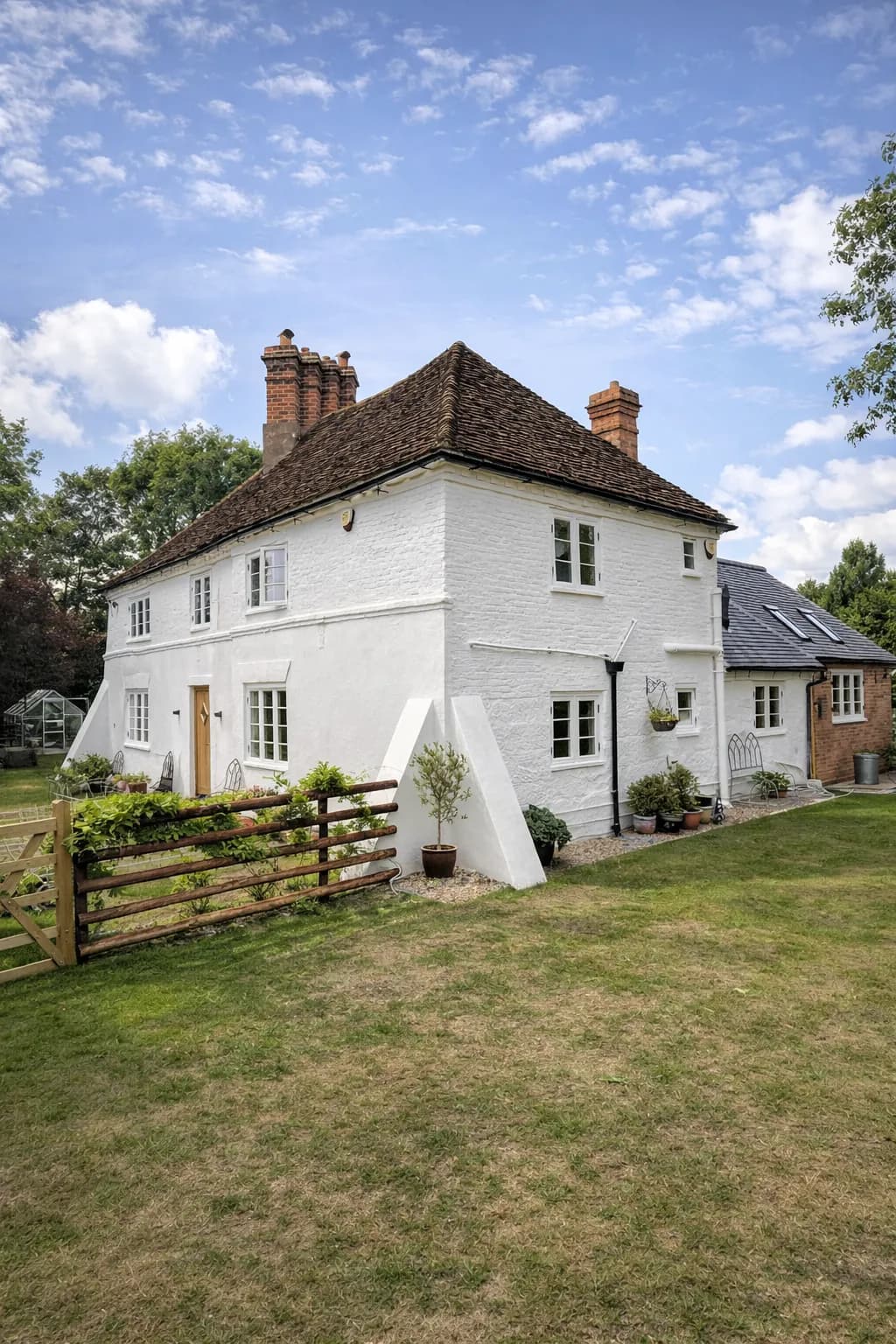
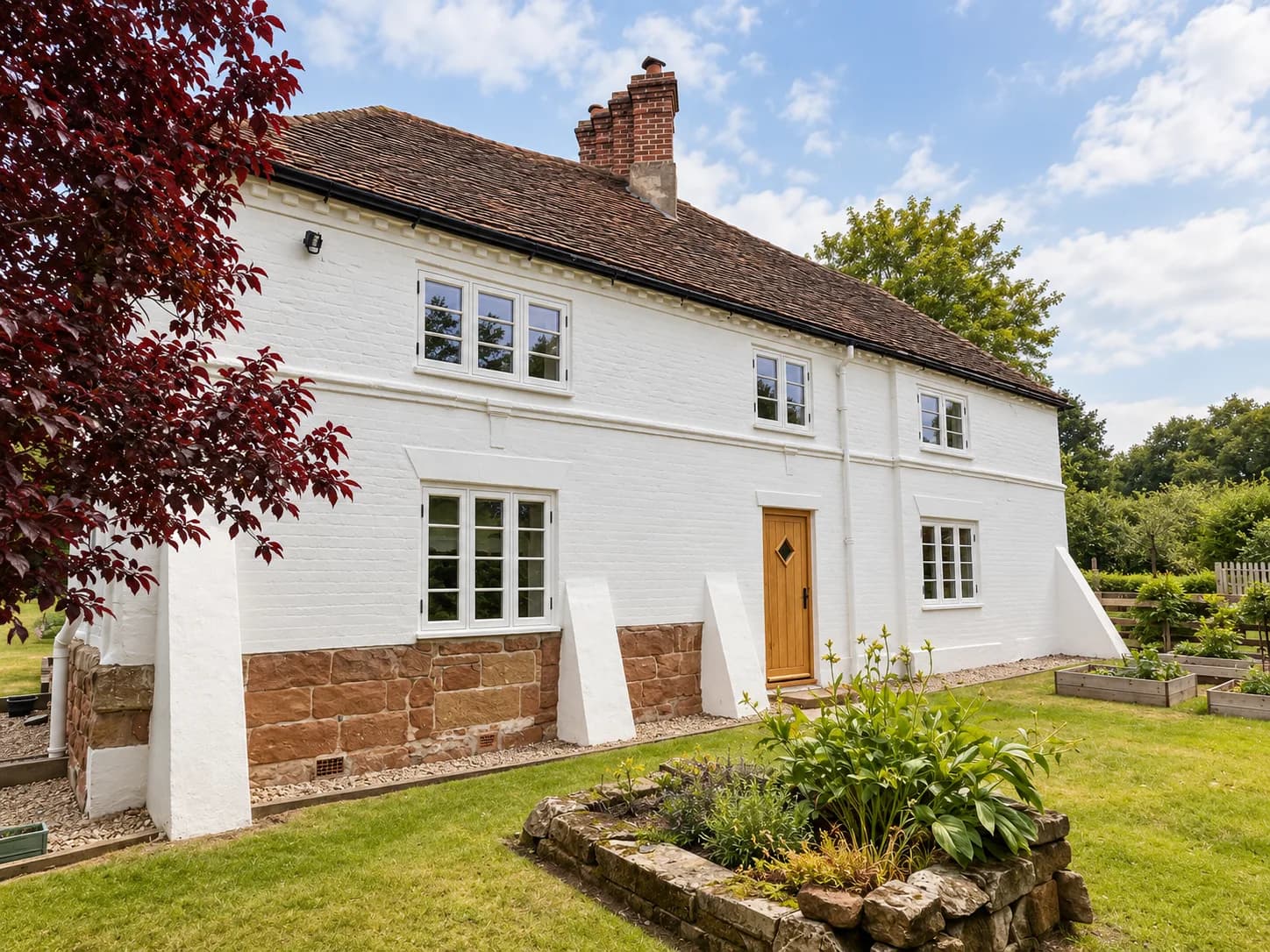
The property is a farmhouse, painted brick under a clay-tiled roof, listed Grade II and standing in open countryside outside Bromsgrove, in north Worcestershire. By the time the studio was approached, the original windows had reached the end of a long life — frames softened by decades of weather, leaves painted shut, glazing bars patched rather than repaired. The owners wanted joinery that would last another century, but the building would not allow a free hand.
A Grade II listing protects the whole farmhouse, not only its principal elevation, and joinery is among the elements a conservation officer scrutinises most closely. Nothing could be specified on appearance alone. Every window had to be justified against the surviving fabric: the depth of the existing frames, the section of the glazing bars, the proportion of each opening. The challenge was not to design something new but to write a specification precise enough to clear listed building consent and disciplined enough that the finished work would read as though it had always been there.
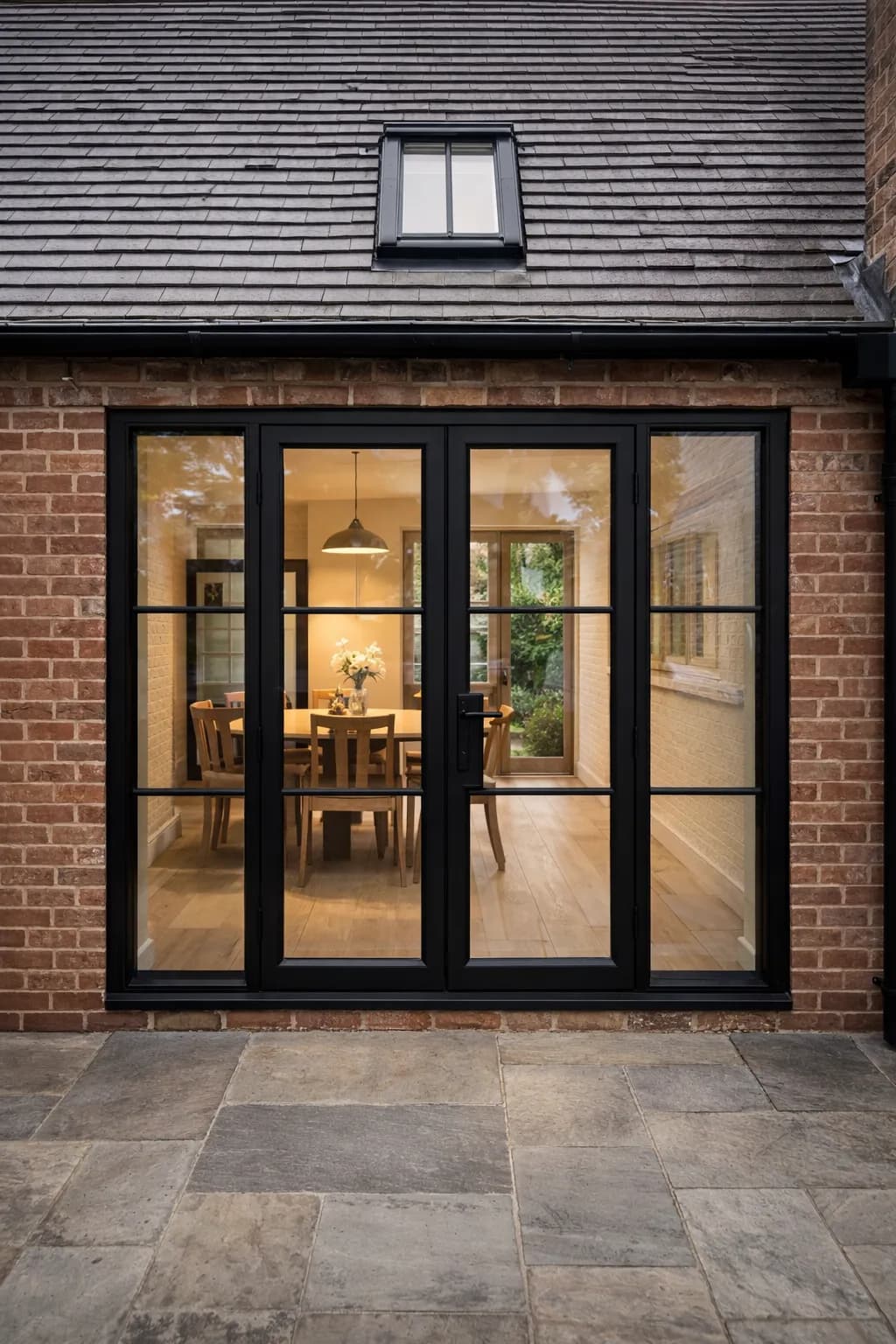
There was a second dimension. To the rear, a single-storey addition opened the kitchen onto the garden — an elevation with no historic sightline to protect, where a more contemporary register was appropriate. The brief therefore spanned two languages at once: period-correct conservation work to the listed elevations, and a quieter modern intervention where the building looked away from the road. The risk in a job like this is that the two halves end up arguing — the front over-restored and lifeless, the back too assertive and at odds with the house. Holding both in one specification, rather than handing them to two trades, was the only way to keep them in conversation.
Studio Response
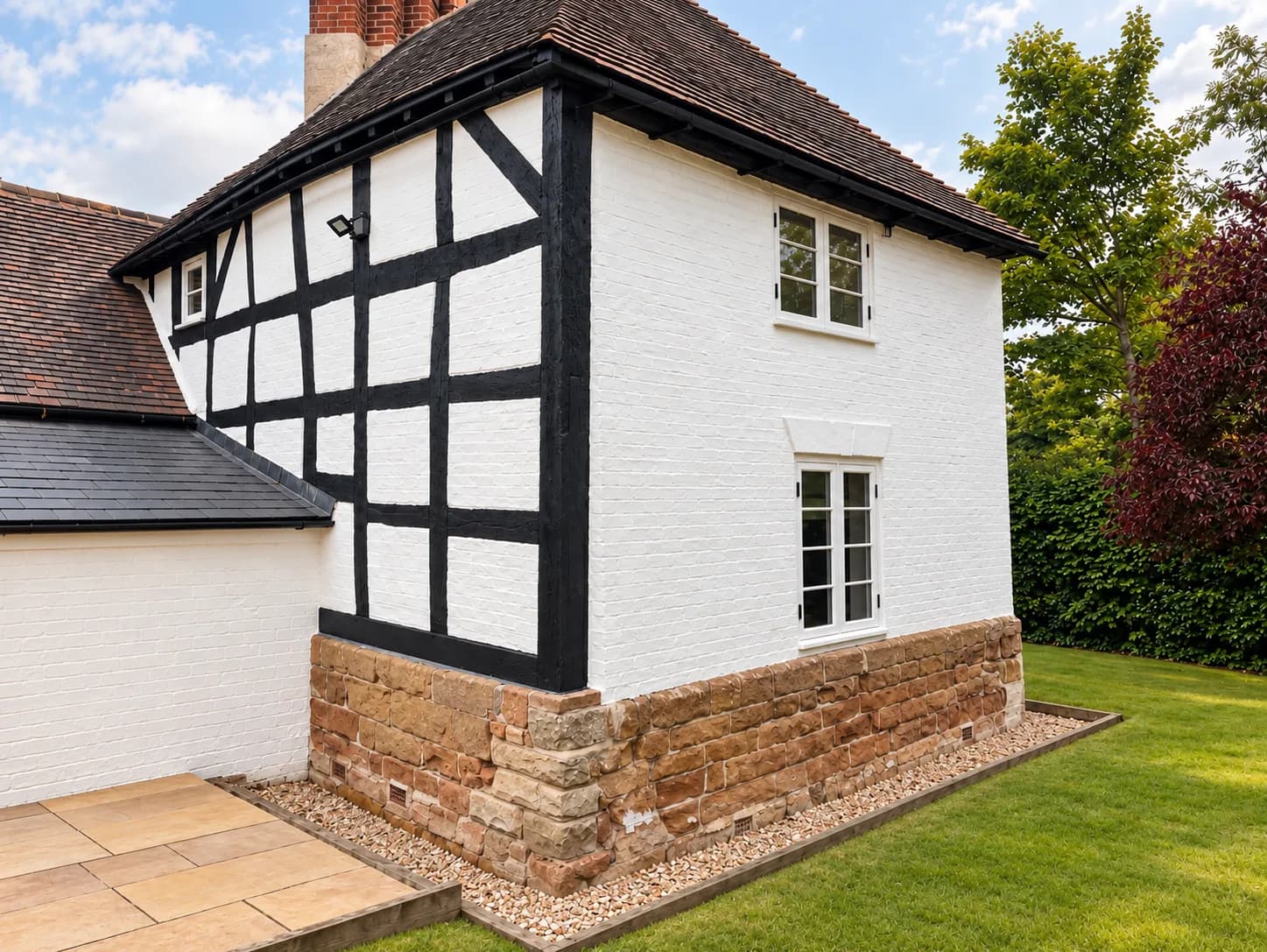
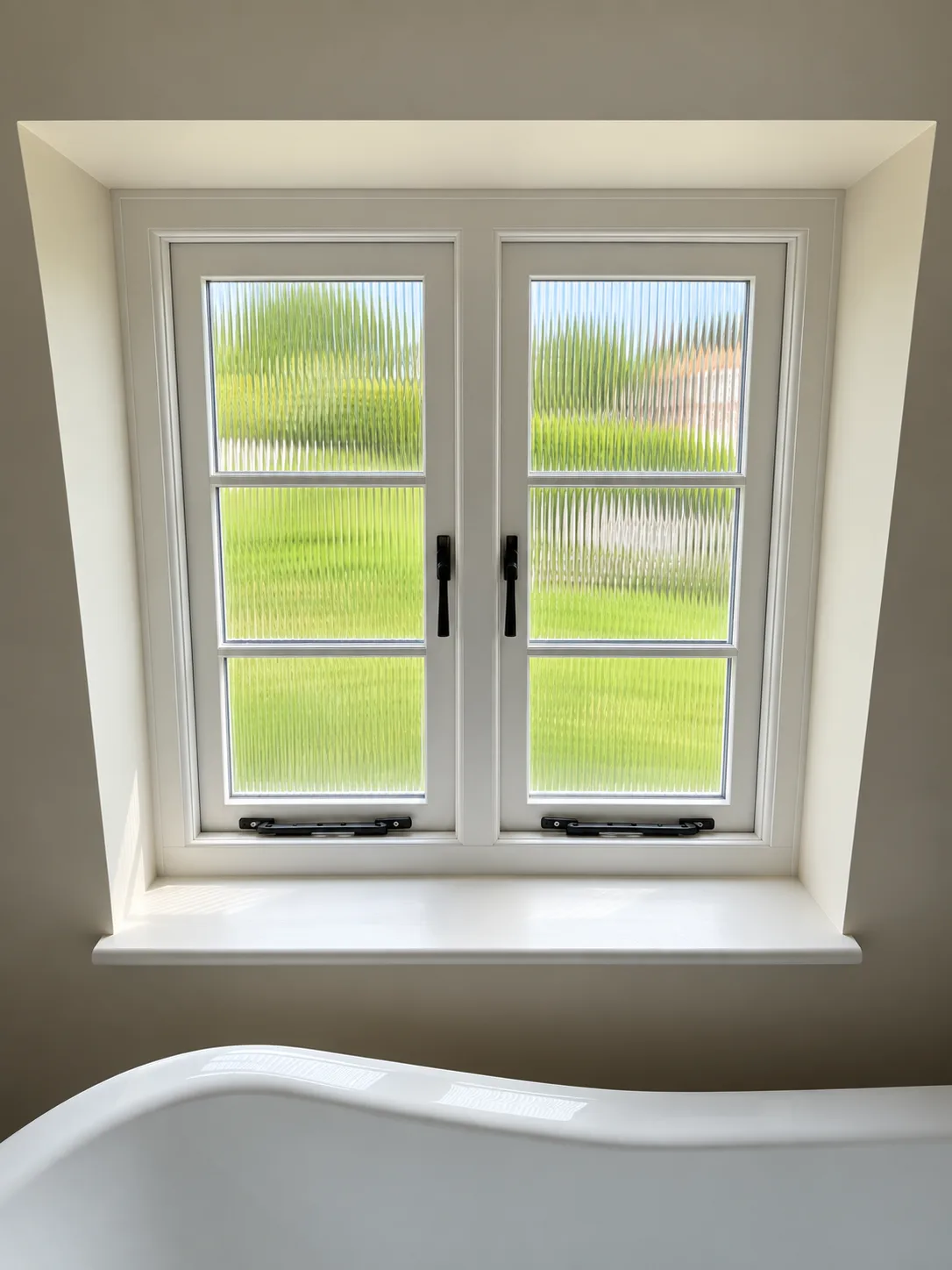
The windows were specified in Accoya rather than oak. On a painted listed elevation the timber is not seen, and Accoya holds a painted finish and resists movement far better over the life of the building — the decision the conservation officer will accept and the one that keeps the joinery sound for decades. Sections were drawn to match the slimmest surviving originals, glazing bars kept to period proportion, and traditional putty glazing specified throughout rather than applied beads, so the new windows carry the same shadow lines as the old.
Each opening was surveyed individually. Where an original window survived intact it became the reference for its neighbours, so the elevation reads as a set rather than a row of replacements. The specification was written as the document consent would be granted against — timber, sections, profiles, glazing and ironmongery all set down before anything was made — and taken to the conservation officer as a single submission rather than negotiated piecemeal.
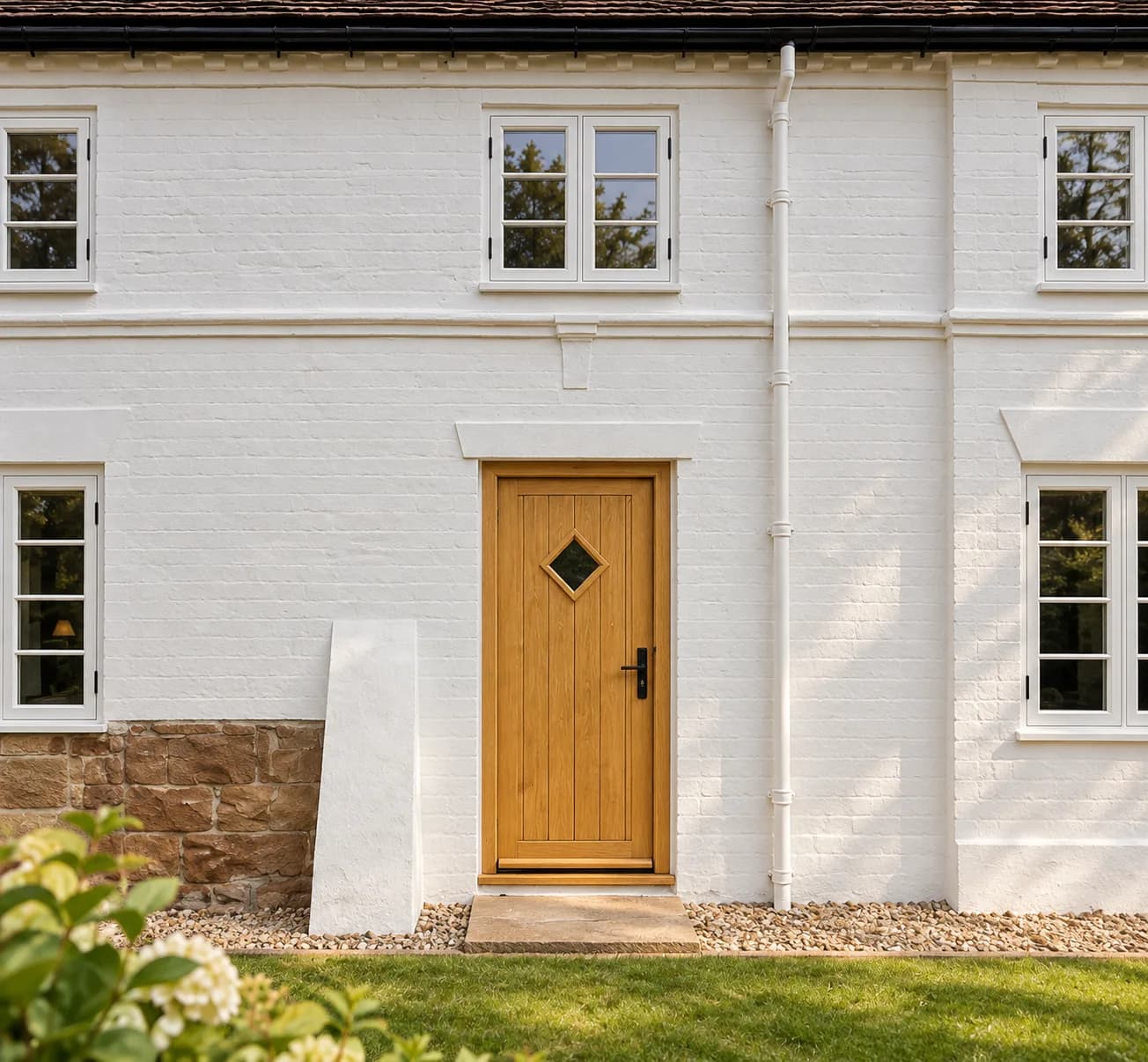
The principal entrance was specified as a solid oak door on period-appropriate ironmongery, sitting within the existing stone surround without altering it. Draught-proofing was integrated discreetly into the rebates rather than surface-applied, so the windows perform in a way the original single glazing never could without changing the way the elevation reads — the conservation gain made invisibly. To the rear, the garden elevation took a different decision: slim steel-look glazed doors in a dark finish, contemporary in line but deliberately subordinate, framing the view without competing with the listed front of the house. The result is one property speaking two architectural languages, each correct for the elevation it sits on — the listed front conserved, the garden side quietly modern, and neither pretending to be the other.
In the Owners’ Words
We are really pleased with the work Chris and the team at We Are Woodland carried out for us. They did a great job from start to finish and were always helpful, approachable and easy to deal with throughout the project.
We really appreciated the care taken with the work and the way Chris kept us informed along the way. Thanks again to Chris and all the team — we wouldn't hesitate to recommend them.
Element Breakdown
Specified as a single package so the listed and contemporary elevations resolved together rather than as separate purchases — each element answering to the same conservation logic:
- Whole-House Joinery
Windows, entrance and rear glazing specified as one package rather than three jobs, so the listed and contemporary elevations were resolved against each other from the first drawing rather than reconciled on site.
- Timber Windows
Accoya casements drawn to match the slimmest surviving originals, with traditional putty glazing and period glazing-bar proportions throughout, so the new windows carry the same shadow lines as the ones they replaced.
- Heritage & Period Joinery
The specification written as the document listed building consent would be granted against — timber, sections, profiles, glazing and ironmongery set down before manufacture — and submitted as a single consent-ready package.
- Grand Entrances
A solid oak principal entrance on period-appropriate ironmongery, set within the existing stone surround without altering protected fabric — the historic opening retained and the new door hung to it rather than the opening adjusted to a standard size.
- Flush Casement Windows
Accoya flush casements, each window surveyed individually against the surviving originals and painted rather than left in the timber — the specification listed building consent would accept.
- Oak Entrance Doors
A solid European oak front door, boarded and framed with a single diamond light, hung to the existing opening rather than the opening altered to suit the door.
- Stable Doors
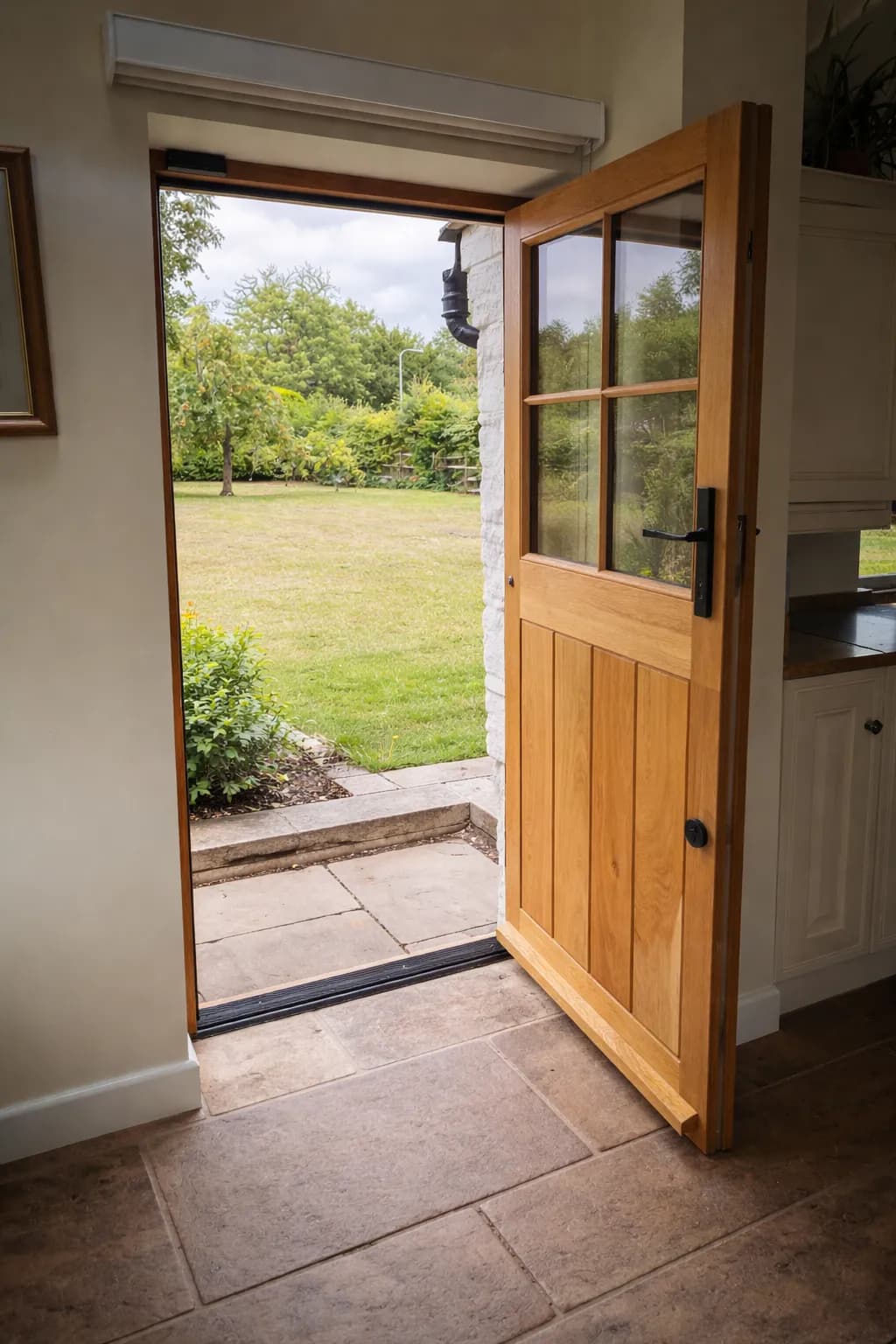
A solid oak stable door from the kitchen to the garden, six-pane glazed upper leaf over a boarded lower, on period-appropriate beeswax ironmongery.
- French Doors
Steel-look Crittall-style french doors in Accoya on the contemporary rear extension, a quieter modern register where no historic sightline is protected.
Related Reading
Read further on the thinking behind this category in the Journal.
Considering a project of your own?
Related Projects
OXFORDSHIRE
Timber-Framed Chilterns Farmhouse
Period Property — Multi-Element
WEST MIDLANDS
Oak Garden Room, Garage & Porches
Architectural Oak
WORCESTERSHIRE
Oak Windows & Bifolds
Oak Windows & Bifolds
WORCESTERSHIRE
Arched-Top Sash Windows & French Doors
Sash Windows & French Doors
Featured Elements
Whole-House Joinery | Timber Windows