

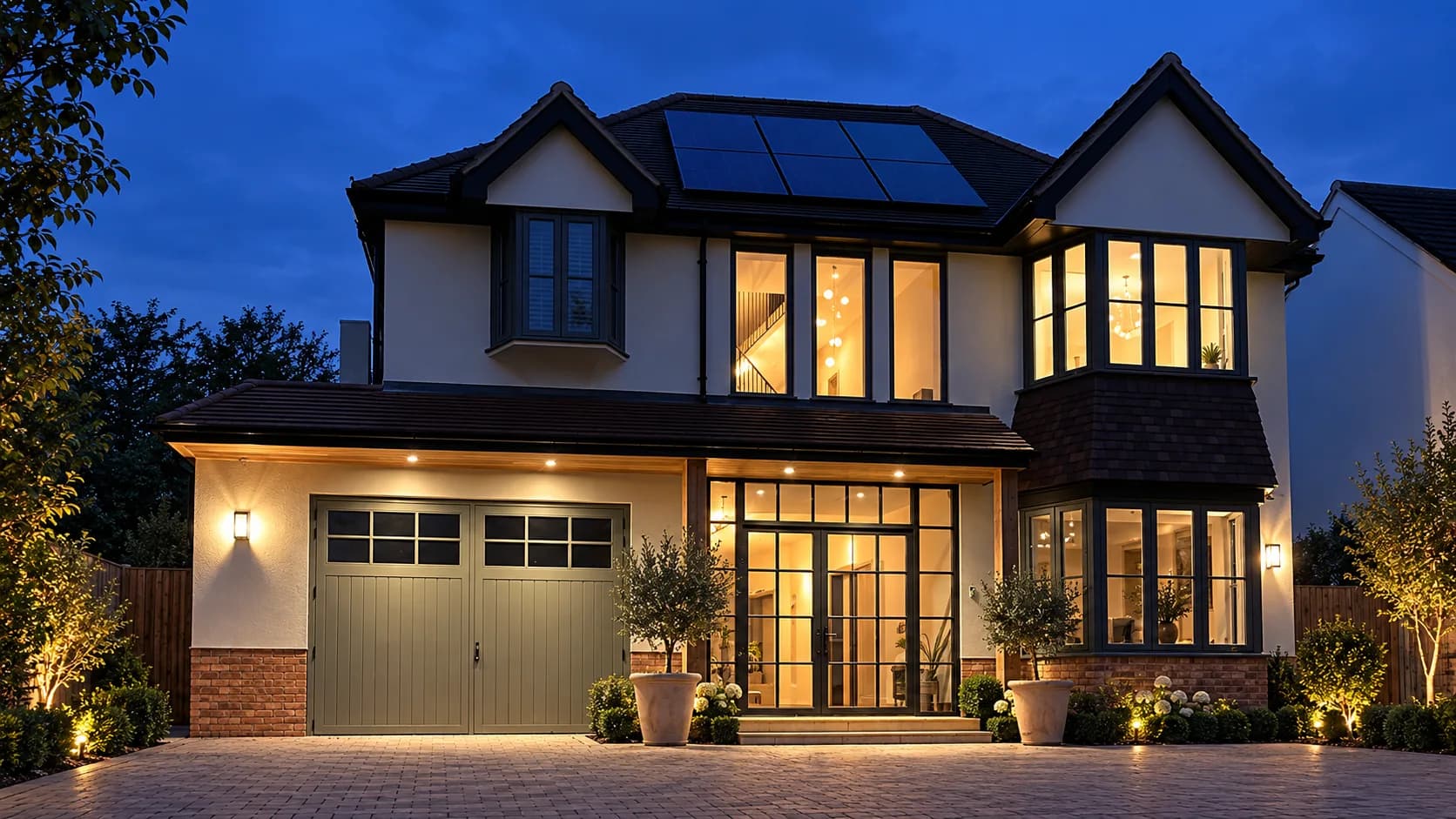
Architectural Elements
Timber Garage Doors
The largest opening on the elevation, designed as part of the building — not bought off a shelf.
- Door types
- Side-hung · sliding · bi-fold
- Timber
- Oak · Accoya · air-dried / engineered timbers
- Specified with
- Frame · structural support · weathering · ironmongery / automation
- Finish
- Designed to match the property's joinery
- Specialism
- Period & rural property; listed contexts
- Areas
- Shropshire · West Midlands · Worcestershire · Cotswolds · Cheshire
Architectural Intent
A garage door is the largest single opening on most elevations, and usually the cheapest-looking thing on the building. A standard up-and-over or a roller shutter undoes a period facade the moment it is fitted — the proportions are wrong, the material is wrong, and the eye goes straight to it. We Are Woodland designs timber garage doors that hold the elevation rather than breaking it.
The studio treats the garage as part of the architecture, not an outbuilding afterthought. Doors are drawn to the opening and the building: side-hung, sliding, or bi-fold leaves where the mechanism suits the use; framing, boarding, and ironmongery detailed to match the period and the rest of the joinery on the property. Where the garage sits alongside an oak structure or a wider package, the doors are specified to belong to it.
Across period farmhouses, rural properties, and listed buildings in Shropshire, the West Midlands, and the Cotswolds, the test is the same as for any element: a garage door that reads as part of the building, in the right timber and the right proportion — not a standard product in a heritage-coloured finish. The largest opening on the elevation is designed, not bought off a shelf.
Approach and Specification
A timber garage door is an engineering problem as much as a joinery one: it is large, heavy, exposed, and moved daily, so the mechanism and the structure have to be specified together. The studio starts with how the door needs to work — side-hung pairs, sliding, or bi-fold leaves — chosen for the opening, the headroom, the driveway, and how the door will actually be used, then designs the leaves to suit both the mechanism and the elevation.
Specification covers the whole opening: leaves, frame, lintel and structural support, weathering, threshold, and the ironmongery or automation where it is wanted. Timber and boarding are chosen for a large exposed door — stable enough not to warp across a wide leaf, detailed to shed water, and finished to last on the most weather-facing opening on the building. On a period or listed property, the door is designed to the elevation and, where it applies, to consent.
Because the door is large, small errors show: a leaf that drops, a gap that opens, a finish that fails on the sunny side. These are designed out — sized to the span, braced against movement, and detailed for the exposure — so the door works as well in ten years as on the day it was hung.
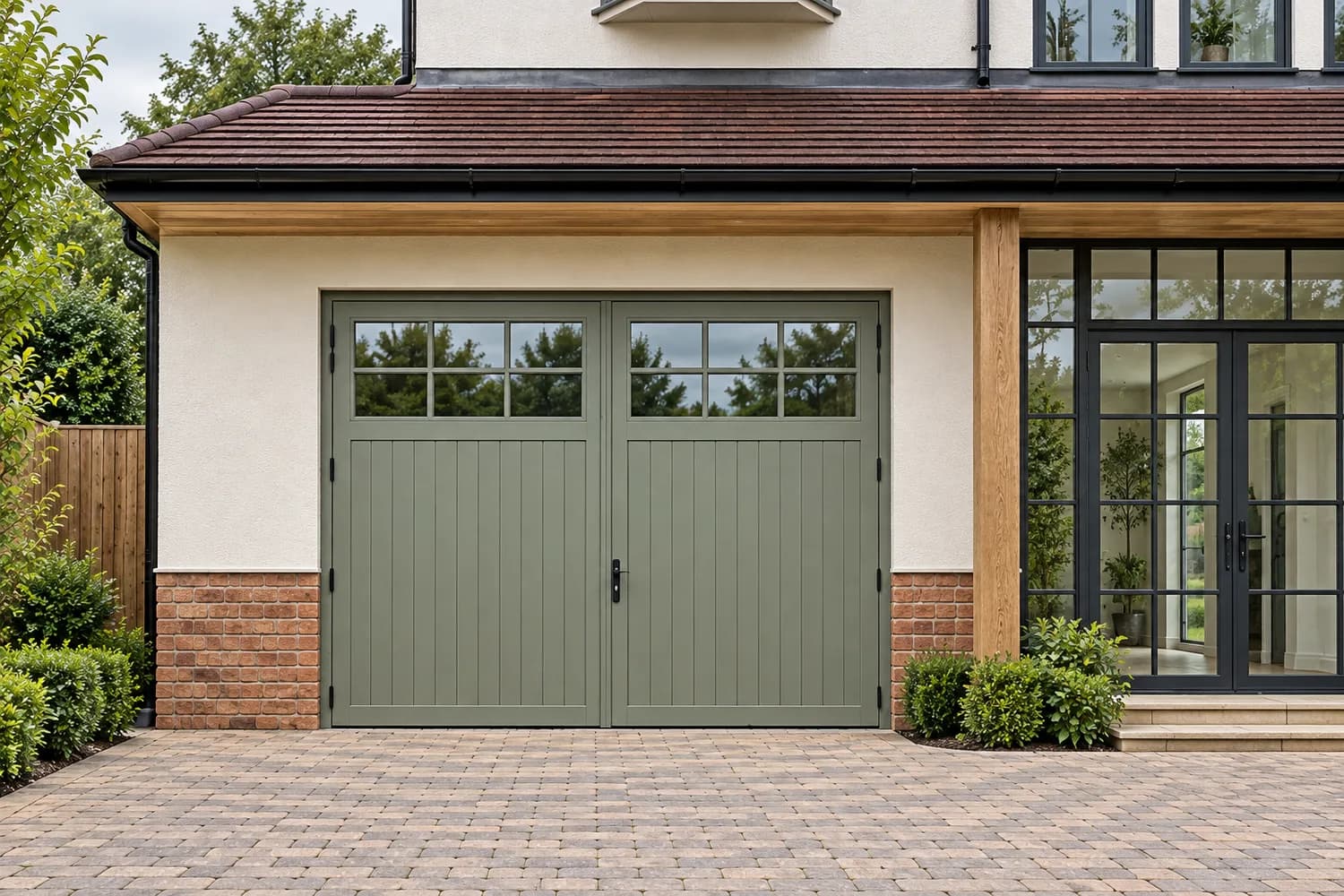
Selected Projects
Selected projects where timber garage doors were designed to the elevation — matched to the property’s joinery rather than supplied as a standard product. Project examples are being prepared from completed work.
Garage door project examples in preparation.
Material and Performance
A garage door is the largest single leaf the studio makes, so material stability matters more here than almost anywhere. Oak is specified where the door is shown and the building wants its weight and weathering; engineered and air-dried timbers are specified where a wide leaf must stay flat and true across its span; Accoya is specified where a painted finish and dimensional stability are the priority. The choice is led by the size of the leaf and the exposure of the opening, not by appearance alone.
The door is detailed for weather and for movement. Boarding and framing are arranged to shed water and resist the warp that a large, sun-facing leaf is prone to; weathering, drainage, and the threshold are designed so the opening stays sound. Where automation is wanted, the mechanism is specified to the weight and use rather than retrofitted to a door that was not drawn for it.
A timber garage door made for its opening, in a stable material and properly finished, holds its line and its looks for decades on the hardest-worked opening on the building. It is the element where doing it properly shows most, because it is the one most often done badly.
Common Questions
What types of timber garage doors do you make?
The studio makes side-hung, sliding, and bi-fold timber garage doors, chosen for the opening, the headroom, the driveway, and how the door will be used. Each is designed to the elevation and detailed to match the period and the rest of the joinery on the property, rather than supplied as a standard product.
Can timber garage doors be automated?
Yes. Where automation is wanted, the mechanism is specified to the weight and use of the door from the start, rather than retrofitted to a leaf that was not drawn for it. Side-hung, sliding, and bi-fold doors can all be automated; the right mechanism depends on how the door is designed to move.
Will a timber garage door warp or sag?
A wide leaf is the hardest test for any door, so it is engineered against it: timber chosen for stability across the span, boarding and framing arranged to resist movement, and the leaf sized and braced so it holds its line. A garage door made for its opening and properly finished keeps its shape and its swing for decades.
Do you make garage doors to match a period or listed property?
Yes. The doors are designed to the elevation — proportion, boarding, framing, and ironmongery detailed to the period and to the rest of the joinery on the building. On a listed or conservation property the design is specified to what consent allows, so the largest opening on the elevation reads as part of the building rather than against it.
What timber do you use for garage doors?
Oak where the door is shown and the building wants its weight and weathering; air-dried and engineered timbers where a wide leaf must stay flat across its span; Accoya where a painted finish and stability are the priority. The choice is led by the size of the leaf and the exposure of the opening.
Which areas do you cover?
We Are Woodland is an architectural joinery studio based near Bridgnorth in Shropshire. The studio works across Shropshire, the West Midlands, Worcestershire, the Cotswolds, and Cheshire, and elsewhere in the UK where the building justifies the journey.
Considering timber garage doors for your property? The conversation starts here.
Start a Project →