

Bespoke Timber Doors
Oak Entrance Doors
An oak front door is chosen for how it looks and how it ages, and everything else follows from that. It is also the one piece of joinery on a house that every visitor touches.
Why oak, on a front door
Oak oils beautifully. That is the plain reason clients ask for it and it is a good one — the grain comes up under oil in a way no paint reproduces and no other common hardwood matches, and the door then deepens in colour over its first years rather than simply getting older. Left unoiled it silvers instead, weathering to a soft grey that suits a stone or brick elevation and needs nothing done to it.
A front door is also the one element of a building people handle. On a house where the windows are painted and the joinery is quiet, an oak entrance is the piece that carries the material quality of the whole job at the point of arrival. That is worth spending on in a way that a rear-elevation window is not.
Movement, designed in rather than argued away
Oak moves. Anyone who tells you otherwise is selling something. Accoya moves less — measurably so — which is why the studio specifies it for painted windows where stability matters more than the timber being seen. On an oak door the honest approach is not to pretend the movement away but to build with the tolerance in mind from the drawing onward.
In practice that means section sizes chosen with a margin the timber can take up, joints cut so seasonal movement closes them rather than opens them, meeting stiles set with a gap appropriate to the season the door is hung in, and ironmongery positioned so the door still swings true when it has taken up moisture in a wet January. A door detailed this way stays square. One built as though oak were dimensionally stable will bind within a year, and it will be blamed on the timber rather than on the drawing.
Finish
Oiled or left to weather, not painted. Oil holds the colour and depth of the grain and is renewed rather than stripped — a coat every year or two on an exposed elevation, less on a sheltered one. Left bare, the door silvers and then stays there, which is the right answer on a barn conversion or an oak-framed building where the rest of the timber is doing the same thing.
Painting an oak door is possible and rarely wise. Oak is high in tannin, which bleeds through a painted finish and stains it brown from underneath, and the movement that oiling tolerates will crack paint at the joints. If the door has to be painted to match an elevation, the studio will normally suggest a different timber and say why.
Ironmongery, and the opening it hangs in
Ironmongery on an oak door is not an accessory — it is the thing in contact with the hand, and it should be specified with the door rather than chosen afterwards from a catalogue. Beeswax and antique-finished ranges suit oak because they darken alongside it; polished chrome fights it. Weight matters too: a solid oak door is heavy, and hinges, closers and locks are sized for that weight rather than for a standard leaf.
On period and listed properties the door is hung to the existing opening rather than the opening adjusted to suit a standard size. Historic openings are rarely square and almost never a stock dimension, and altering protected fabric to fit a door is both the wrong order of operations and, on a listed building, the sort of thing that needs consent nobody wants to apply for.
- Timber
- Solid European oak
- Finish
- Oiled, or left bare to silver — not painted
- Movement
- Tolerance designed in: sections, joints and meeting stiles
- Ironmongery
- Beeswax and antique finishes, sized for a heavy leaf
- Fitting
- Hung to the existing opening, not the opening altered
- Versus Accoya
- Accoya moves less and takes paint; oak is chosen to be seen
Common Questions
Why choose an oak front door?
Aesthetics, mostly, and that is a legitimate reason. Oak oils beautifully — the grain comes up under oil in a way paint cannot reproduce — and it then deepens with age rather than simply wearing. A front door is also the one piece of joinery every visitor touches, so the material quality is felt as well as seen.
Will an oak door warp or stick?
Oak moves, and a door that has not been drawn to expect it will bind. Ours are built with the tolerance in mind from the outset: sections sized with a margin, joints cut so seasonal movement closes rather than opens them, and meeting stiles set for the season the door is hung in. Built that way it stays square.
Oak or Accoya for an entrance door?
Accoya where the door is to be painted — it is more dimensionally stable and holds a painted finish far longer. Oak where the door is meant to be seen, which on a front door is usually the point. The two are not competing on quality; they answer different briefs.
Can an oak front door be painted?
It can, and it is rarely the right decision. Oak is high in tannin, which bleeds through paint and stains it from underneath, and the seasonal movement an oiled finish tolerates will crack paint at the joints. If the door must be painted, a different timber will serve better and we will say so.
How much maintenance does an oiled oak door need?
A coat of oil every year or two on an exposed elevation, less where the door is sheltered by a porch or a deep reveal. Oil is renewed rather than stripped, so maintenance is a wipe and a recoat rather than a job. Left unoiled the door silvers and needs nothing at all.
Will an oak door fit a period opening?
It is made to the opening rather than the opening made to it. Historic openings are rarely square and almost never a stock size, and on a listed building altering the fabric to accept a standard door is both the wrong way round and likely to need consent. The door is surveyed and drawn to what is there.
Selected Projects
Where oak entrance doors formed part of the commission — each linked to the full project.
 WORCESTERSHIRE
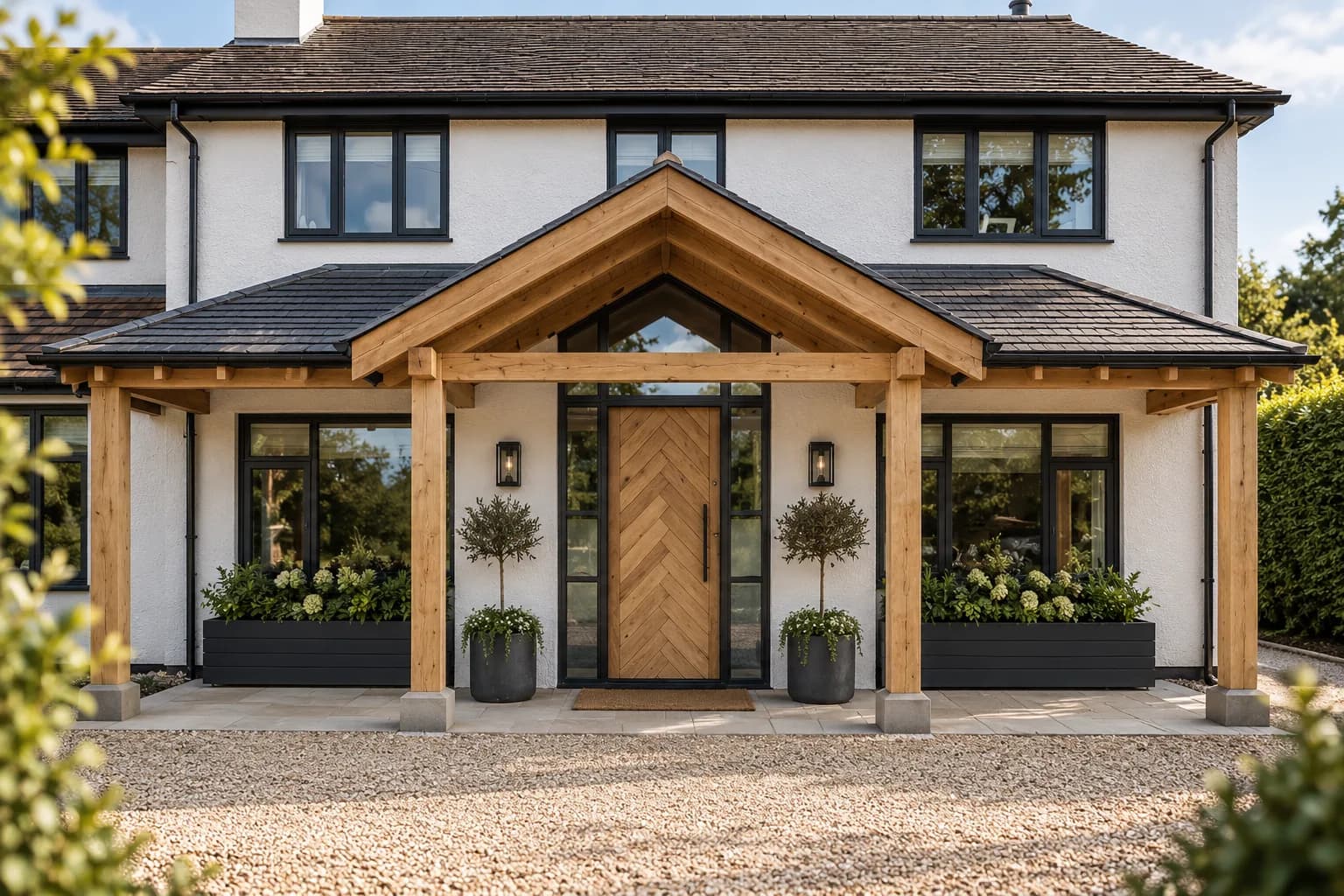
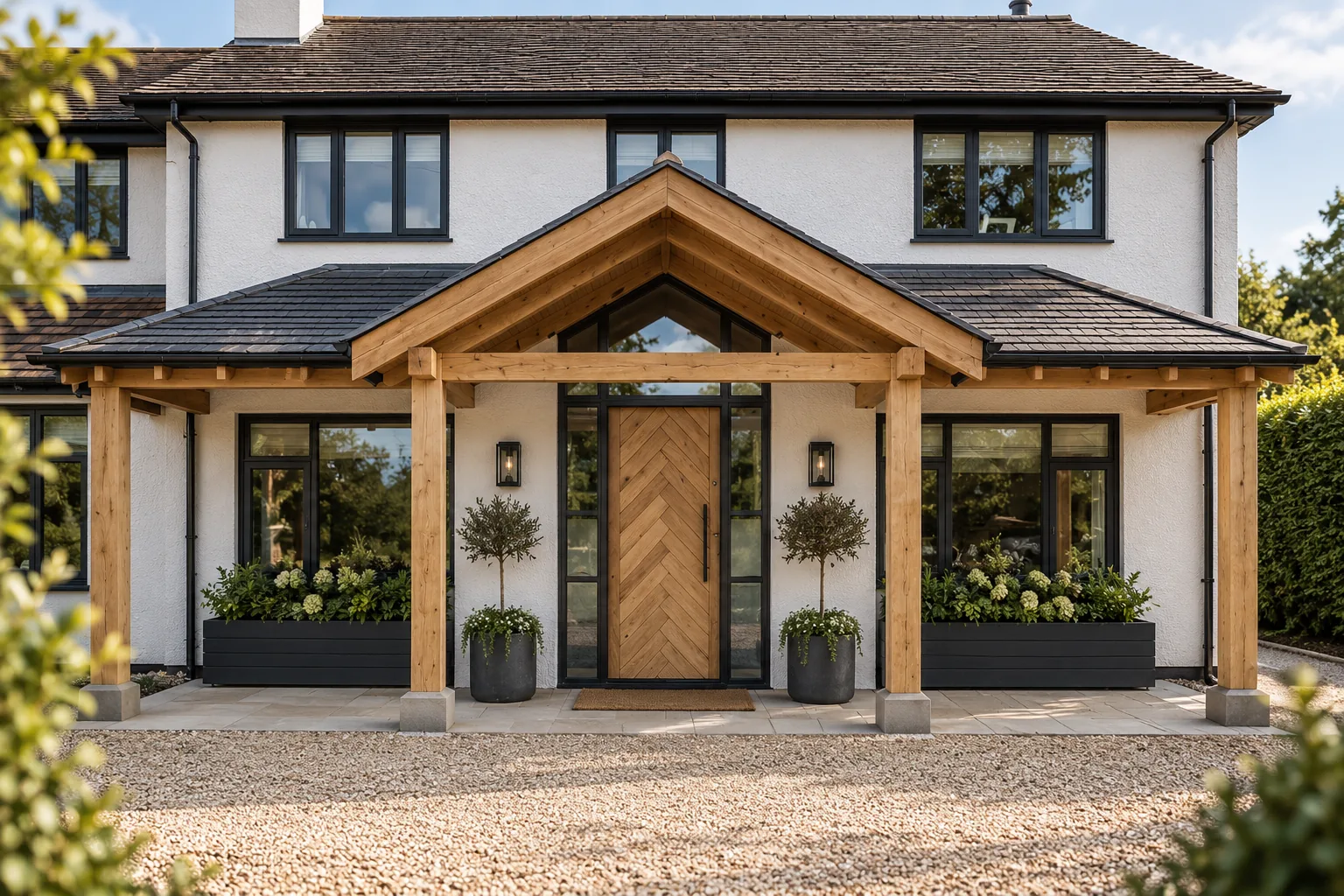
Oak Porch & Herringbone Oak Front Door
A solid European oak front door boarded in herringbone — set out as a pattern before it is made as a door, because diagonal boards fight seasonal movement from two directions and a chevron that is not jointed for it pulls out of true.
 SHROPSHIRE
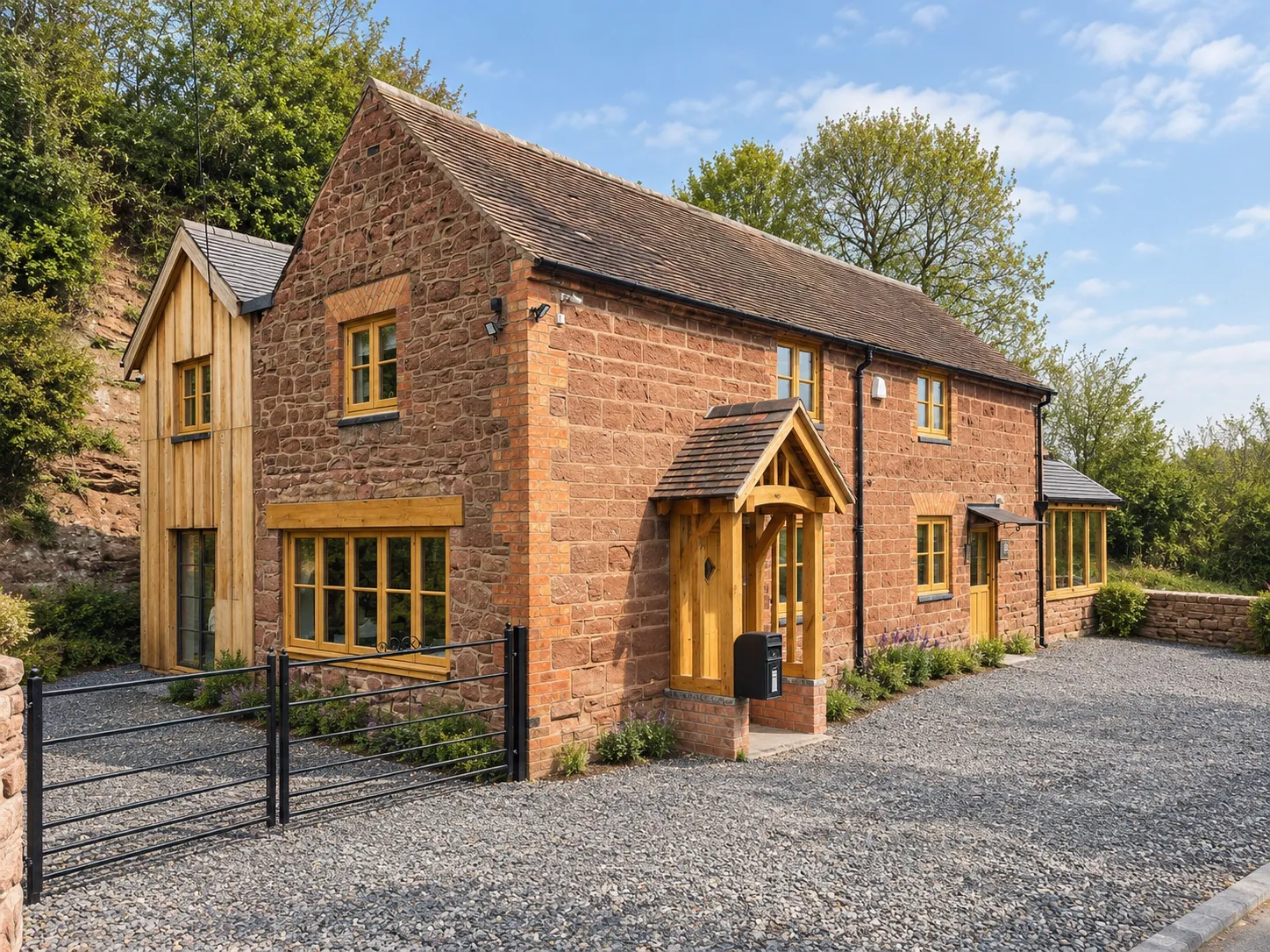
The Founder’s Own Sandstone Cottage
An oak front door with a small diamond light, hung beneath the oak porch.
 SHROPSHIRE
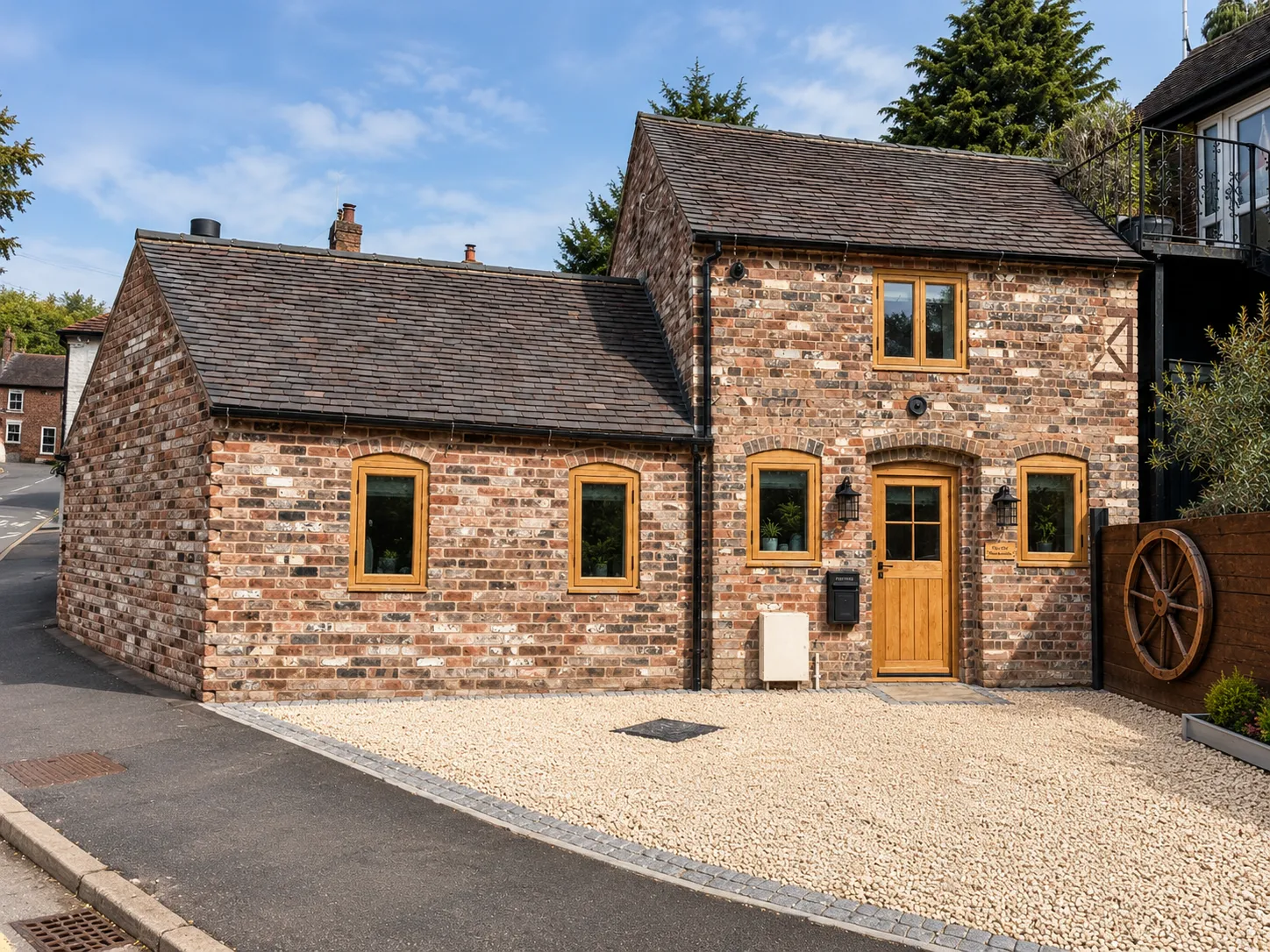
The Old Blacksmiths Cottage
An oak front door with four glazed panes above a boarded lower half, set beneath a brick arch.
Considering oak entrance doors for a period or rural property? The conversation starts here.
Start a Project →