

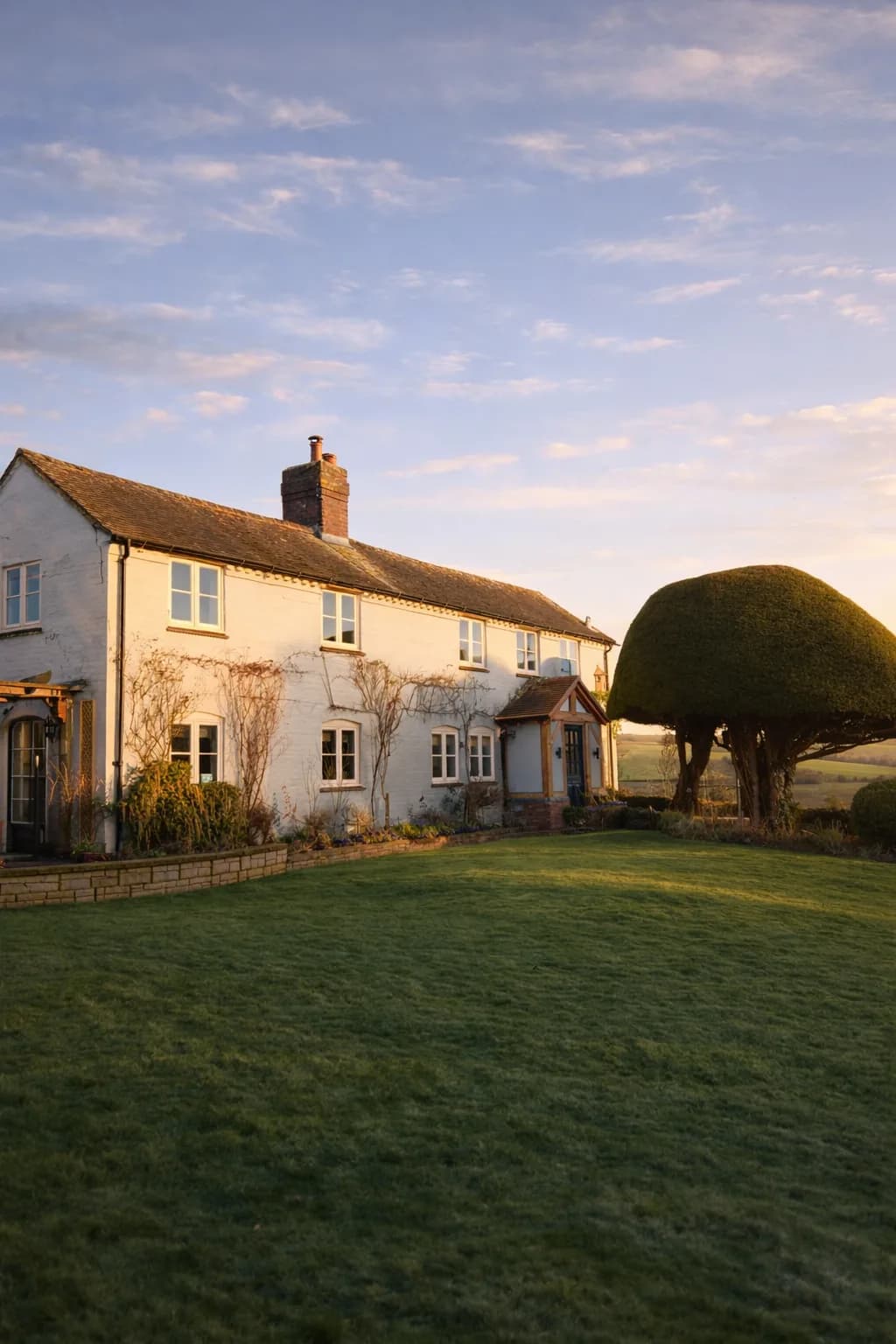
Architectural Elements
Timber Windows
Sliding sash, flush casement, and traditional casement timber windows for properties where the window is part of the architecture.
- Window types
- Sliding sash · Flush casement · Traditional casement
- Timber
- Accoya · oak · European hardwoods
- Glazing
- Traditional putty bars · slim-profile double glazing (where consent permits)
- Specialism
- Period, listed & conservation windows
- Areas
- Shropshire · West Midlands · Worcestershire · Cotswolds · Cheshire
Architectural Intent
A window is the part of a period building most often got wrong. Replace it with the wrong profile, the wrong glazing pattern, or the wrong material, and the whole elevation reads as altered — even from the street. We Are Woodland designs and makes timber windows that answer to the elevation they sit in, not to a standard range.
The studio works in three window disciplines: sliding sash, flush casement, and traditional casement — each with its own proportions, glazing-bar profiles, and rules. A Georgian sliding sash has specific glazing-bar widths and a specific meeting-rail line; a Victorian flush casement sits differently in its frame again. The window is designed from the period and the opening, not selected from a catalogue.
Across Georgian, Victorian, Edwardian, and Arts-and-Crafts properties — and the farmhouses and cottages of Shropshire, the West Midlands, and the Cotswolds — the work is the same: timber windows proportioned to the building, detailed to the period, and, on listed and conservation work, specified to what the property and its consent require. The result reads as part of the elevation, because it was designed to be.
Variants
Five window disciplines below, each treated on its own terms. Sliding sash, flush casement and traditional casement carry different proportions, glazing-bar profiles and methods of construction; oak is a material decision rather than a fourth type; and a bay is a structural assembly with windows in it. All matched to the period and the elevation rather than offered as a single product line.
 01
01Sliding Sash Windows
Period-correct sliding sash windows for heritage and listed properties.
 02
02Flush Casement Windows
Flush casement windows detailed for Victorian and period properties.
 03
03Traditional Casement Windows
Traditional timber casement windows for rural and period homes.
 04
04Oak Windows
European oak where the timber is meant to be seen — and Accoya where the window is to be painted.
 05
05Bay Windows
Canted and square bays in sash or casement — replaced as a structural job, with the elevation propped while the old bay comes out.
Selected Projects
Selected projects where timber windows were the central architectural decision — or specified alongside doors and joinery as one intervention.
- Oak Windows & BifoldsWORCESTERSHIRE · Oak Windows & Bifolds
- Arched-Top Sash Windows & French DoorsWORCESTERSHIRE · Sash Windows & French Doors
- Joinery for Oak-Framed BuildingsWEST MIDLANDS · Ongoing Trade Relationship
- The Old Blacksmiths CottageSHROPSHIRE · Holiday Let Conversion
- Oak Glazed Gable, Bifolds & WindowsSHROPSHIRE · Oak Glazed Gable & Bifolds
- Grade II Listed FarmhouseWORCESTERSHIRE · Full Joinery Package
Material and Performance
Window material logic is not door logic. A window is mostly glazing held in a slender timber frame, so section size, paint-line stability, and how the timber holds a fine profile matter more than mass. Accoya is often the default for painted period windows: it is dimensionally stable, holds a crisp paint line, and resists the movement that throws a sash out of true. Oak is specified where the elevation calls for it and where the window is shown rather than painted. European hardwoods appear where budget or conservation guidance shapes the brief.
Glazing follows the building. On listed and conservation work, traditional putty-glazed bars and appropriate glass are specified where the elevation requires them; slim-profile double-glazed units are used where conservation guidance permits them, giving period appearance with modern performance. Draught-sealing and hardware are detailed into the window, not added after.
A timber window made for its opening, in a stable material, painted and maintained, lasts decades and can be repaired rather than replaced — the opposite economy to the sealed units it is so often compared against. The architecture earns the longevity.
Common Questions
Do you make sliding sash windows for listed buildings?
Yes. Sliding sash windows are one of the studio's three window disciplines, and listed and conservation work is core to it. Sashes are specified to the period — glazing-bar profiles, meeting-rail line, and box detailing matched to what survives on the property, or to what a conservation officer has accepted on comparable buildings. Where consent requires it, the specification is like-for-like.
Can I have double glazing in a period or listed window?
Often, yes — within limits set by the building. Slim-profile double-glazed units are specified where conservation guidance permits them, giving a period appearance with modern thermal performance. Where a listed elevation requires single glazing with traditional putty-glazed bars, that is specified instead. The decision follows the property's grade and the conservation officer's guidance, not a default.
Oak or Accoya for timber windows?
Accoya is often the default for painted period windows: it is dimensionally stable, holds a crisp paint line, and resists the movement that throws a sash out of true. Oak is specified where the elevation calls for it and where the window is shown rather than painted. European hardwoods appear where budget or conservation guidance shapes the brief. The choice follows the elevation and finish, not a stock list.
What window styles do you make?
Three disciplines: sliding sash, flush casement, and traditional casement. Each carries its own proportions, glazing-bar profiles, and construction — a Georgian sliding sash is detailed differently from a Victorian flush casement. The style follows the period and the opening rather than a standard range.
Will my new windows match the existing ones on the property?
Where original windows survive, their profiles, proportions, and glazing pattern are recorded and reproduced so new and old read as one. Where detail has been lost, the specification is drawn from the period and the elevation rather than invented. The aim is windows that read as part of the building, not as replacements.
Which areas do you cover?
We Are Woodland is an architectural joinery studio based near Bridgnorth in Shropshire. The studio works across Shropshire, the West Midlands, Worcestershire, the Cotswolds, and Cheshire, and elsewhere in the UK where the building justifies the journey.
Related Authority
Authority content on window specification, conservation glazing, and period material decisions — written by the studio.
Considering architectural timber windows for your property? The conversation starts here.
Start a Project →