

Bespoke Timber Doors
Oak Bifold Doors
A bifold is not one door but four or five, hung from a track and folding against each other. Every tolerance an oak door has to allow for is multiplied by the number of leaves — which is exactly why it is worth doing properly.
Oak, on a wide opening
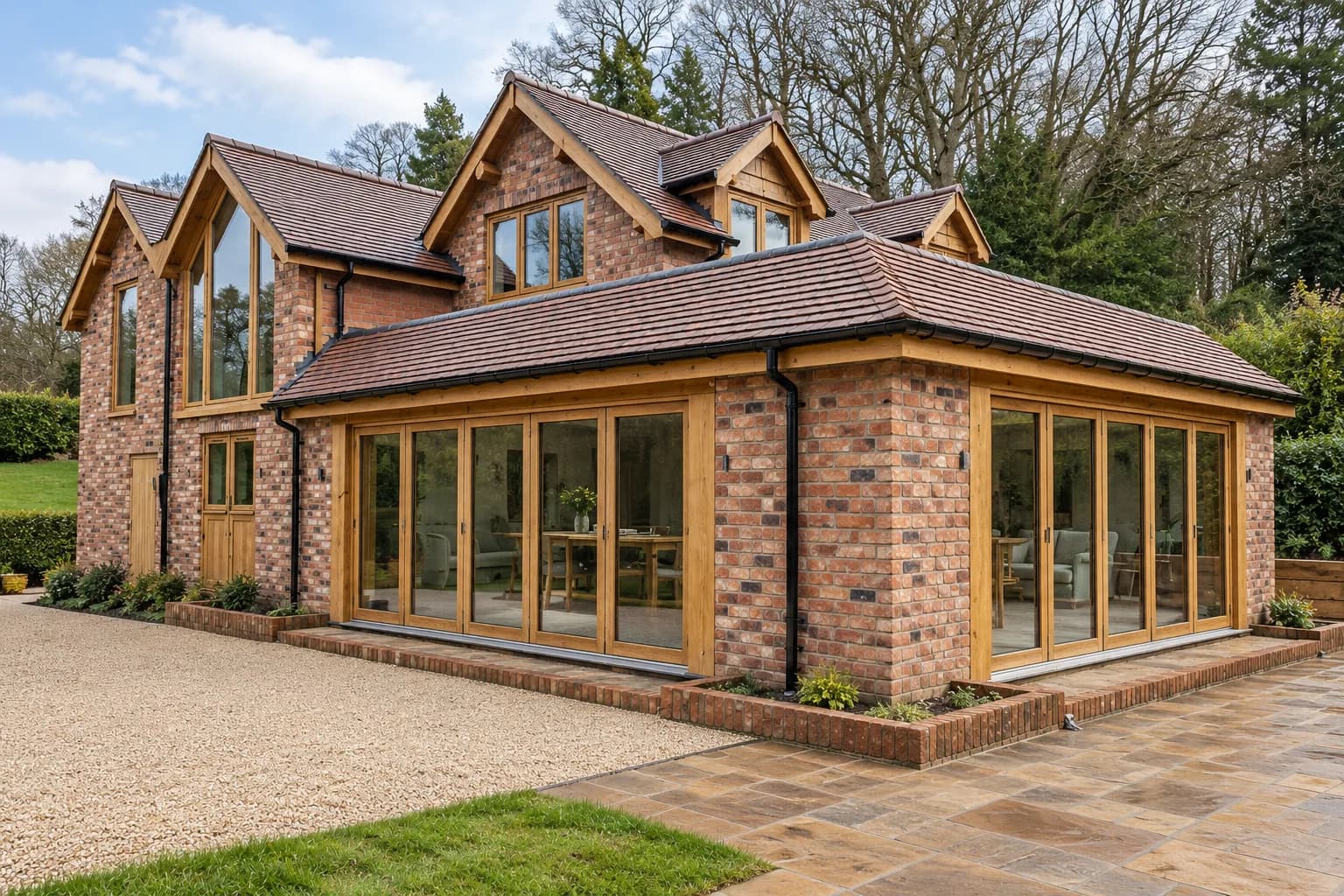
Oak is the studio’s principal material and a folding set is where it makes its strongest visual argument. Folded back, the leaves stack into a column of oak at one side of the opening; closed, the elevation reads as a run of slim vertical members against glass. Oiled, the grain carries across all of them. It is a different object from a painted aluminium-look system and it is chosen for that reason.
It also has to work every day. A bifold is the most-operated piece of joinery in a house — a door people fold open in April and closed in October and slide past a hundred times between — so it is the one where the difference between a set that was drawn properly and one that was not shows up soonest.
Movement across every leaf
A single oak door absorbs seasonal movement quietly because there is one leaf and one closing edge. A bifold has four or five leaves, as many pairs of meeting edges, a track that must stay true, and hinges carrying the weight of solid hardwood. The movement is not larger per leaf — it simply accumulates across the set, and the last leaf in the run inherits the sum of everything upstream of it.
So the tolerance is designed in from the first drawing rather than discovered on site: sections sized with a margin the timber can take, hinge positions set for the weight of oak rather than a lighter softwood, the track specified to the loaded weight of the full set, and the seasonal gap at each meeting edge set for the season the doors are hung in. Adjustable hinges are specified as standard, because a set that can be tuned in its second winter is a set that stays right for twenty years.
Where Accoya is the better answer
There is a span beyond which oak stops being the right engineering choice, and it is worth saying so. On a very wide opening with many leaves — particularly a south or west elevation that gets wet and then dries hard — the accumulated movement across the set makes a stable timber the sounder specification. Accoya moves substantially less, takes a painted finish, and on a five- or six-leaf run that difference is the difference between a set that stays tuned and one that needs attention.
That is why several of the studio’s widest folding sets are Accoya rather than oak, including a five-leaf set within a stone arch in Shropshire. It is not a lesser choice. Oak is specified where the timber is meant to be seen and the span suits it; Accoya where the span is doing the deciding. Any joiner who tells you oak is always the right answer on any width is selling oak rather than advising you.
Slim sections, and the threshold
The point of a bifold is glass, so the timber has to be kept as fine as the structure allows. Sections are drawn to the minimum the span and the glazing weight will carry, so folded back the stack is narrow and closed the elevation reads as glass held in a frame rather than as a row of doors. Oak’s strength helps here: it carries a slimmer section than softwood for the same span.
Thresholds are detailed to sit as flush as weatherproofing allows, so the floor reads through to the terrace and the opening feels like a removed wall rather than a set of doors with a step. On a period building the threshold usually has to work with an existing floor level that was never designed for it, which is a survey question before it is a product question.
- Timber
- Solid European oak — or Accoya on the widest spans
- The hard part
- Movement accumulates across every leaf in the run
- Hinges
- Adjustable as standard, sized for the weight of oak
- Sections
- Drawn to the minimum the span and glazing will carry
- Finish
- Oiled, or left bare to silver — not painted
- Threshold
- As flush as weatherproofing allows
Common Questions
Can bifold doors be made in oak?
Yes, and they are one of the better arguments for oak — folded back the leaves stack into a column of grain, and closed the elevation reads as slim oak against glass. The work is in allowing for movement across every leaf rather than just one.
Do oak bifolds go out of adjustment?
Any folding set moves over its life; the question is whether it can be tuned. Adjustable hinges are specified as standard, sections are sized with a margin, and the track is specified to the loaded weight of the full set. A set that can be adjusted in its second winter is a set that lasts.
Is oak or Accoya better for a wide bifold?
On a very wide opening with many leaves, Accoya. Movement accumulates across the run and the last leaf inherits the sum of it, so a dimensionally stable timber is the sounder engineering choice — several of the studio’s widest sets are Accoya for exactly that reason. Oak where the timber is meant to be seen and the span suits it.
How slim can the sections be?
As slim as the span and the weight of glass will carry, which is the whole point of the exercise. Oak helps: it carries a finer section than softwood over the same span, so the stack is narrower folded back and the elevation reads as glass rather than as a row of doors.
Will a bifold work on a period property?
Often, but the threshold is the question. Period floor levels were never set with a flush threshold in mind, and getting the floor to read through to the terrace usually needs resolving on survey rather than assuming from a product specification. On listed elevations there is a consent question as well.
Selected Projects
Where oak bifold doors formed part of the commission — each linked to the full project.
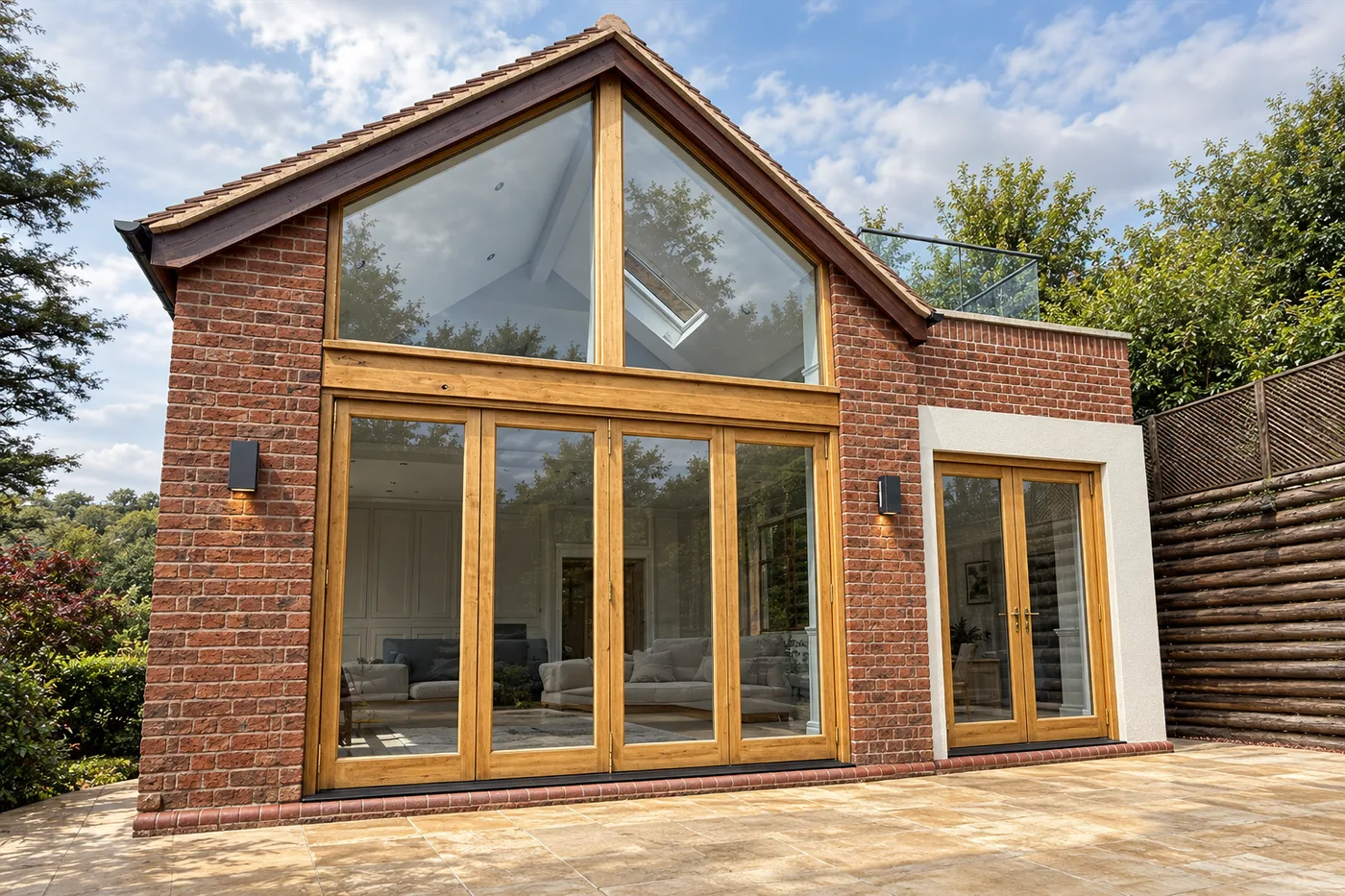 SHROPSHIRE
Oak Glazed Gable, Bifolds & Windows
Two sets of oak bifolds beneath the glazed gable, with the structural steel that spans the opening concealed between them and the apex frame above.
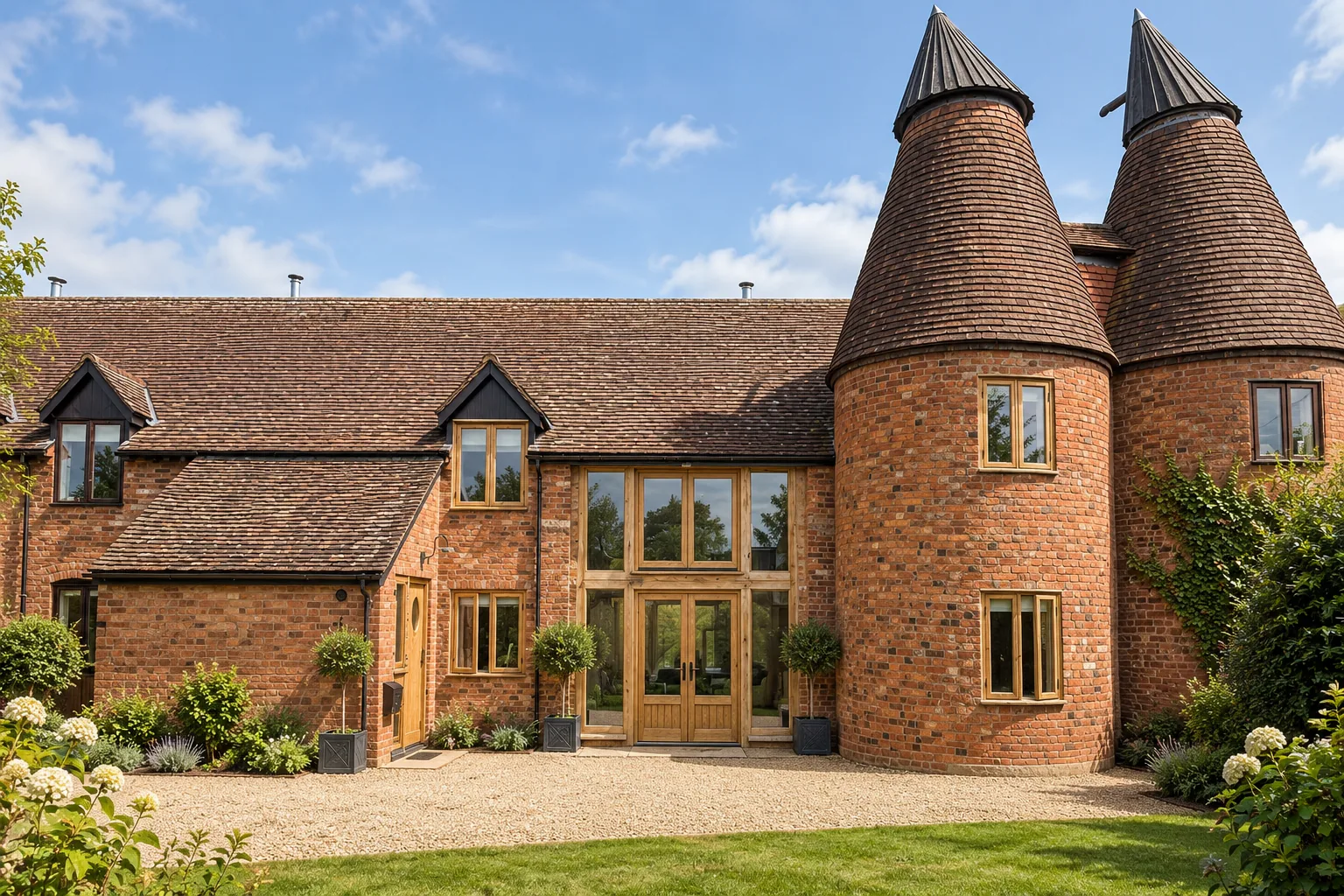 WORCESTERSHIRE
Oak Windows & Bifolds
A run of oak bifolds set under the brick cart arch with larch boarding closing the head above, folding fully back so the room reaches the terrace while the arch still reads as an arch.
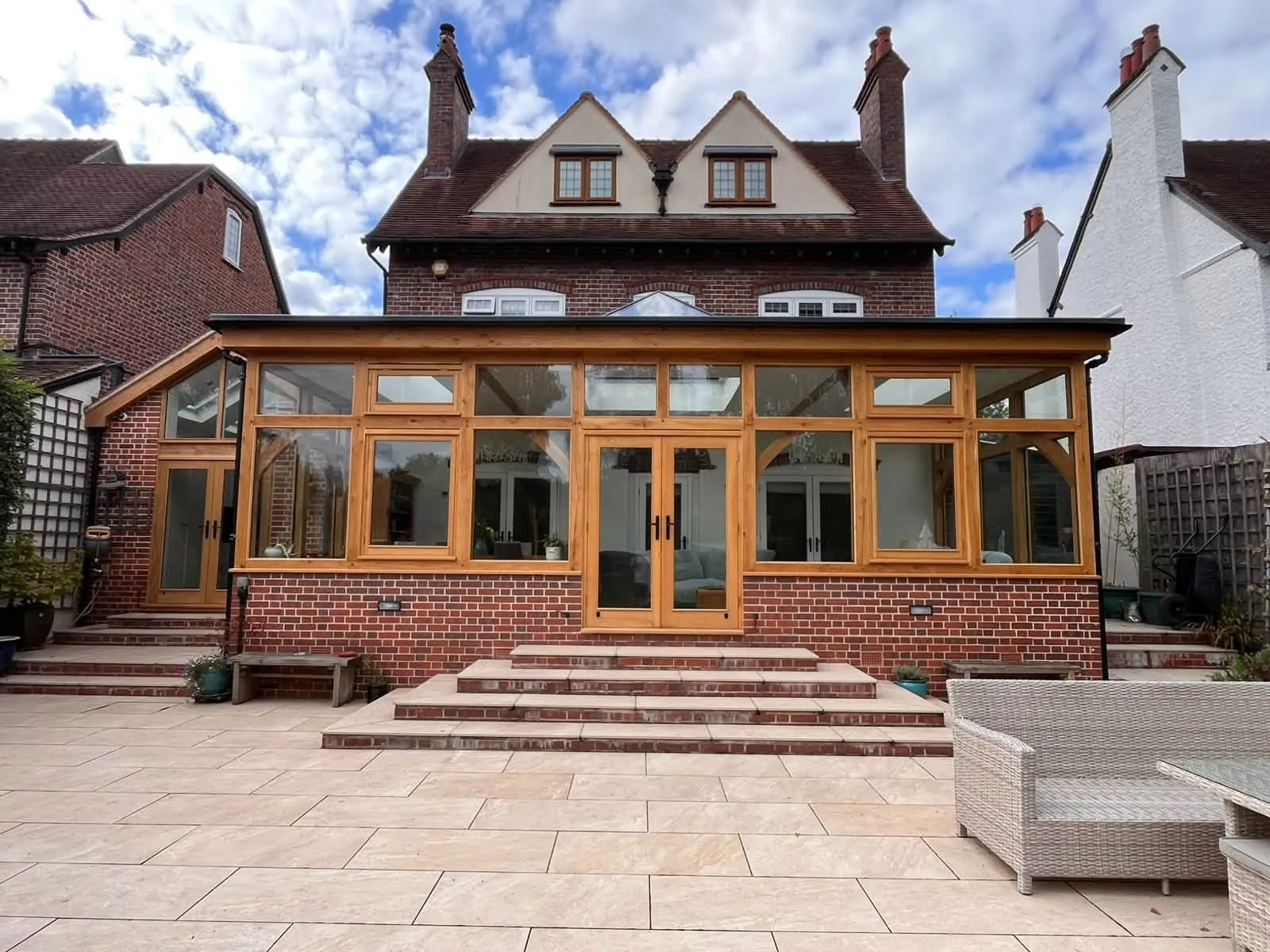 WEST MIDLANDS
Joinery for Oak-Framed Buildings
Oak bifolds filling the wide bays an oak frame makes possible, detailed so the run of leaves does not fight the rhythm of the posts behind it.
Considering oak bifold doors for a period or rural property? The conversation starts here.
Start a Project →