

Oak Frame Buildings
Oak Porches
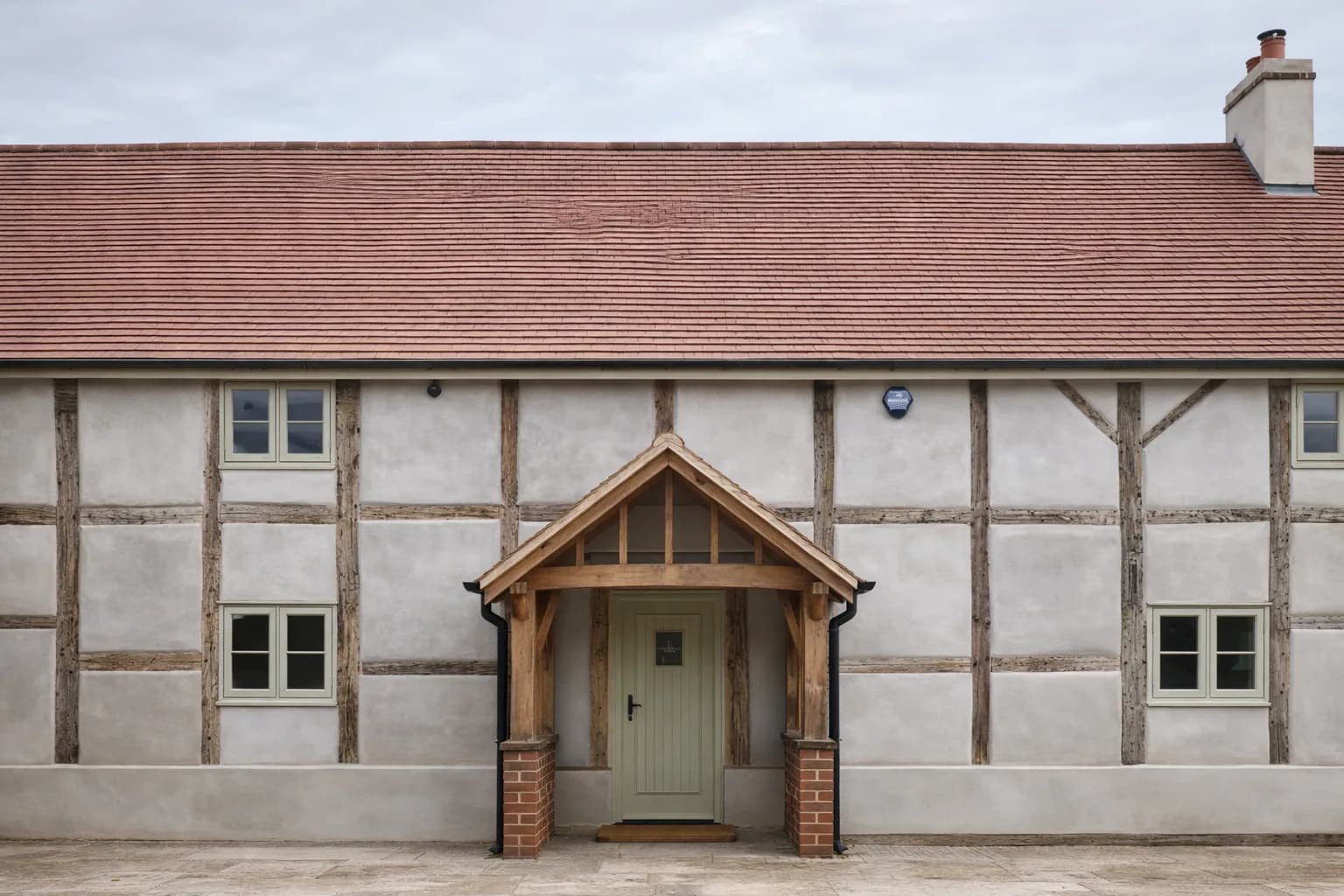
An oak porch belongs to a house when it is built the way the house’s own structure was: green oak, pegged joints, and proportion taken from the elevation rather than from a catalogue.
Green oak, traditionally jointed
A traditional oak porch is built from green oak — freshly sawn, worked while it is stable to cut and joint — and held together by its joinery rather than by steel. The members are cut with mortise-and-tenon joints and drawn tight with riven oak pegs, so the frame tightens as the oak dries. As it seasons it develops shakes and silvers to grey; both are the expected behaviour of a green oak frame, not faults. The frame should be doing the work it appears to be doing.
Proportion and permission
A porch changes the front of a house, so it is proportioned to the building — its scale set against the door and the elevation, its pitch matched to the roof. On many properties a modest porch is permitted development, but the limits fall away on a listed building, within its curtilage, or in a conservation area or AONB, where consent is required and the design is judged against the building’s significance. The porch is specified and, where needed, agreed with the planning or conservation officer before it is made.
- Suits
- Period & rural property entrances
- Material
- Green oak (freshly sawn) — the structural default
- Jointing
- Mortise-and-tenon drawn with riven oak pegs; no steel where timber will do
- Expected
- Shakes and silvering as the oak seasons — not faults
- Planning
- Permitted-development limits; consent on listed / curtilage / conservation / AONB
Common Questions
Why are oak porches built from green oak?
Green oak — freshly sawn and still high in moisture — is strong, easier to work and joint, and tightens onto its pegs as it dries. It is the traditional structural choice for an oak frame.
Is it normal for an oak porch to crack as it dries?
Yes. Green oak develops shakes — surface splits along the grain — and silvers to grey as it seasons. This is expected behaviour, not a fault, and a frame designed by someone who understands oak accommodates it.
Do I need planning permission for an oak porch?
Often a modest porch is permitted development, but the limits fall away on a listed building, within its curtilage, or in a conservation area or AONB, where listed building consent or planning permission is required.
How is an oak porch frame held together?
With mortise-and-tenon joints drawn tight by riven oak pegs, carrying loads through timber-to-timber connections, with concealed steel used only where a span genuinely requires it.
Selected Projects
Where oak porches formed part of the commission — each linked to the full project.
 WORCESTERSHIRE
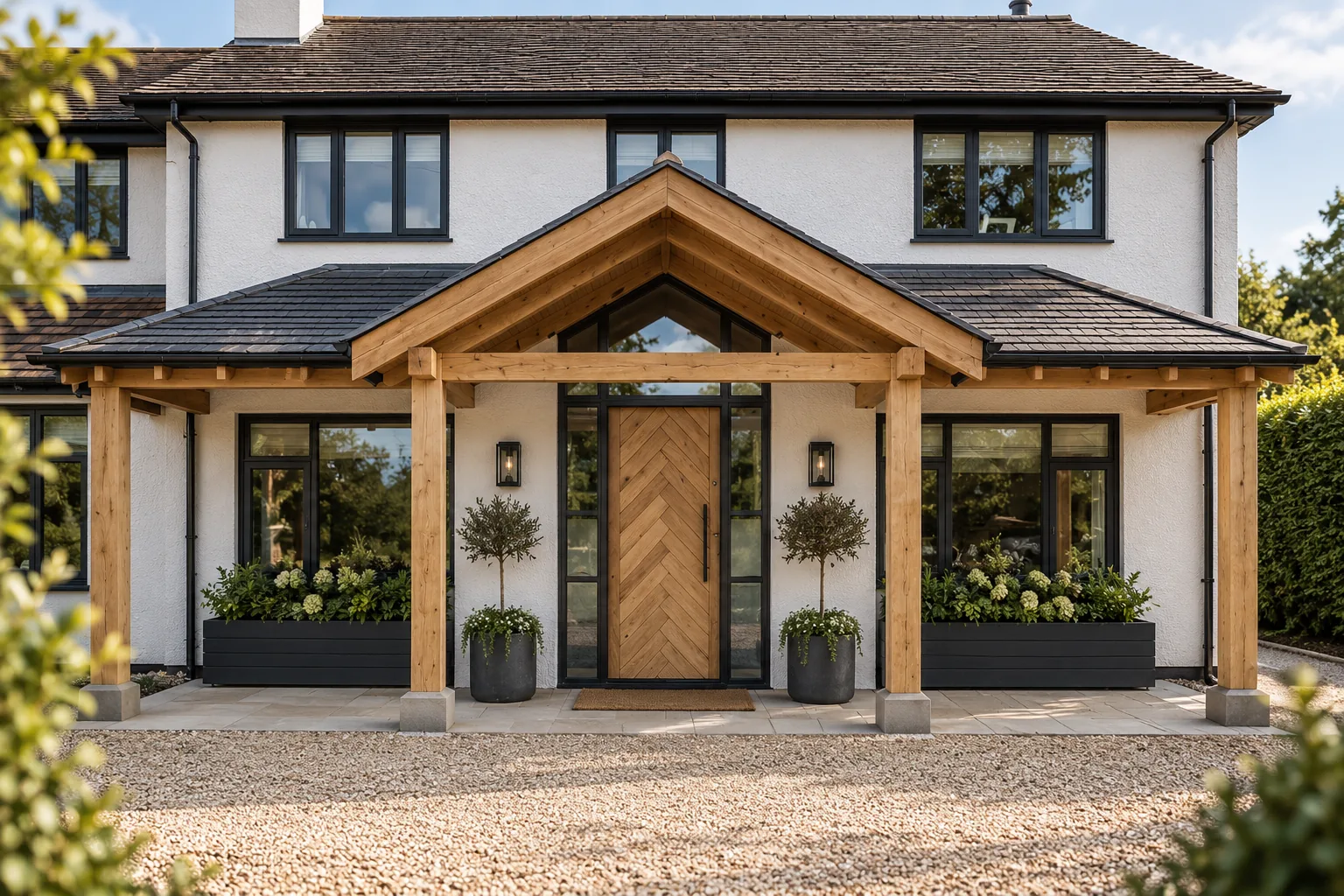
Oak Porch & Herringbone Oak Front Door
Two green oak porches, drawn for two different buildings. At the house, a colonnade running the width of the frontage under a standing-seam roof with a gabled bay raised over the entrance. At the cottage, a single gable on brick piers — short frontage, so no colonnade, and the piers set on the same brick as the wall in front of them.
 CHESHIRE
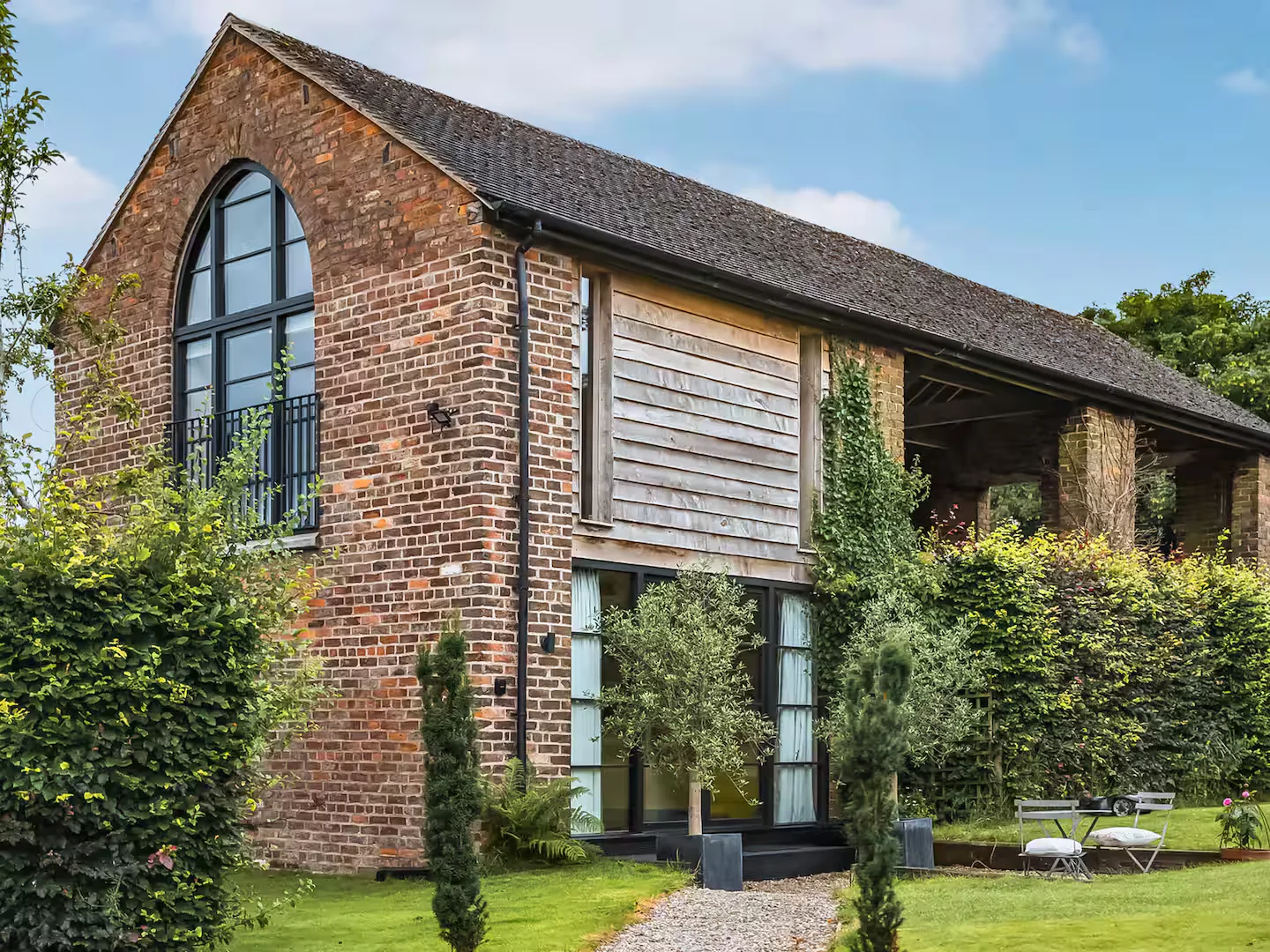
Steel-Look Accoya Glazing
An oak porch framed at the farmhouse entrance, giving the door somewhere to sit and the arrival some depth, in the same timber and left in the same finish.
 WEST MIDLANDS
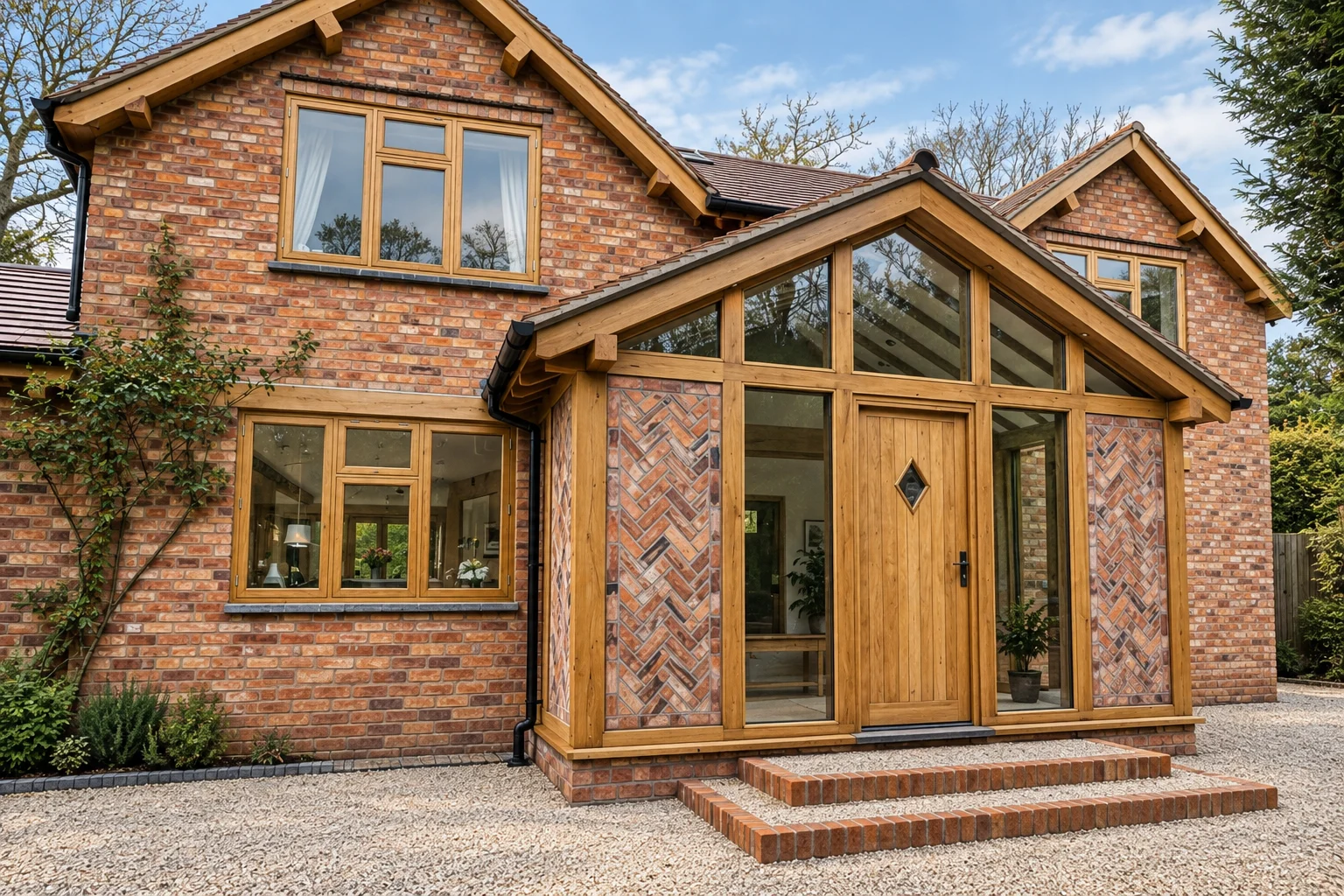
Oak Garden Room, Garage & Porches
Two oak porches — a gabled one to the house, glazed and fully enclosed with apex glazing and herringbone brick panels flanking the opening, and a second for the annexe in the same timber and detailing.
Considering oak porches for a period or rural property? The conversation starts here.
Start a Project →