

Limestone west, chalk south, river towns between
West Oxfordshire is Cotswold: the same oolitic limestone, stone-slate roofs and mullioned tradition that runs through Gloucestershire, in towns like Burford, Chipping Norton and Witney. That tradition is covered in full in the studio’s guide to architectural joinery in the Cotswolds, and this article treats it as read rather than repeating it.
South and east the geology changes to chalk, and so does the building. The Vale of White Horse and the Chilterns fringe build in brick and flint, frequently in combination — flint panels with brick dressings and quoins — and in clunch, the soft chalk stone that is workable but weathers poorly and is therefore usually reserved for sheltered or internal work. It produces a quite different elevation from the Cotswold one: more texture, more colour variation, and openings that are usually brick-dressed even when the wall is not brick.
Along the Thames — Henley-on-Thames, Abingdon, Wallingford, Dorchester — the towns are substantially Georgian, prosperous river trade having paid for a good deal of eighteenth-century rebuilding. And Oxford itself is a case apart: collegiate limestone at its centre, Victorian Gothic in the North Oxford suburbs, and industrial-era terraces in Jericho and East Oxford.
Mullions, sashes, and North Oxford Gothic
In the west the window is the Cotswold stone mullion, with slim casements or leaded lights within a masonry opening that will not move. In the chalk south it is more often a timber casement or a sash in a brick-dressed opening, with the brick doing the framing work that stone does further west.
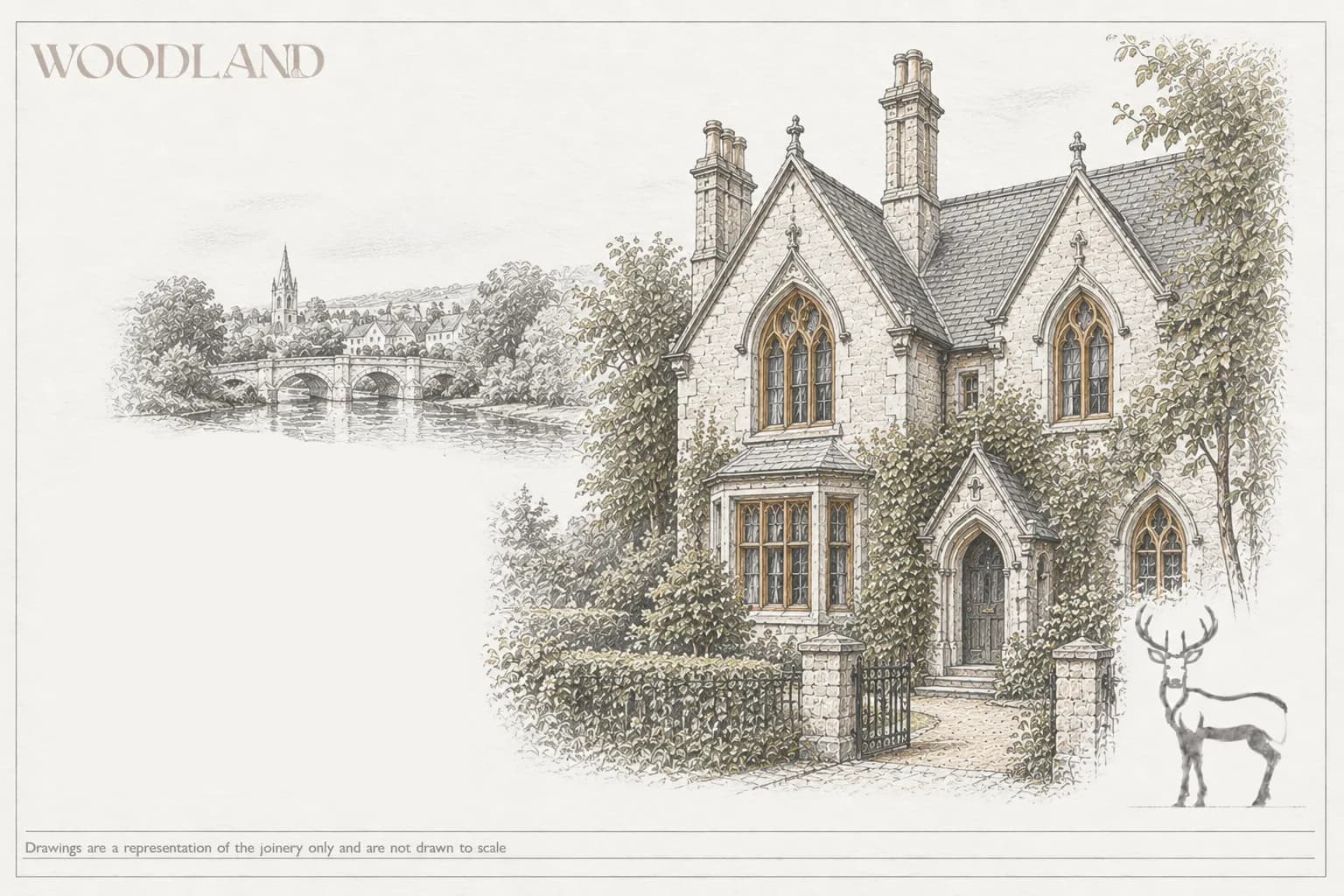
In the Georgian river towns it is the sash proper, well proportioned and finely barred, in streets consistent enough that neighbours are a reliable specification guide. And in North Oxford it is something genuinely distinctive: the Victorian Gothic Revival villas built largely for newly-married dons after the celibacy rules relaxed, carrying pointed and mullioned windows, casements rather than sashes, and a deliberate medievalism that has nothing to do with the vernacular around it. Treating a North Oxford villa as though it were Georgian is a common and very visible error.
The conservation context
Oxford’s central conservation area is among the largest and most tightly controlled in the country, and the city adds something most places do not: protected view corridors defending the historic skyline, which constrain what can be done to roofscape and upper elevations well beyond the usual conservation-area tests. Listing density in the centre and in the colleges is extremely high, and much of it is above Grade II.
Beyond the city, the western towns sit within the Cotswolds National Landscape and carry the same dense conservation-area and listing pattern as their Gloucestershire neighbours. The Chilterns National Landscape covers part of the south-east. Henley, Abingdon, Wallingford, Woodstock and Burford all carry conservation areas, and Article 4 directions are common enough across the county that the permitted development right to replace windows with similar-appearance units should be treated as questionable rather than assumed. As always, listing is settled on the National Heritage List for England and Article 4 status with the district council — and in this county both are worth settling before anything is measured, let alone ordered.
Materials that belong
West of the county, oak in stone openings and glazing that acknowledges a deep reveal, exactly as in the Cotswolds. South and east, painted timber against brick and flint — the flint-and-brick tradition is a painted-joinery tradition, and bare or stained frames sit badly against it. In the Georgian towns, painted sashes to the street’s own pattern. In North Oxford, painted or stained hardwood depending on the individual villa, which is one of the few places in the studio’s area where stained timber can be correct.
Glazing carries the usual hierarchy with one Oxford-specific point: in the city centre and the colleges, historic glass survives in quantity, and the presumption towards retention is correspondingly strong. Secondary glazing is very often the right answer there. In the county’s later stock, slim-profile double glazing in genuine timber bars is workable, judged case by case.
Doors and entrances across the county
The western towns take oak plank-and-ledge or framed, ledged and braced doors in stone surrounds, as the Cotswolds do throughout. The chalk south and the Georgian river towns take painted panelled doors — six panels in the eighteenth-century stock, with fanlights above and, on the better houses, a cased and pedimented surround. North Oxford takes Gothic Revival doors: heavier, often boarded or with pointed panel heads, and ironmongery to match.
The failure mode across Oxfordshire is importing between its own regions. A Cotswold oak door on a Henley Georgian townhouse, or a painted six-panel door on a Burford cottage, are both perfectly good doors placed in a tradition that never used them. The county’s regions are close enough together that this happens more often here than elsewhere.
Working across Oxfordshire
The studio works across the county — Burford, Chipping Norton, Witney and the western Cotswold towns, Woodstock, Oxford itself, and the Thames-side towns of Henley, Abingdon and Wallingford. The western half shares its building tradition directly with the studio’s Gloucestershire and Cotswold work, and the same specification logic carries across the county boundary without adjustment.
Oxfordshire’s practical characteristic is scrutiny. Between the city’s conservation regime, the Cotswolds National Landscape in the west and the Chilterns in the south-east, a high proportion of the county’s period stock sits under some form of additional control. That makes early establishment of the constraints unusually valuable — in this county more than most, what is permitted shapes the design rather than merely approving it.
What gets it right regionally
Place the building in the county’s geology before its period: limestone west, chalk and flint south, Georgian river town, or Oxford itself. Follow the Cotswold guide in the west without modification. Paint against brick and flint. Read the street in the Georgian towns. Recognise North Oxford Gothic for what it is rather than defaulting to sash.
Settle listing, conservation area, Article 4 status and — in the city — the view corridors before drawing anything, because in Oxfordshire the constraints are more likely to determine the answer than anywhere else in the studio’s area. Where the building is listed, the studio’s guide to specifying joinery for a Grade II listed building sets out the evidence a consent application is built on.