

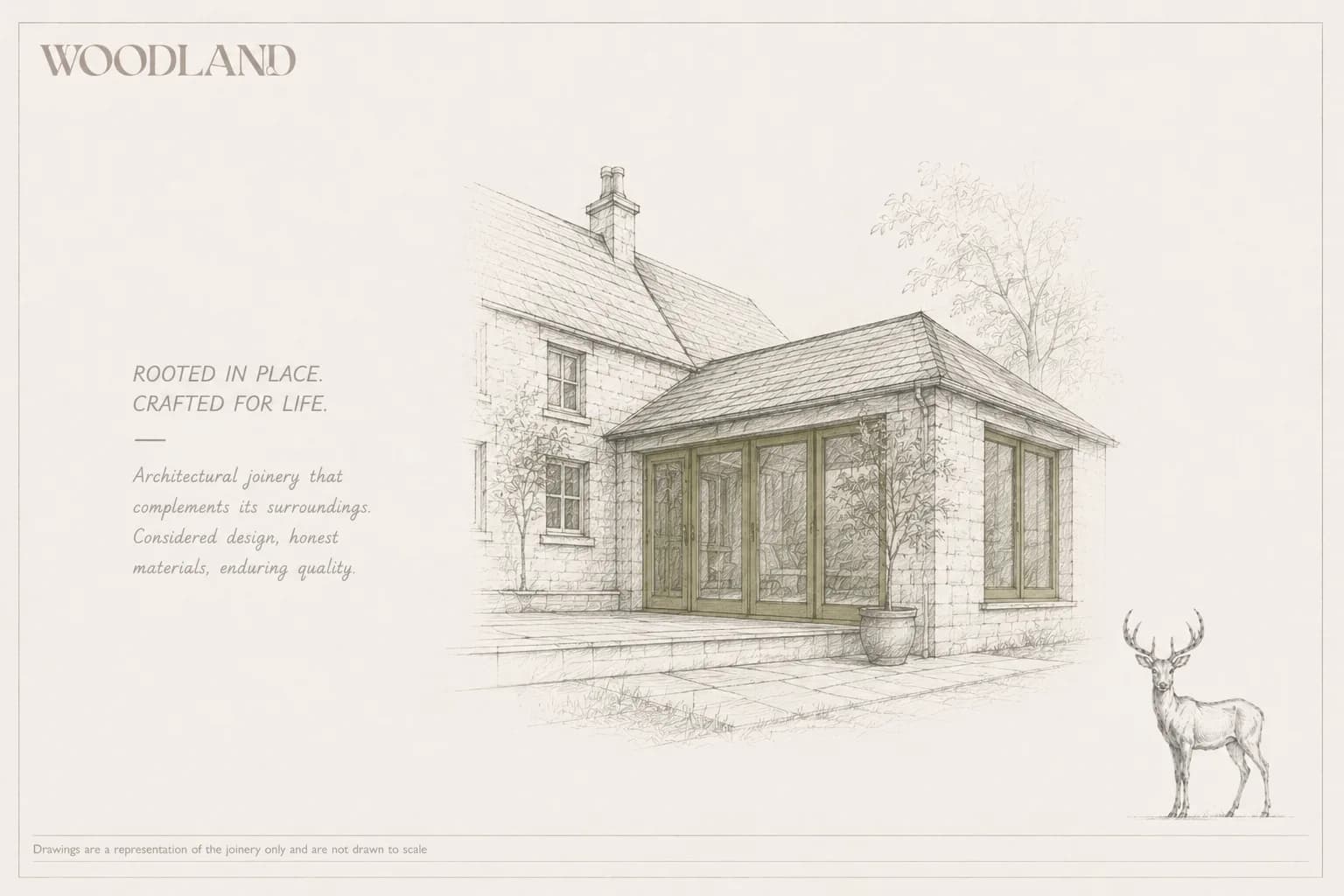
The Cotswold vernacular
The Cotswolds reads as a single architectural place because, for centuries, it was built from one material: the local oolitic limestone, quarried and laid by builders working to a shared vocabulary. The honey-coloured stone, the steep stone-tiled roofs, the gabled elevations, and the consistent proportions give the region its unmistakable coherence — and they set the terms for everything that goes into the buildings, joinery included. Timber in a Cotswold property is read against the stone: it has to sit within it correctly, not fight it.
Stone mullion windows and the joinery within them
The defining Cotswold window is the stone-mullioned window — openings divided by upright stone mullions, often with a hood mould or dripstone above, carrying the glazing within the stone. Historically these held leaded lights: small panes (quarries) set in lead cames, sometimes openable as a side-hung casement within the stone surround. Getting joinery right in a Cotswold property means understanding that the stone is the frame, and the timber and lead sit within it — slim casements, leaded or slim-bar glazing, and sections fine enough not to overwhelm the mullion. A chunky modern casement in a stone-mullioned opening looks as wrong here as anywhere in England.
The conservation context
Few parts of the country are as comprehensively protected. Most of the region lies within the Cotswolds National Landscape (the AONB), the towns and villages are densely covered by conservation areas, and listed buildings are everywhere — not only the manors and churches but ordinary cottages and farm buildings. The practical consequence is that joinery work across the Cotswolds is, more often than not, governed by listed building consent, conservation-area control, or AONB considerations. Specifying for a Cotswold property means specifying for that context from the start — the same discipline that governs any conservation work.
Materials that belong
The materials that suit Cotswold joinery are the ones the region was built with. Oak — for doors, frames, and structural work — sits naturally against the limestone and weathers to a grey that belongs beside it. Glazing follows the building: leaded lights where they are original or appropriate, slim-bar or conservation glazing in casements, and traditional single glazing where a significant elevation requires it. Finishes are kept appropriate to the property and the planning context. The aim is joinery that looks as though it was quarried from the same decision as the rest of the house.
Doors and entrances in the Cotswold idiom
The Cotswold door tradition runs to plank-and-ledge and framed, ledged, and braced doors in oak, often set within a stone surround with a dripstone over, and fitted with ironmongery appropriate to the period and the building. As with the windows, proportion and section matter more than ornament: a door that sits correctly in its stone opening, in the right timber, with the right hardware, reads as part of the building. The idiom is restrained, and the restraint is the point.
Working across the Cotswolds
The Cotswolds spans several counties and a string of towns and villages with the same architectural character — among them Cirencester, Stow-on-the-Wold, Chipping Campden, Burford, Tetbury, Northleach, and Moreton-in-Marsh — alongside the rural farmhouses and cottages between them. The studio works across the region and the counties around it, where the building and its setting justify the journey. The common thread is not a postcode but a building type: stone, mullion, oak, and a planning context that expects joinery to respect all three.
What gets it right regionally
Joinery gets the Cotswolds right when it answers to the vernacular and the planning context together: slim casements and appropriate glazing within stone mullions, oak doors proportioned to their stone openings, finishes and ironmongery suited to the building, and a specification written from the start for the listed, conservation-area, or AONB setting most Cotswold properties sit in. The region rewards restraint and accuracy — joinery that belongs to the stone, not joinery applied to it.