

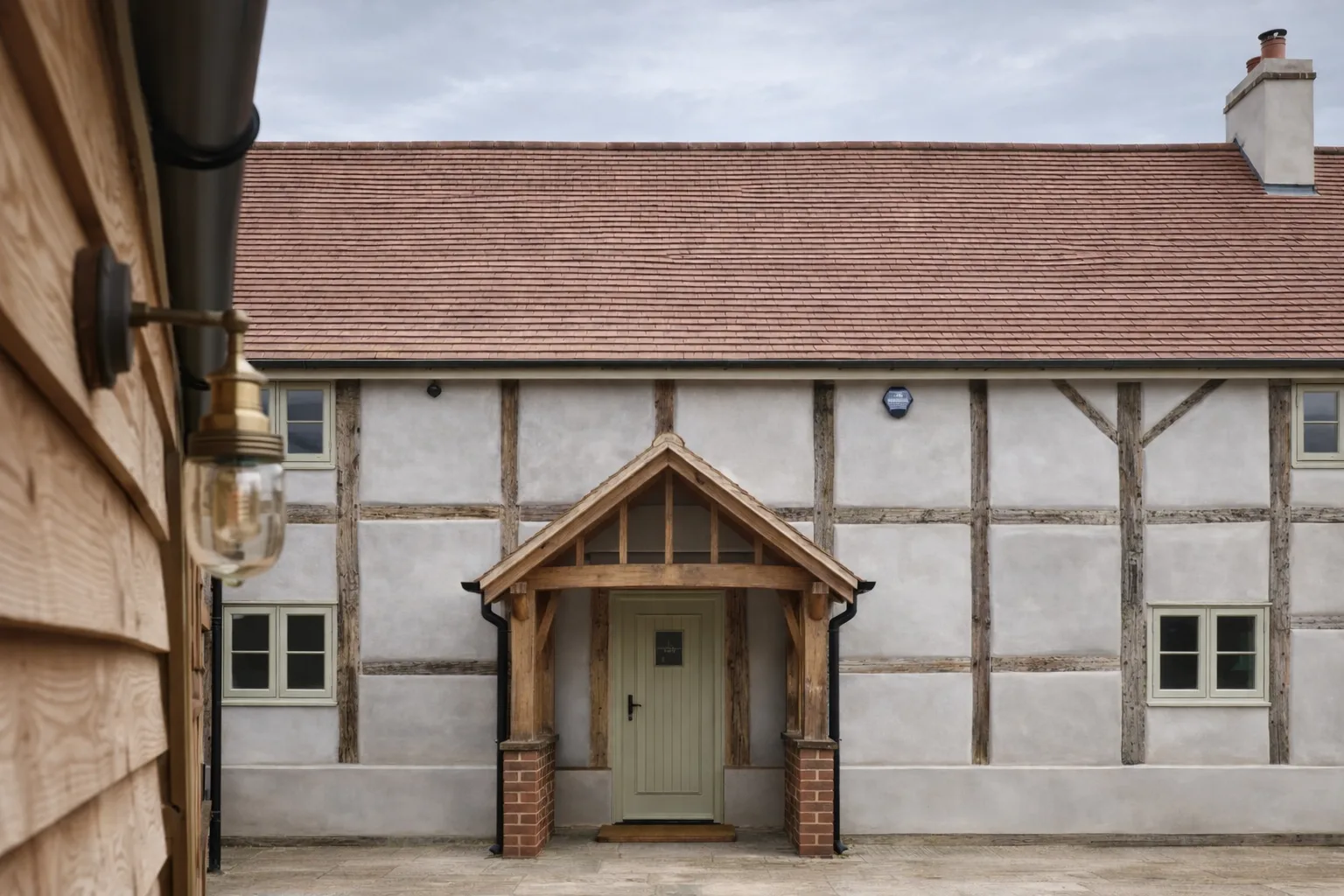
Architectural Elements
Heritage & Period Joinery
Specialist joinery for listed buildings, conservation contexts, and period properties where the work is governed by what already exists.
The Specialism
Heritage and period joinery is the studio’s specialism within its Period & Rural practice — the work where the building, not the brief, sets the terms. A listed building or a significant period property carries decisions made a century or more ago: proportion, profile, glazing pattern, the way a door meets its frame. The work is governed by what already exists.
This is not period-style joinery. Period style reproduces an appearance; heritage joinery answers to the actual building — its grade, its consent conditions, its surviving detail. On a Grade II listed elevation the question is not “what looks right” but “what is permitted, what matches the original, and what a conservation officer will accept.” The studio reads the building first: surviving mouldings, historic glazing, the joinery that remains, and the planning context around it.
Across Georgian, Victorian, Edwardian, and Arts-and-Crafts properties — and the farmhouses, cottages, and rural manors of Shropshire, the West Midlands, and the Cotswolds — the discipline is the same. Like-for-like specification where consent requires it. Period-correct moulding profiles taken from what survives. Conservation-grade glazing where the property demands it. The result reads as continuous with the building, not applied to it.
Conservation Approach
Most listed building joinery is decided before anything is made. Listed building consent governs what can change and what must be retained, and the joinery specification has to satisfy it before manufacture begins. The studio works to that sequence rather than against it.
In practice this means engaging the conservation officer early, as a collaborator rather than an obstacle. Where a door, window, or run of joinery is being replaced, the studio specifies like-for-like: the same profiles, the same glazing pattern, the same method of construction — matched to surviving examples on the property, or to what the officer has already accepted on comparable buildings. Where original detail survives, it is recorded and reproduced. Where it has been lost, the specification is drawn from the period and the elevation, not invented.
Glazing is specified to the building: traditional putty-glazed bars and appropriate glass where a listed elevation requires it, slim-profile units where conservation guidance permits them. Ironmongery is selected to the period, and is often where a conservation officer’s attention lands first. Literacy in planning and consent is part of the specification, not an afterthought to it.
The aim throughout is consent the first time, and joinery the building keeps for decades — work that reads as if it was always part of the property, because it answers to the property.
Gallery
- Specialism
- Heritage & conservation joinery (within Period & Rural)
- Contexts
- Listed buildings · conservation areas · period & rural property
- Periods
- Georgian · Victorian · Edwardian · Arts-and-Crafts
- Approach
- Like-for-like specification · early conservation-officer engagement · period-correct profiles
- Elements covered
- Doors · windows · entrance structures · oak structures · full packages
- Areas
- Shropshire · West Midlands · Worcestershire · Cotswolds · Cheshire
Listed Building & Period Project Examples
Selected heritage and period property commissions from the studio’s portfolio — including listed building consent work specified like-for-like and cleared first time.
- Arched-Top Sash Windows & French DoorsWORCESTERSHIRE · Sash Windows & French Doors
- Oak Glazed Gable, Bifolds & WindowsSHROPSHIRE · Oak Glazed Gable & Bifolds
- Grade II Listed FarmhouseWORCESTERSHIRE · Full Joinery Package
- Bespoke Period Entrance Door with Leaded GlazingWEST MIDLANDS · Period Entrance Door Set
- Black Country Living MuseumWEST MIDLANDS · Museum Conservation Joinery
Element Categories Within Heritage Work
Heritage work rarely sits in one category. A listed building project often runs across doors, windows, and structural oak at once, specified together so the whole reads as one intervention. These are the element categories the studio works in most often within heritage and conservation contexts.
- Bespoke Timber DoorsPeriod door specification for listed building work
- Timber WindowsSash and casement work for conservation contexts
- Grand EntrancesHeritage-appropriate entrance assemblies
- Oak Frame BuildingsSympathetic oak structures for period properties
- Whole-House JoineryWhole-property joinery for listed building projects
Common Questions
Do you work on listed buildings?
Yes. Listed building work is the studio's specialism. The work begins with listed building consent, which governs what can change and what must be retained; the joinery is specified to satisfy it before manufacture. The studio engages the conservation officer early and specifies like-for-like where consent requires — matched to surviving detail on the property, or to what has already been accepted on comparable buildings.
Will you work with our conservation officer?
Yes — directly, and from the start. The studio treats the conservation officer as a collaborator rather than an obstacle: agreeing profiles, glazing, and ironmongery against what the officer has accepted on equivalent properties, so the specification clears consent the first time. Ironmongery is often where a conservation officer's attention lands first, so it is specified to the period from the outset.
Can you match the existing windows and doors on a period property?
Yes. Where original joinery survives, its profiles, proportions, and glazing pattern are recorded and reproduced like-for-like. Where detail has been lost, the replacement is drawn from the period and the elevation rather than invented. The aim is joinery that reads as continuous with the building — matched, not approximated.
What is the difference between heritage joinery and period-style joinery?
Period style reproduces an appearance. Heritage joinery answers to the actual building — its listed grade, its consent conditions, and its surviving detail. On a listed elevation the question is not what looks right in general, but what is permitted, what matches the original, and what a conservation officer will accept. The building sets the terms, not a catalogue.
Do you make conservation-grade glazing for listed buildings?
Glazing is specified to the building. Traditional putty-glazed bars and appropriate glass are used where a listed elevation requires them; slim-profile units are specified where conservation guidance permits them. The decision follows the property's grade and the conservation officer's guidance, not a default.
Which periods and properties do you work on?
Georgian, Victorian, Edwardian, and Arts-and-Crafts properties, alongside farmhouses, cottages, and rural manors — listed buildings, conservation-area properties, and significant period homes. The studio works across Shropshire, the West Midlands, Worcestershire, the Cotswolds, and Cheshire, and elsewhere in the UK where the building justifies the journey.
Related Authority
Authority content on listed building consent, conservation specification, and period material decisions — written by the studio.
Considering joinery work for a listed building or period property? Alongside the joinery itself, the studio prepares the drawings and joinery specification a listed building consent application is judged on. The conversation starts here.
Start a Project →