

Architectural Elements
Grand Entrances
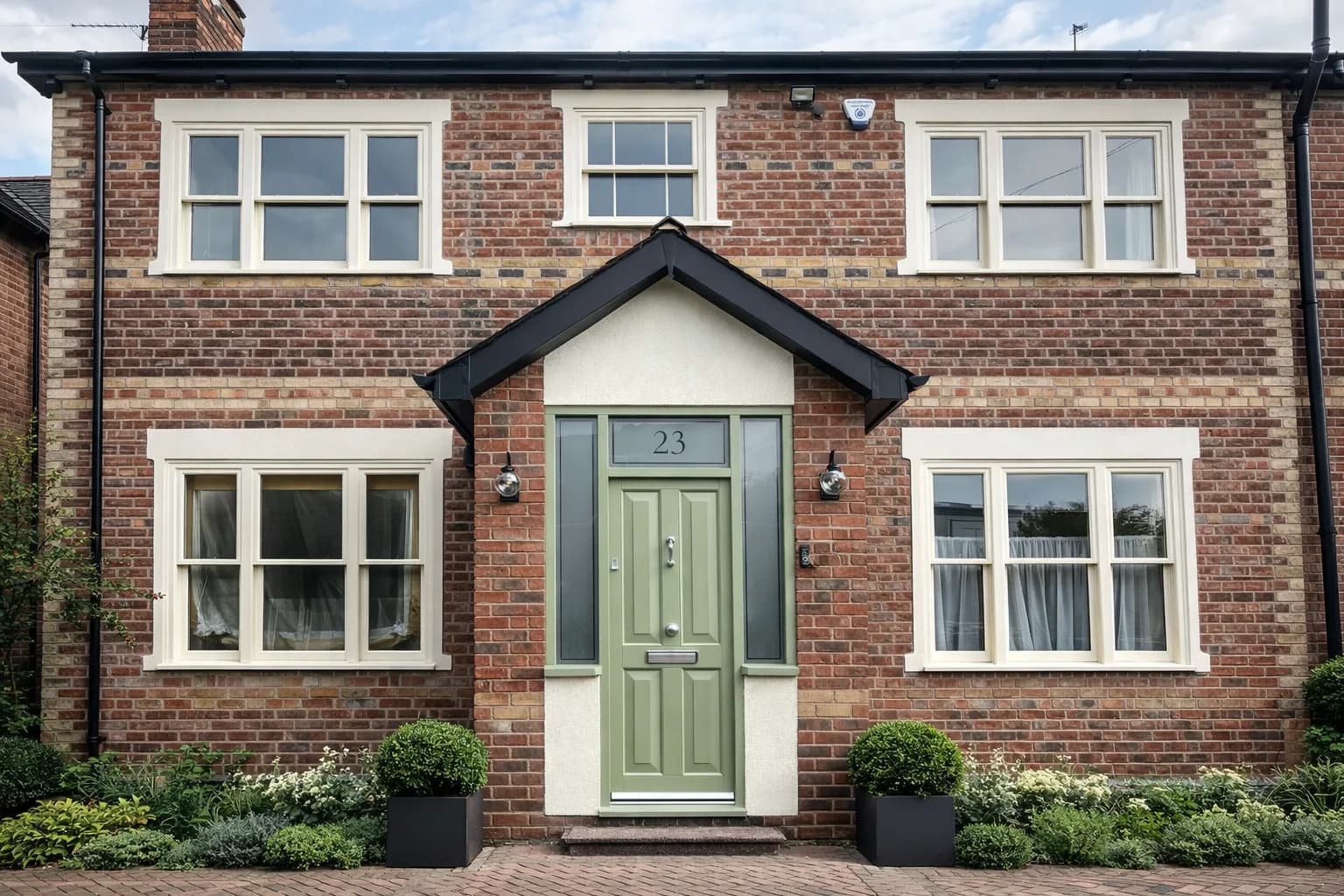
Oversized timber entrance assemblies for properties where the entrance is the architecture.
- Scope
- The entrance as one designed assembly
- Includes
- Door · surround · porch/canopy · glazing · fanlight/sidelights · ironmongery
- Pricing
- Set by the assembly and the building, not a price list
- Material
- Oak · Accoya · European hardwoods
- Specialism
- Period, listed & rural entrances
- Areas
- Shropshire · West Midlands · Worcestershire · Cotswolds · Cheshire
Architectural Intent
On most houses the entrance is a door in a hole. On the houses We Are Woodland works with, the entrance is the architecture — the first and most-read elevation, and the part of the building that sets what the rest will be judged against. An Entrance Structure is the studio’s term for the entrance treated at that level: not a door alone, but the whole assembly that frames arrival.
That assembly varies with the building. It might be an oversized timber door set within a designed surround; a porch or canopy that gives the entrance depth and shelter; a glazed entrance that brings light into a hallway; or an oak-framed entrance that carries real structure. What they share is scale and intent — the entrance is composed as a piece of architecture, proportioned to the elevation rather than dropped into it.
The studio designs and makes entrance structures for period and rural properties across Shropshire, the West Midlands, and the Cotswolds, and for listed buildings where the entrance is part of what is protected. Door, frame, surround, glazing, ironmongery, and any porch or canopy are drawn together, so the entrance reads as one designed event rather than a door with parts added around it.
Approach and Specification
An entrance structure is designed from the elevation in, not the door out. The studio starts with how the entrance sits in the facade — its proportion against the building, the line of the threshold, the depth and shelter the approach needs — and works back to the door and its surround. On a period or listed property, the historic entrance and what consent allows shape the design from the first sketch.
Scope is set early: whether the structure is a door and designed surround, a porch or canopy, a glazed entrance, or an oak-framed assembly, and how it meets the wall, the roof, and the ground. Everything the entrance touches is specified together — door leaf, frame, fanlight or sidelights, glazing, weathering, threshold, and ironmongery — so there are no parts left to reconcile on site.
Because an entrance structure is larger and more visible than a single element, the detailing is where it succeeds or fails: the junctions with masonry, the weathering above the door, the way light meets timber on a glazed entrance. These are resolved in the design, drawn for the specific opening, and made to suit the building. The entrance is the introduction to the house, and it is specified as one.
Gallery
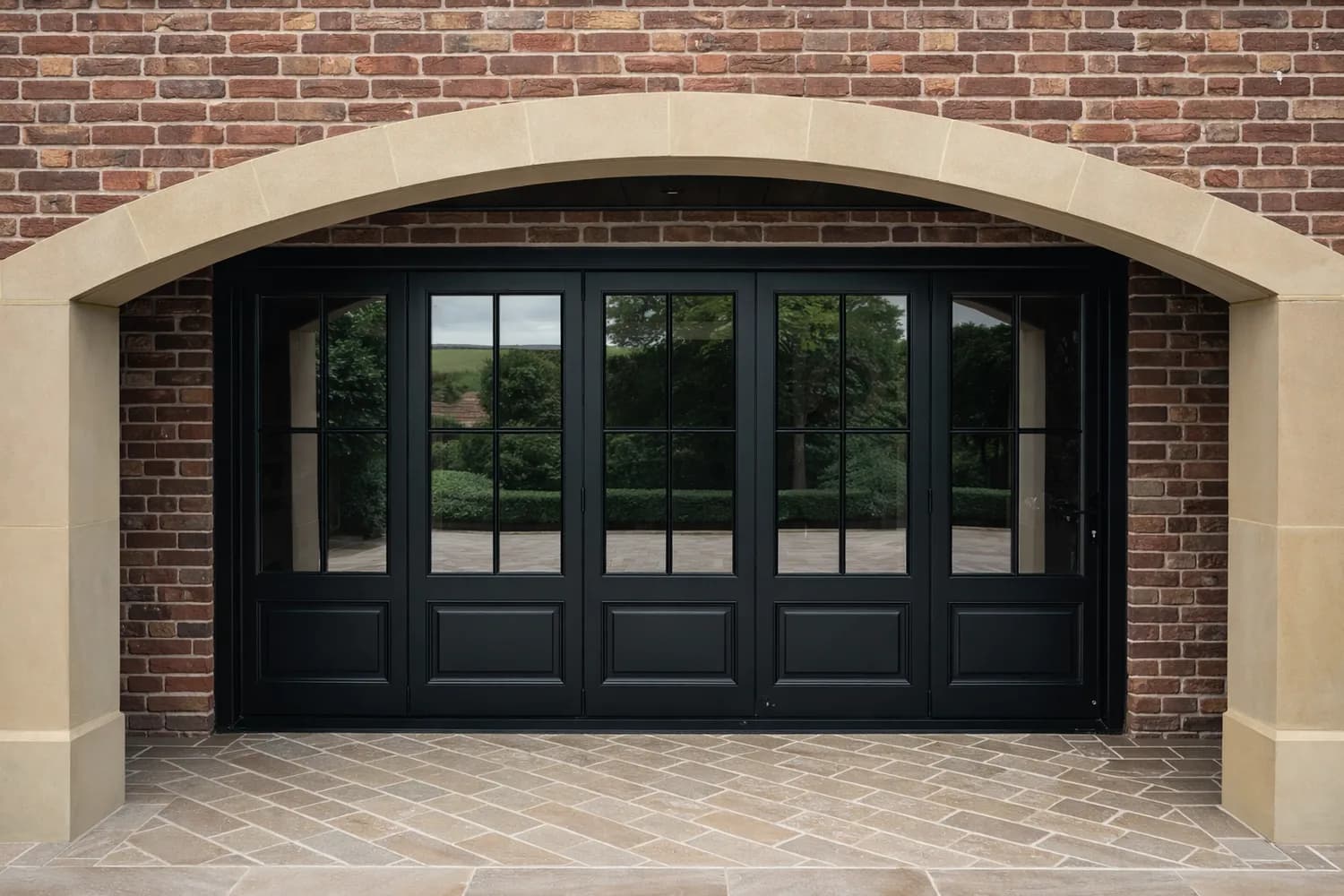
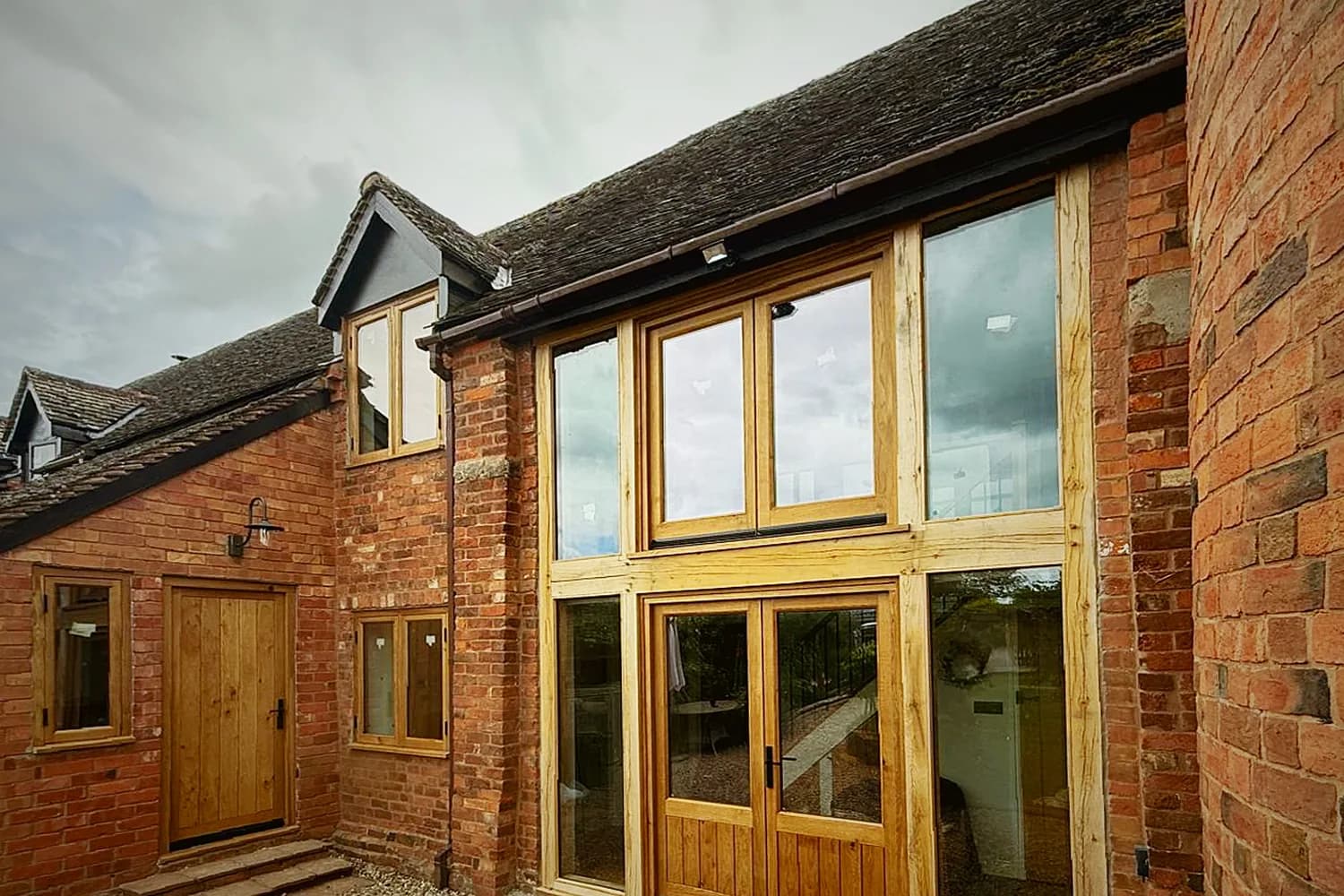
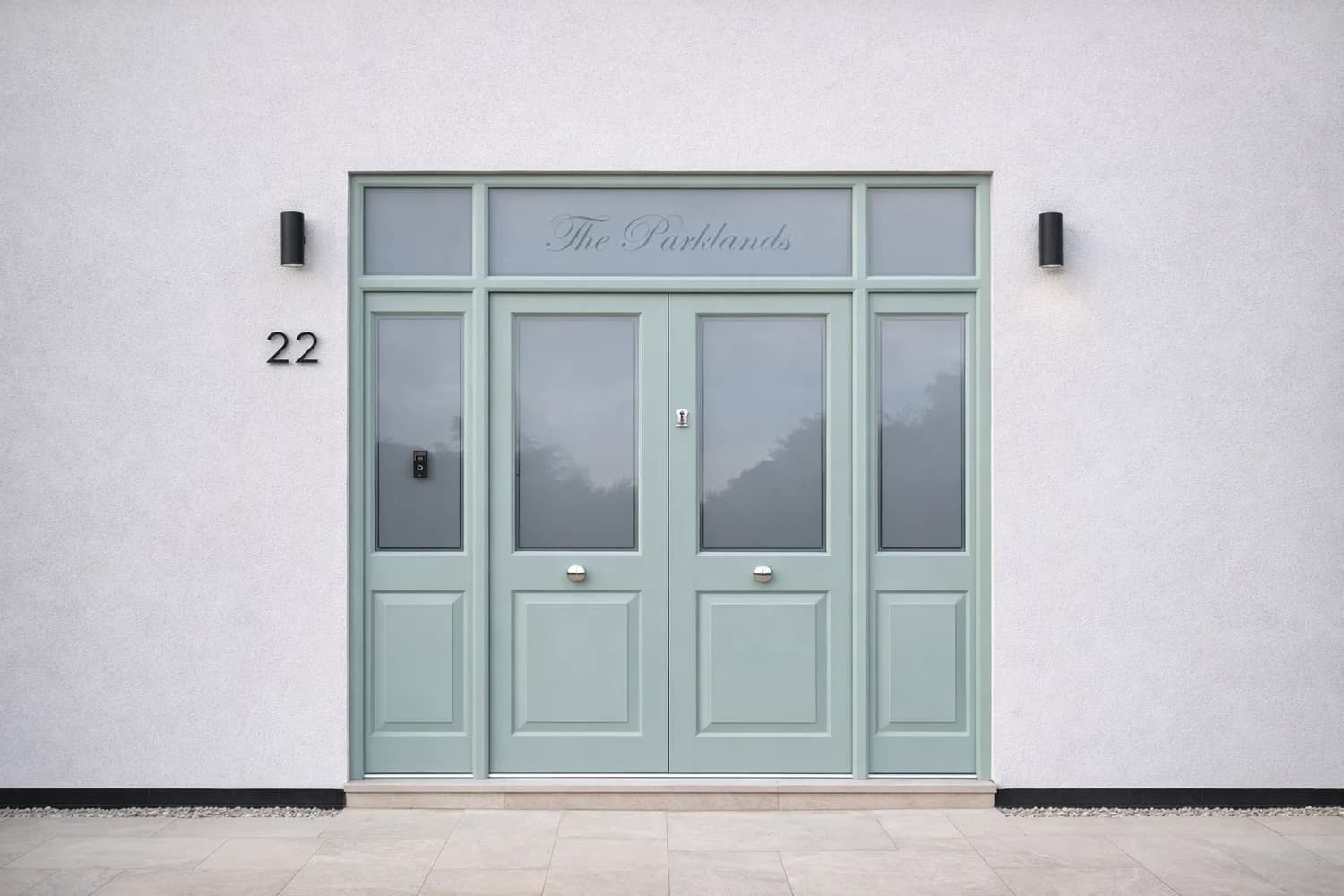
Selected Projects
Selected projects where the entrance was the central architectural decision — a designed surround, porch, or glazed entrance drawn to the elevation.
Material and Performance
An entrance takes the most weather and the most use of any joinery on a building, so material and detailing are specified for exposure first. Oak suits entrance structures where weight, presence, and weathering match the property — it silvers, lasts, and carries the scale a grand entrance wants. Accoya is specified where the entrance is painted and stability matters, and where a fine, held paint line is part of the look. European hardwoods appear where budget or conservation guidance shapes the brief.
The structure is detailed to shed water and carry load: weathered heads and cills, flashings where a porch or canopy meets the wall, and frames and posts sized to the span rather than to a standard. Glazed entrances use glass and bars specified to the elevation — traditional where a listed building requires it, slim-profile units where conservation guidance permits. Ironmongery on an entrance is specified for both presence and endurance, since it is handled daily and seen first.
An entrance structure made for its opening and its exposure, in the right material, lasts for decades and ages into the building. It is the part of the house most worth getting right, because it is the part everyone sees first.
Common Questions
What is an Entrance Structure?
An Entrance Structure is the entrance treated as architecture rather than as a door alone — the whole assembly that frames arrival. Depending on the building, that may be an oversized door within a designed surround, a porch or canopy, a glazed entrance, or an oak-framed assembly. Door, frame, surround, glazing, and ironmongery are designed and specified together as one piece.
How is an entrance structure different from a front door?
A front door is one element; an entrance structure is the composition around it. Where a bespoke door set replaces the door and frame, an entrance structure designs the whole entrance — its proportion against the elevation, any porch or canopy, sidelights or fanlight, and the way it meets the wall and ground. It is specified when the entrance is doing architectural work, not just closing an opening.
How much does an entrance structure cost?
An entrance structure is priced from what the building needs rather than from a list. A designed door-and-surround sits at the lighter end; a substantial porch, glazed entrance, or oak-framed assembly carries more structure and more cost. The studio gives an indication once the assembly is understood. Smaller architecturally-aligned projects are considered case-by-case.
Do you design entrance structures for listed buildings?
Yes. On a listed or period property the entrance is often part of what is protected, so the structure is designed to the building's grade and consent conditions — historic detail recorded and matched, profiles and glazing specified to the period, and the whole taken through consent as one. The entrance is treated as architecture the building already owns.
Can an entrance structure include a porch or glazed surround?
Yes — that is often exactly the scope. A porch or canopy gives the entrance depth and shelter; a glazed surround, fanlight, or sidelights bring light into the hallway. These are designed as part of the entrance from the start, proportioned to the elevation and detailed to weather, rather than added to a standard door.
Which areas do you cover?
We Are Woodland is an architectural joinery studio based near Bridgnorth in Shropshire. The studio works across Shropshire, the West Midlands, Worcestershire, the Cotswolds, and Cheshire, and elsewhere in the UK where the building justifies the journey.
Related Authority
Authority content on entrance design, porches and canopies, and material decisions for exposed joinery — written by the studio.
An entrance structure is priced from the assembly the building needs, not from a list. Smaller architecturally-aligned projects are considered case-by-case.
Considering an entrance structure for your property? The conversation starts here.
Start a Project →