

GLOUCESTERSHIRE
Timber-Framed Cotswold Farmhouse — Period Joinery & Oak Porch, Gloucestershire
(The Wolds Farmhouse Project)
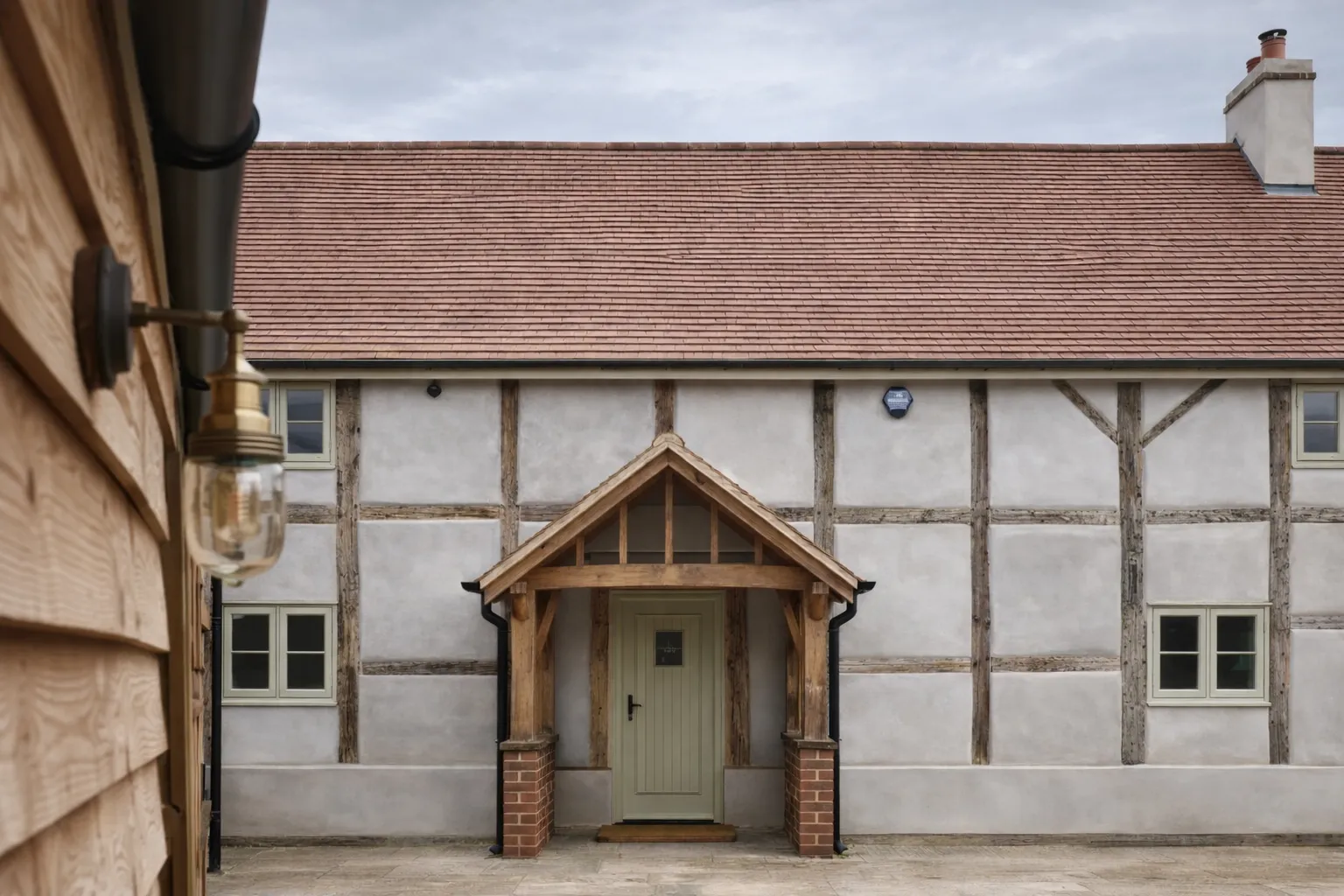
A timber-framed Cotswold farmhouse where an oak-framed porch, casement windows and entrance doors were specified together, so nothing read as a separate addition.
Project Facts
- Location
- Gloucestershire
- Property
- Period Timber-Framed Cotswold Farmhouse
- Scope
- Entrance Structures (oak porch), Architectural Timber Windows, Bespoke Door Sets
- Materials
- Green oak frame, Accoya casement windows, painted hardwood entrance doors
- Year completed
- 2023
Architectural Context
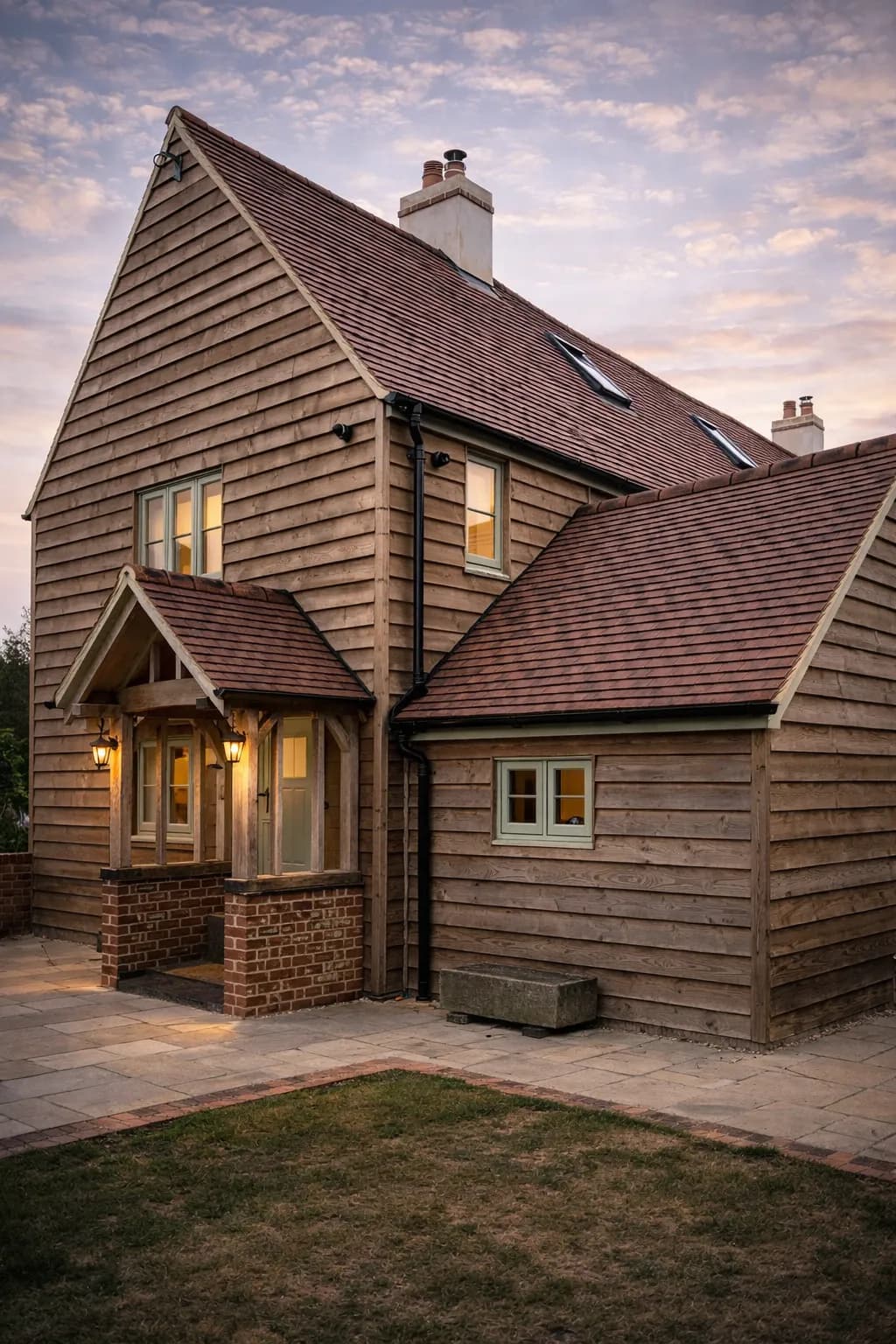
A timber-framed farmhouse in the Gloucestershire Cotswolds, its render-and-frame elevations and steep clay roof typical of the region. The house had been worked on piecemeal over the years, and it showed: windows of differing ages and proportions, an entrance with no shelter or sense of arrival, and detailing that no longer hung together. The owners had restored the structure carefully and wanted the joinery to match that ambition — but as one scheme, not another round of separate jobs.
The architectural problem was coherence. On a timber-framed house the joinery is not incidental trim; it sits within a structural grid that the eye reads instinctively, and any window out of proportion with that grid is immediately obvious. The casements, the entrance, and a new porch all had to answer to the same framing rhythm and the same material logic. The question was how to specify across three element categories at once so the finished elevations looked considered rather than assembled.
The entrance, in particular, needed architecture rather than a doorstep. The house wanted a porch with the presence to mark the principal door and the structural honesty to belong to a timber-framed building — oak, expressed, not a bolted-on canopy. A timber-framed elevation is unusually unforgiving of this: the structural grid is on show, the eye reads it instinctively, and anything stuck onto it that does not share its logic is immediately obvious. The porch had to look as though it had been framed with the house, not added to it afterwards.
Studio Response
The casement windows were specified in Accoya to a single profile drawn from the proportions of the timber frame, so each opening sits correctly within its bay. Painting them in a soft estate green tied the windows to the entrance doors and settled them against the render — a quiet, consistent line across the whole elevation in place of the previous patchwork.
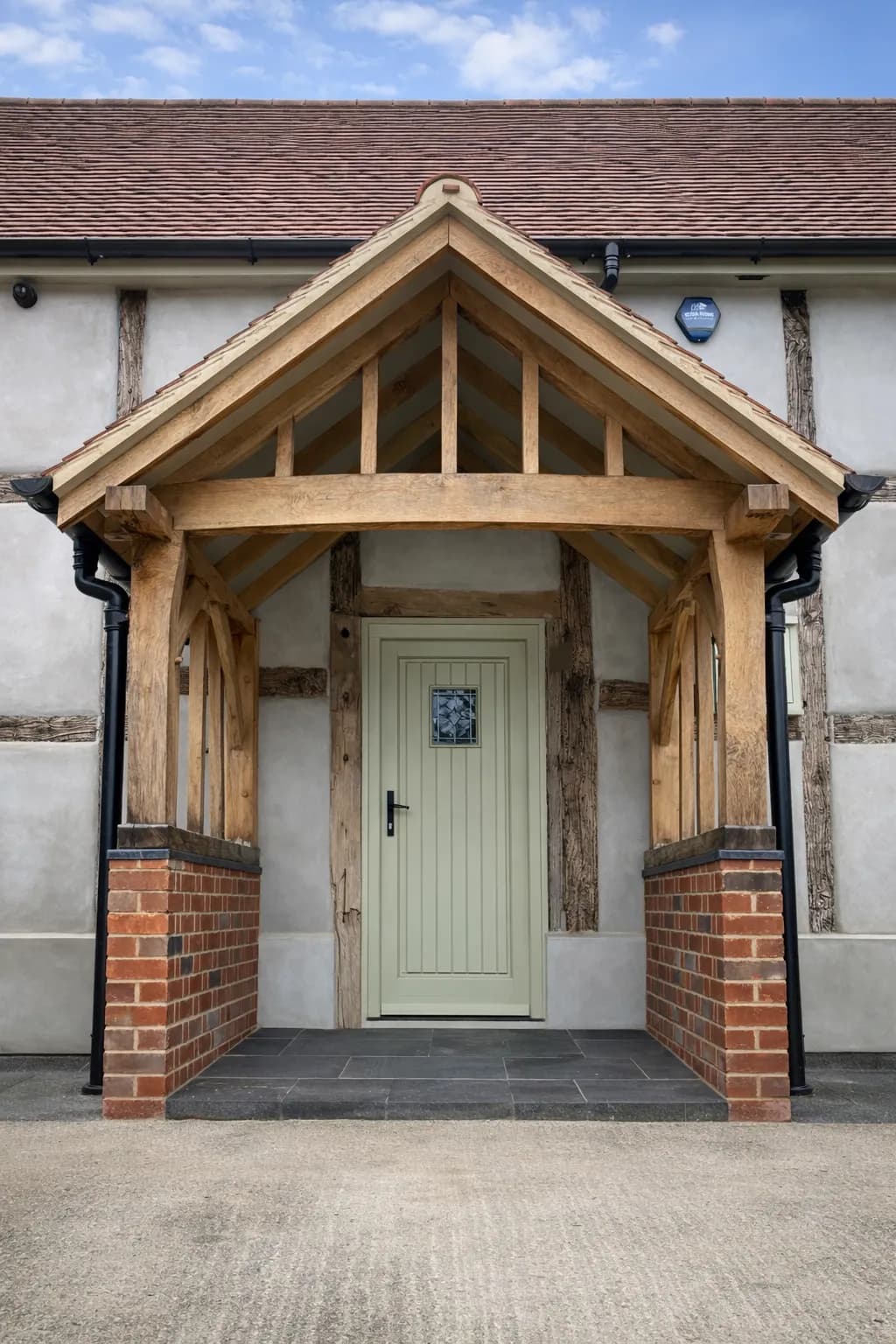
The porch was designed as a green oak structure: a pitched, framed canopy on oak posts standing on a handmade brick plinth, jointed and pegged in the traditional way rather than fixed back to the wall as an afterthought. Green oak was the right decision precisely because it moves and weathers — it will shrink, check and silver over its first years, settling into the building rather than sitting proud of it. On a timber-framed house oak reads as structure, which is what the elevation needed.
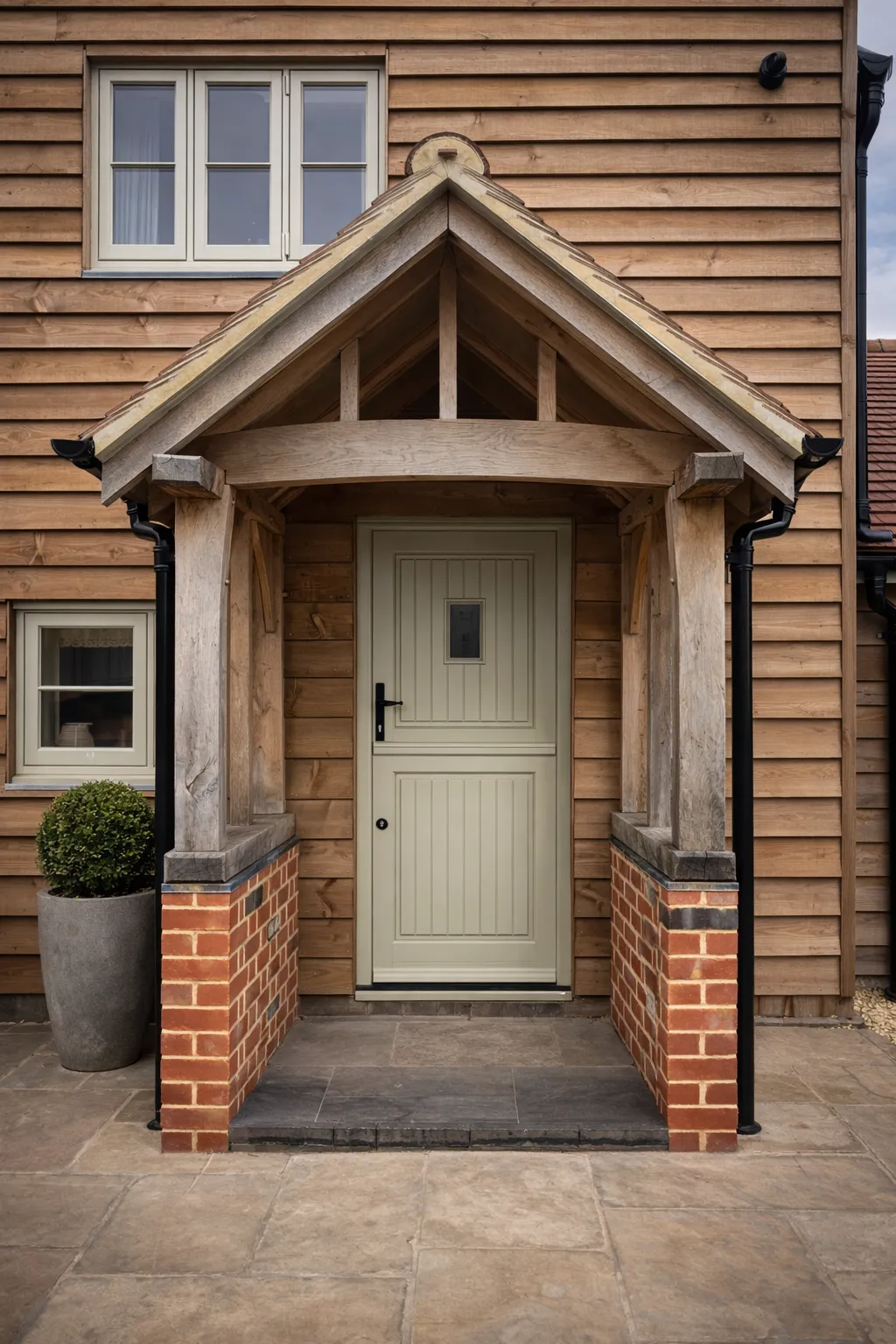
The entrance doors were specified as painted hardwood, glazed to throw light into the hall and detailed to the same restrained palette as the windows. The oak of the porch was left to weather rather than treated to hold an even colour, because on a timber-framed house a porch that silvers with the frame belongs to the building in a way a varnished one never will. Specifying the porch, the doors and the casements together meant the proportions could be resolved against one another before anything was made — the porch sized to the door, the door balanced against the flanking windows, the whole entrance composed as a single piece of architecture. That is the difference between a coherent elevation and three good elements that happen to share a wall.
Element Breakdown
Three element categories specified as one scheme so the timber-framed elevation read as a whole rather than as a sequence of separate additions:
- Entrance Structures
A pegged green oak porch on a handmade brick plinth, jointed in the traditional way rather than fixed back to the wall, giving the principal entrance real structure and a proper sense of arrival.
- Architectural Oak Structures
Green oak chosen precisely because it moves and weathers — it will shrink, check and silver over its first years, settling into a timber-framed building rather than sitting proud of it, the posts and braces left exposed so the porch reads as frame rather than as cladding hung on a wall.
- Architectural Timber Windows
Accoya casements to a single profile drawn from the proportions of the frame and painted a soft estate green, so every opening sits correctly within its structural bay.
- Bespoke Door Sets
Painted, glazed hardwood entrance doors detailed to the same palette as the windows and balanced against the flanking openings, their upper panels glazed to carry daylight into the hall behind and their proportions set by the porch rather than chosen from a range.
Related Reading
Read further on the thinking behind this category in the Journal.
Considering a project of your own?
Related Projects
WORCESTERSHIRE
Grade II Listed Farmhouse
Full Joinery Package
CHESHIRE
Oak-Framed Garden Room & Orangery
Architectural Oak
Featured Elements
Entrance Structures | Architectural Oak Structures