

WEST MIDLANDS
Bespoke Period Entrance Door with Leaded Glazing — West Midlands
(The Beaufort Project)
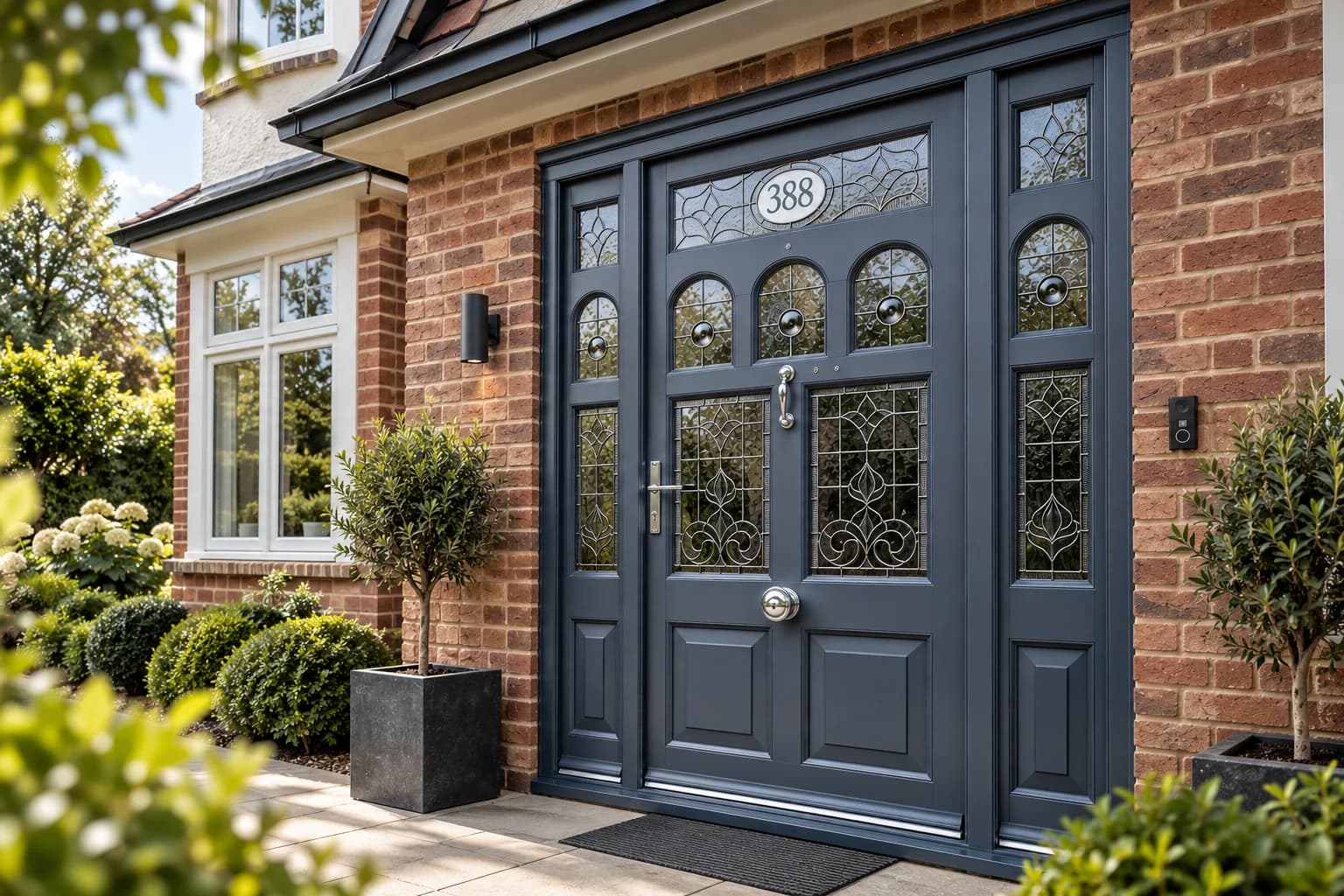
A period entrance specified as one assembly — door, leaded sidelights and fanlight composed together to give a Wolverhampton home the arrival it had lost.
Project Facts
- Location
- Wolverhampton, West Midlands
- Property
- Edwardian-Register Suburban Home
- Scope
- Entrance Structures, Bespoke Door Sets (entrance door, sidelights, fanlight)
- Materials
- Accoya, leaded and bevelled glazing, polished chrome ironmongery
- Year completed
- 2024
Architectural Context
A substantial suburban home in Wolverhampton, of Edwardian character, where the original entrance had long since been lost to a flat modern replacement. The doorway is the one piece of joinery a house presents to the street before anything else, and here it was working against the building — a plain slab where the proportions of the elevation called for an assembly with depth, light and detail.
The brief was focused but exacting: a single entrance, specified properly. A period entrance is rarely just a door. It is a composed opening — a door flanked by sidelights and crowned by a fanlight, the glazing carrying the decorative register that a brick Edwardian elevation expects. Getting it right is a matter of proportion above all: the width of the sidelights against the door, the depth of the fanlight, the weight of the glazing bars, and a leaded pattern that belongs to the period rather than approximating it.
There was an interior dimension too. An entrance assembly is read from both sides — from the street as a statement of the house, and from the hall as the source of light and the first thing seen on returning home. Both faces had to resolve. A flat replacement door fails on both counts at once: nothing to the street, and a dim hall behind it. The opportunity here was to give the house back the light and the presence its proportions were designed around, in a single well-made assembly rather than a series of compromises.
Studio Response
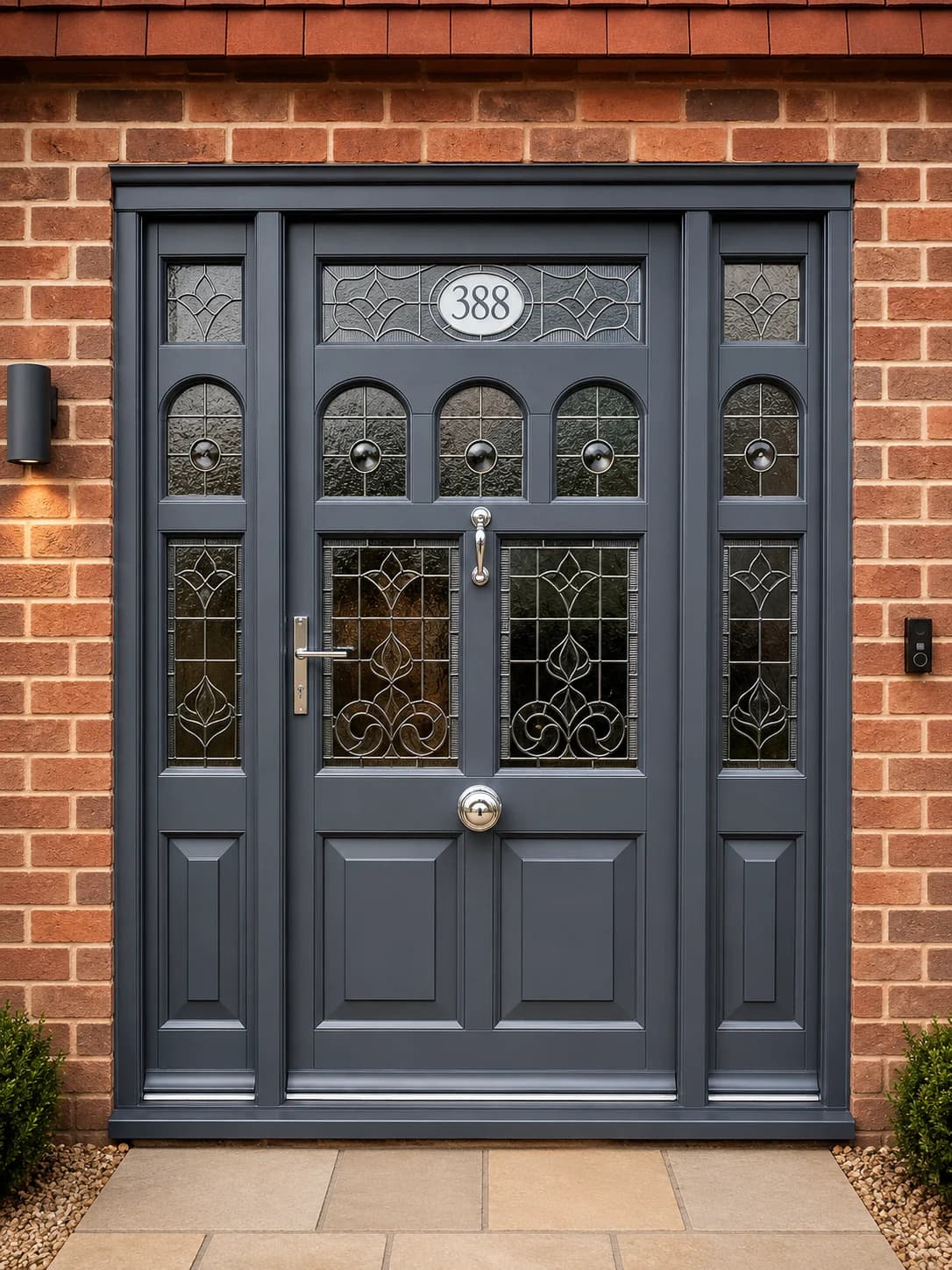
The entrance was specified as a single composed assembly rather than a door with extras added around it. The proportions were set first — the door width against the flanking sidelights, the fanlight sized to crown the opening without overpowering it — so the whole assembly sits correctly within the brick surround and reads as part of the elevation rather than an insertion into it.
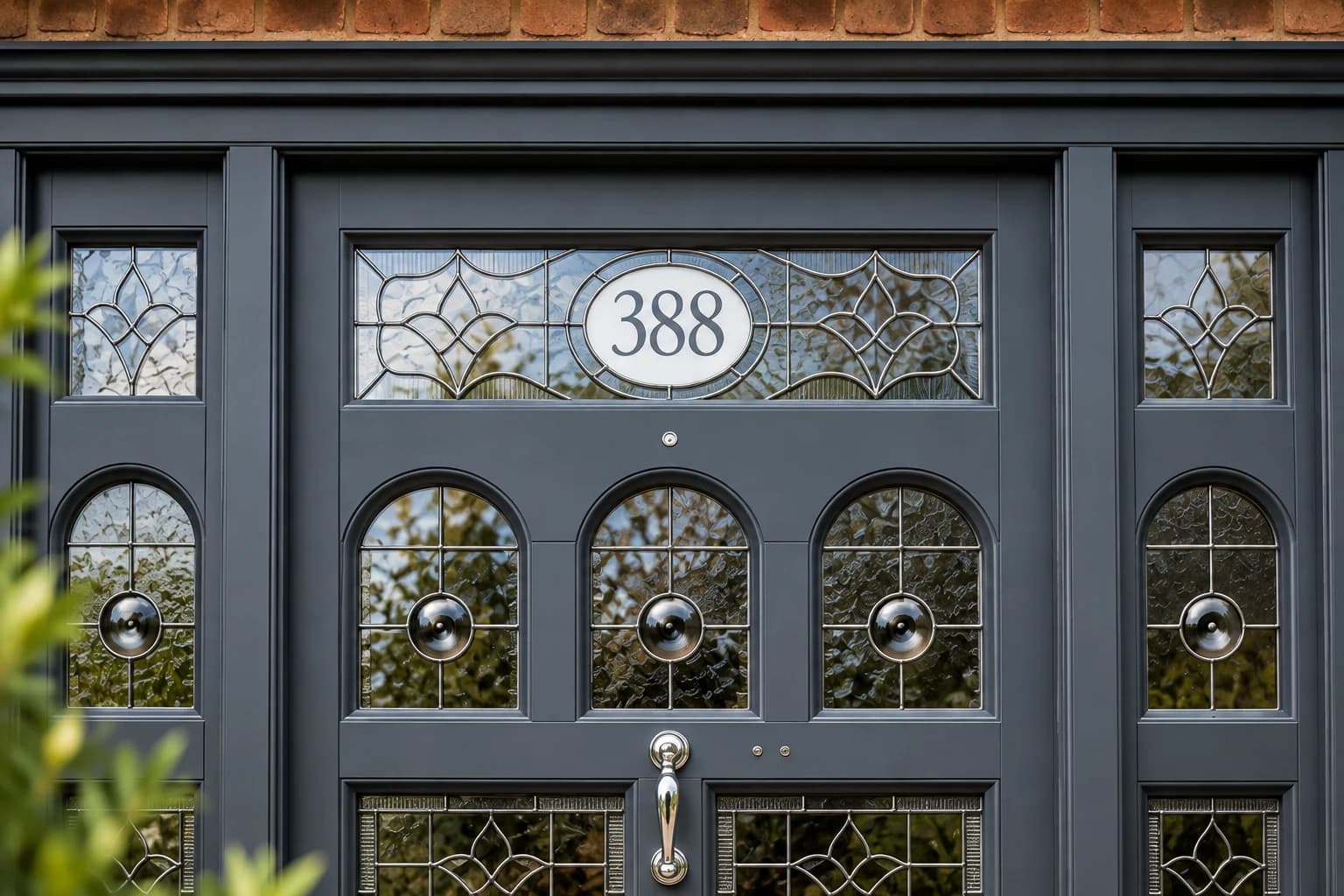
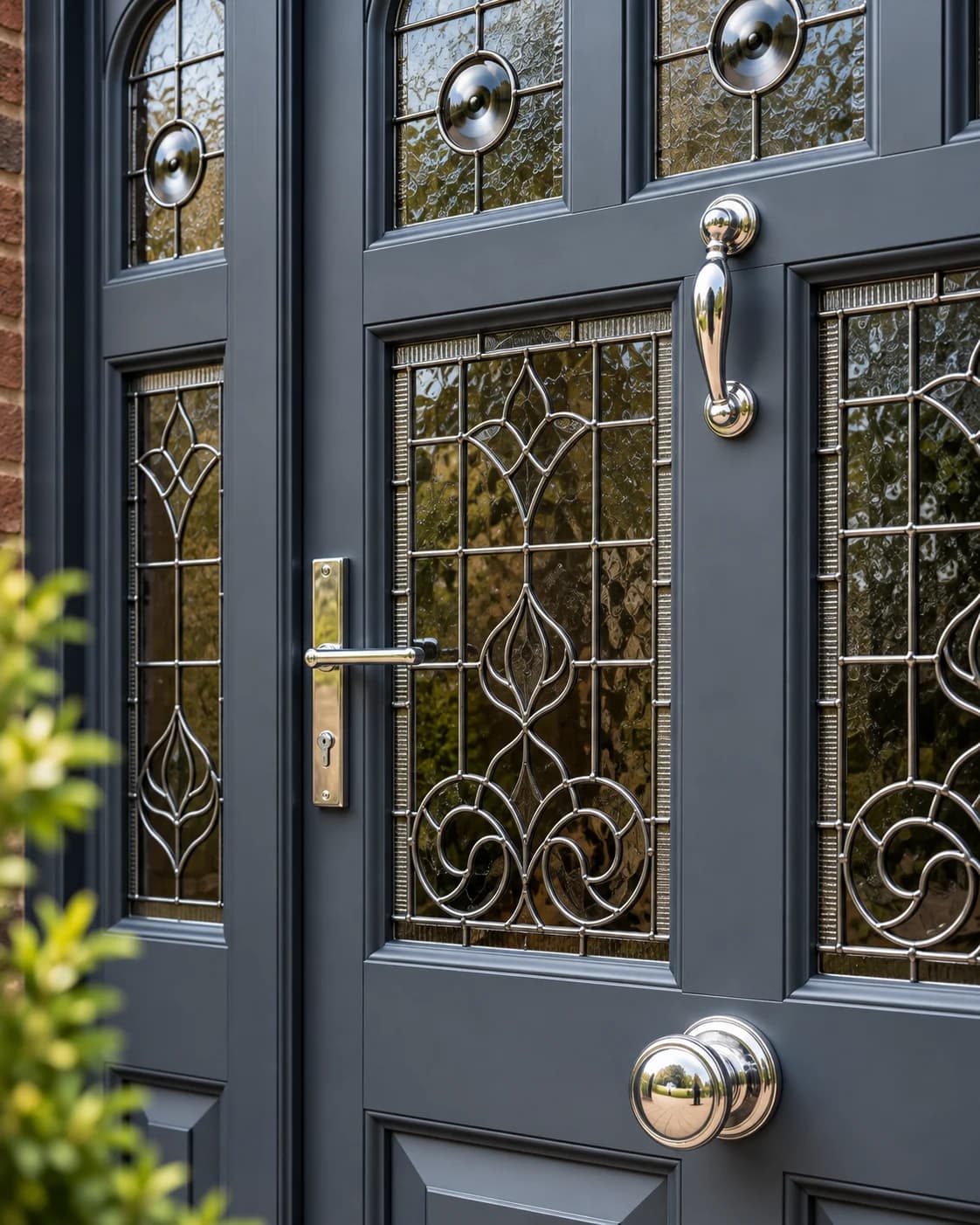
The glazing did the period work. Leaded and bevelled glass was specified to a pattern drawn from the Edwardian register, carried consistently across the door lights, sidelights and fanlight so the decorative scheme reads as one design. Bevelled glass earns its place here: it catches and breaks the light, giving the entrance the movement and depth that flat glass cannot, while the leaded pattern ties the assembly to the age of the house. The Accoya was specified for stability and a long painted life, finished in a deep, quiet grey that lets the glazing carry the detail.
The glazing panels carry arched heads — a row of small arches across the door, one in each sidelight, and the fanlight turning above them. It is a modest thing to describe and an unforgiving one to draw: the arches have to share a radius and a springing line or the row reads as a wobble, and the leaded pattern inside each has to be set out to the curve rather than squared off and trimmed to fit it. Done properly nobody remarks on it, which is rather the point.
Ironmongery was treated as part of the composition rather than an afterthought — polished chrome furniture chosen to suit the period and proportioned to the door, the numbered fanlight detailed so the house identifies itself without a surface-fixed plaque. The sections were kept generous enough to hold the leaded lights properly rather than pared down to a modern slimness the period would not recognise. From the street the entrance now gives the house the arrival its elevation always implied; from the hall, the leaded glazing throws patterned light across the floor and the assembly reads as deliberately from inside as out. A single opening, but the one that sets how the whole house is read.
In the Owners’ Words
We asked Chris to replace the main entrance to our house, including the door, sidelights and fanlight, with new leaded antique style glazing.
One of our main concerns was making sure it looked right for the age and style of the property, rather than looking too new. Chris talked us through the design and the different details, and making the whole entrance as one piece made a lot of sense.
We’re really pleased with how it’s turned out. The glazing is a lovely feature and the entrance feels as though it belongs with the house. In a stressful renovation this was one of the projects that came together without issue.
Element Breakdown
A single entrance, specified as one composed assembly rather than a door with extras added around it — proportion resolved first, then the period detail carried consistently across every light:
- Grand Entrances
Door, sidelights and fanlight proportioned together — the door width set against the flanking sidelights and the fanlight sized to crown the opening — so the whole assembly sits correctly within the brick surround and reads as part of the elevation.
- Bespoke Timber Doors
Leaded and bevelled glazing to an Edwardian pattern, carried consistently across the door lights, sidelights and fanlight; the bevelled glass catches and breaks the light to give the entrance depth that flat glass cannot.
- Heritage & Period Joinery
A period-register entrance in Accoya returning the arrival the elevation always implied — read as a statement from the street and as the source of patterned light from the hall, the sections kept generous enough to hold the leaded lights as the period intended rather than pared to a modern slimness.
- Period Doors
A bespoke period entrance door with leaded and bevelled glazing, panel layout and mouldings drawn to the age and proportion of the house rather than fitted from a standard range.
Related Reading
Read further on the thinking behind this category in the Journal.
Considering a project of your own?
Related Projects
WORCESTERSHIRE
Grade II Listed Farmhouse
Full Joinery Package
SHROPSHIRE
Oak French Doors & Accoya Casement Windows
Bespoke Door Sets & Windows
WEST MIDLANDS
Black Country Living Museum
Museum Conservation Joinery
WORCESTERSHIRE
Arched-Top Sash Windows & French Doors
Sash Windows & French Doors
Featured Elements
Grand Entrances | Bespoke Timber Doors