

CHESHIRE
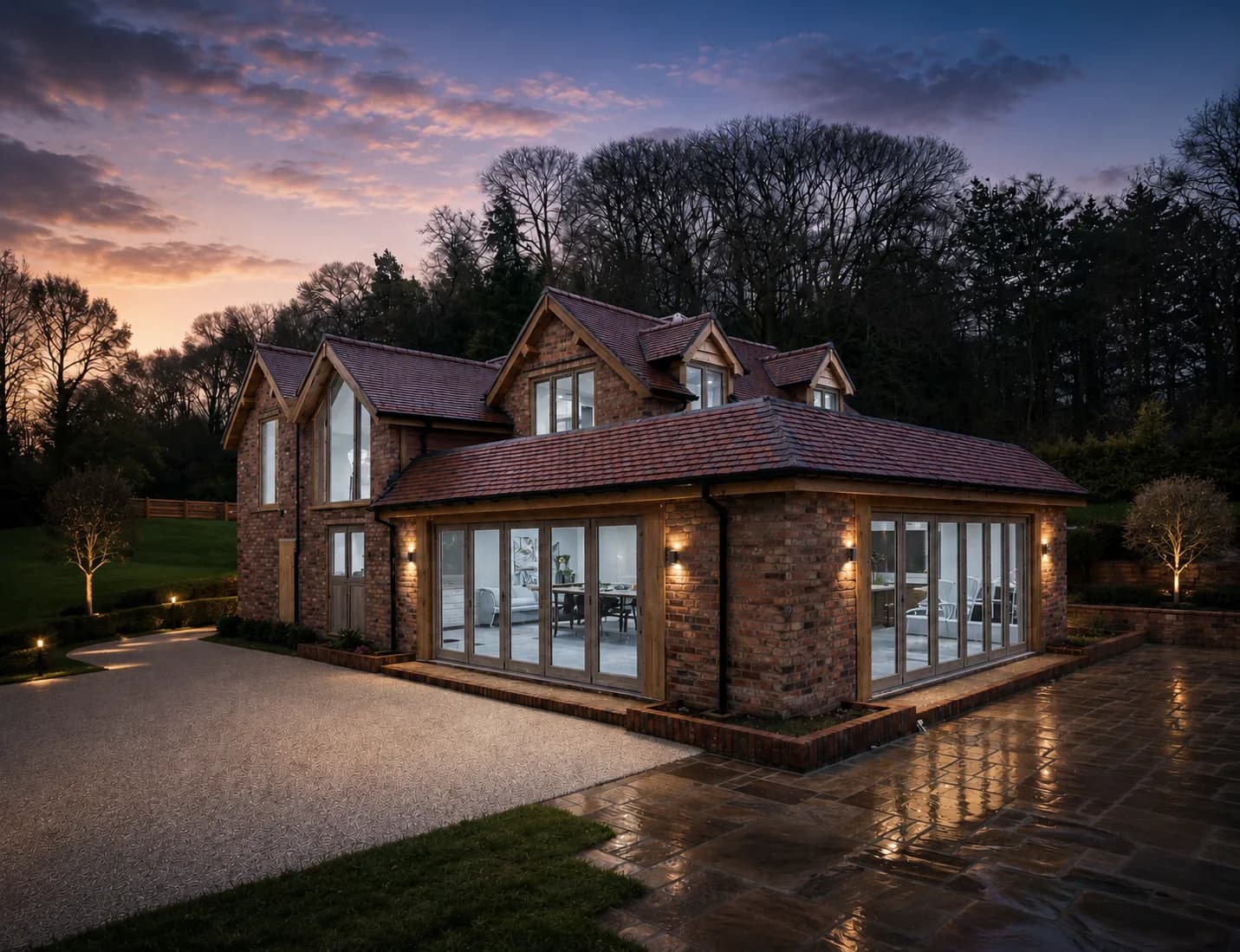
Oak-Framed Garden Room & Orangery — Period Property, Cheshire
(The Lockside Project)
An oak-framed garden room extending a period Cheshire house — oak as architecture, glazed to the garden and detailed to belong to the building it joins.
Project Facts
- Location
- Cheshire
- Property
- Period Country House
- Scope
- Architectural Oak Structures (garden room / orangery), Bespoke Door Sets, Entrance Structures
- Materials
- Green oak frame, hardwood glazed doors and screens, handmade brick plinth, slate roof
- Year completed
- 2022
Architectural Context
A period country house in Cheshire, brick under slate, with the kind of generous garden that asks to be lived in rather than looked at. The owners wanted a room that opened fully to it — somewhere between an orangery and a garden room — but they were wary of the obvious trap. Too many such additions read as a conservatory wearing better materials: a glazed box pushed against the wall, structurally and architecturally separate from the house it serves.
The architectural challenge was integration. An extension to a period property either belongs to the building or it does not, and oak is unforgiving of half-measures. Done well, an oak frame reads as architecture — a structure with its own logic that nonetheless settles against brick and slate as though it grew there. Done badly, oak becomes rustic decoration. The brief was for the former: a framed, glazed room with real structural presence, sized and detailed so the period house remained the dominant building and the new room read as its natural extension into the garden.
Inside, the same discipline applied to the way the house was entered and moved through — the threshold between old and new needed to feel deliberate, not like a doorway punched through a wall. Where many garden rooms fail is at exactly this junction: the new room is handsome in isolation but meets the original house with a clumsy step or a misaligned opening that announces the join. The brief was for the two to read as one circulation, the eye carried through rather than stopped at the seam.
Studio Response
The room was built as a green oak frame — posts, beams and braces jointed and pegged, the structure left expressed inside so the room is read through its own architecture. A hipped slate roof tied it to the existing house, and a handmade brick plinth carried the frame down to the ground, matching the brick of the parent building so the two read as one material family rather than a new structure parked alongside an old one.
Glazing filled the frame rather than defining it. Hardwood glazed doors and screens were specified to open the room to the garden along its principal face, with slim sections that keep the oak structure dominant — the frame is the architecture, the glass is the infill. Specifying doors and frame together meant the openings sat within the structural bays by design, not cut to fit afterwards, so the rhythm of the oak carries uninterrupted across the elevation.
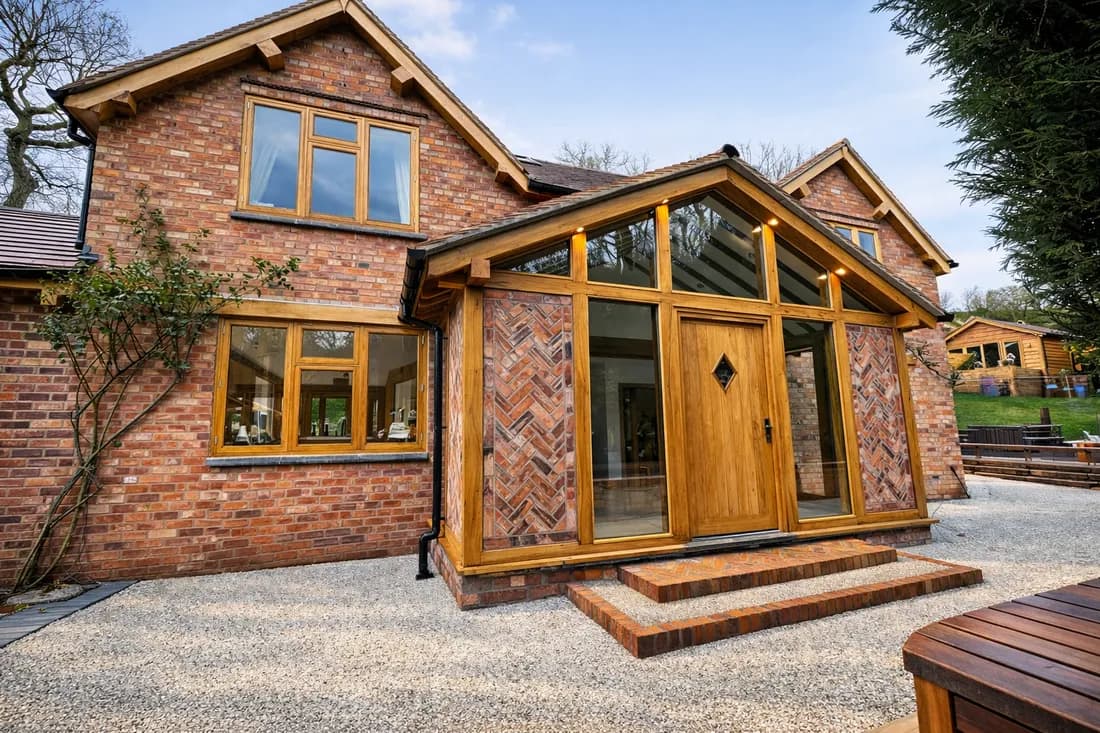
The entrance and internal thresholds were treated as part of the same scheme. A glazed hardwood entrance set with sidelights and a fanlight draws light deep into the hall, and the doorways between the original house and the new room were specified to align and proportion correctly, so moving from old to new feels continuous. Joints were cut to traditional mortise-and-tenon and pegged rather than relying on concealed steelwork, so the frame carries its load honestly and the structure on show is the structure doing the work. The decision throughout was to use oak architecturally — as the structure that makes the room, not as a finish applied to it — which is what allows a new garden room to read as though the period house had always reached out into its garden.
Element Breakdown
Oak specified as structure, not finish — the room, its glazing and its thresholds resolved as one so the addition reads as architecture rather than a glazed box pushed against the wall:
- Architectural Oak Structures
A green oak frame — posts, beams and braces jointed and pegged, left expressed inside — on a handmade brick plinth matched to the parent building, sized to keep the period house the dominant structure, with a hipped slate roof tying the new room back into the existing roofscape.
- Bespoke Door Sets
Hardwood glazed doors and screens specified to fill the oak bays by design rather than cut to fit afterwards, slim sections keeping the frame dominant and the glass as infill.
- Entrance Structures
A glazed hardwood entrance set with sidelights and a fanlight drawing light deep into the hall, its thresholds aligned with the new room so moving from old house to new feels continuous rather than stepped, and the join between the periods deliberately understated.
Related Reading
Read further on the thinking behind this category in the Journal.
Considering a project of your own?
Related Projects
GLOUCESTERSHIRE
Timber-Framed Cotswold Farmhouse
Period Property — Multi-Element
SHROPSHIRE
Bespoke Oak Doors & Casement Windows
Bespoke Door Sets & Windows
Featured Elements
Architectural Oak Structures | Bespoke Door Sets