

OXFORDSHIRE
Contemporary Steel-Look Casements — Architectural Extension, Cotswolds AONB
(The Forge Project)
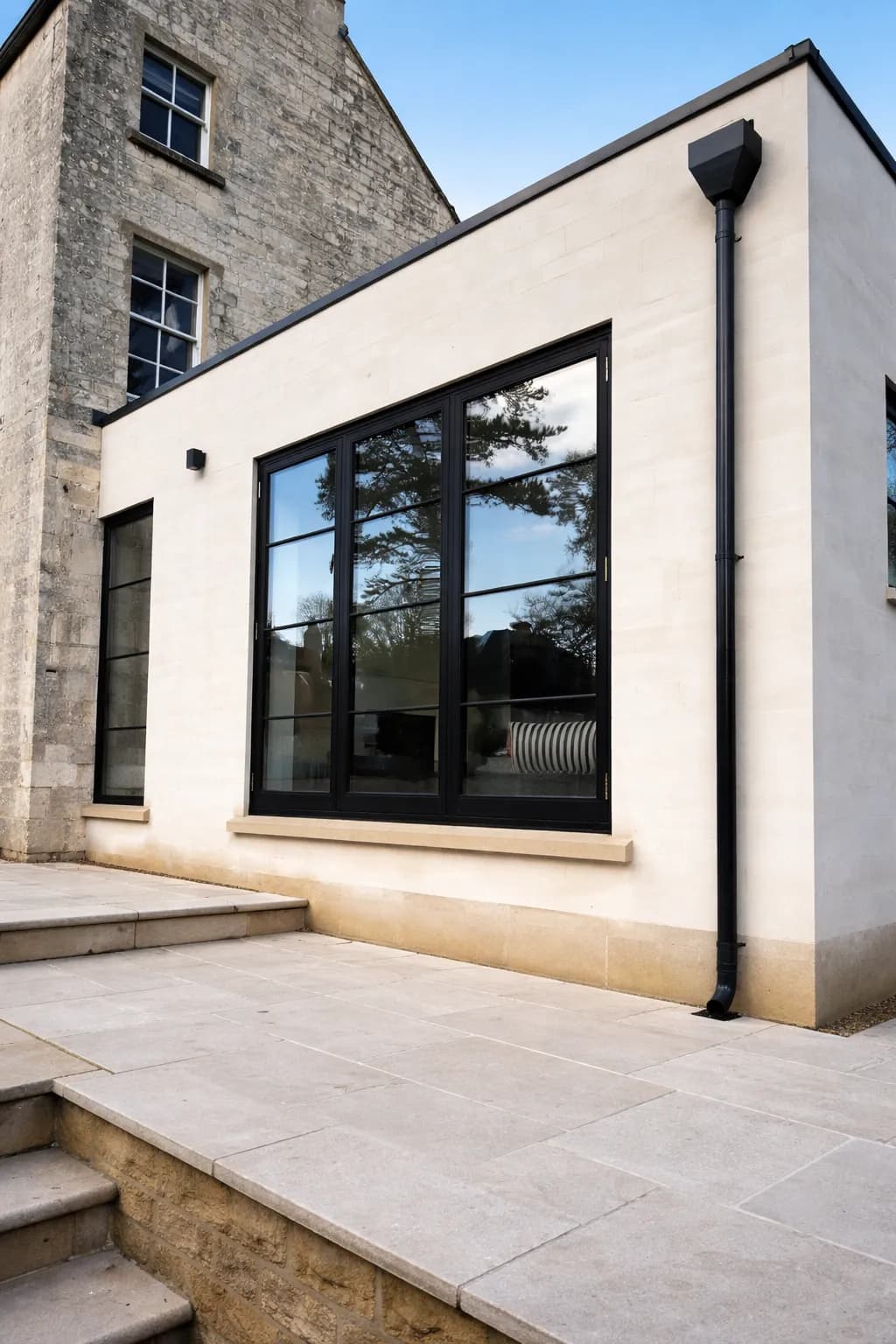
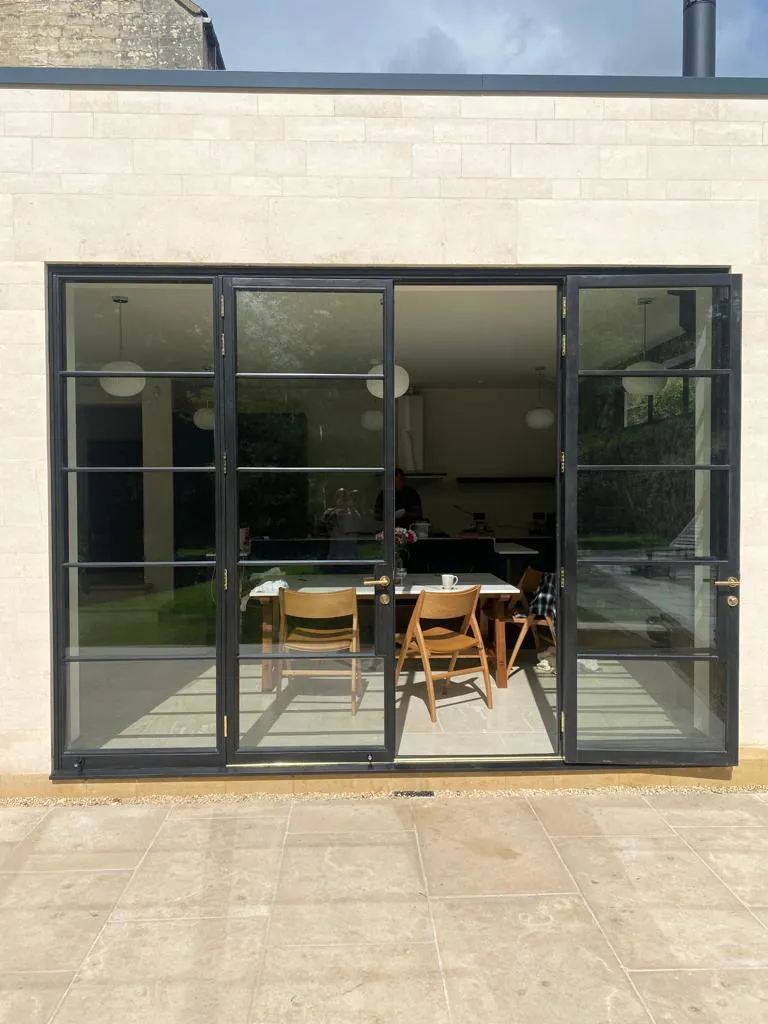
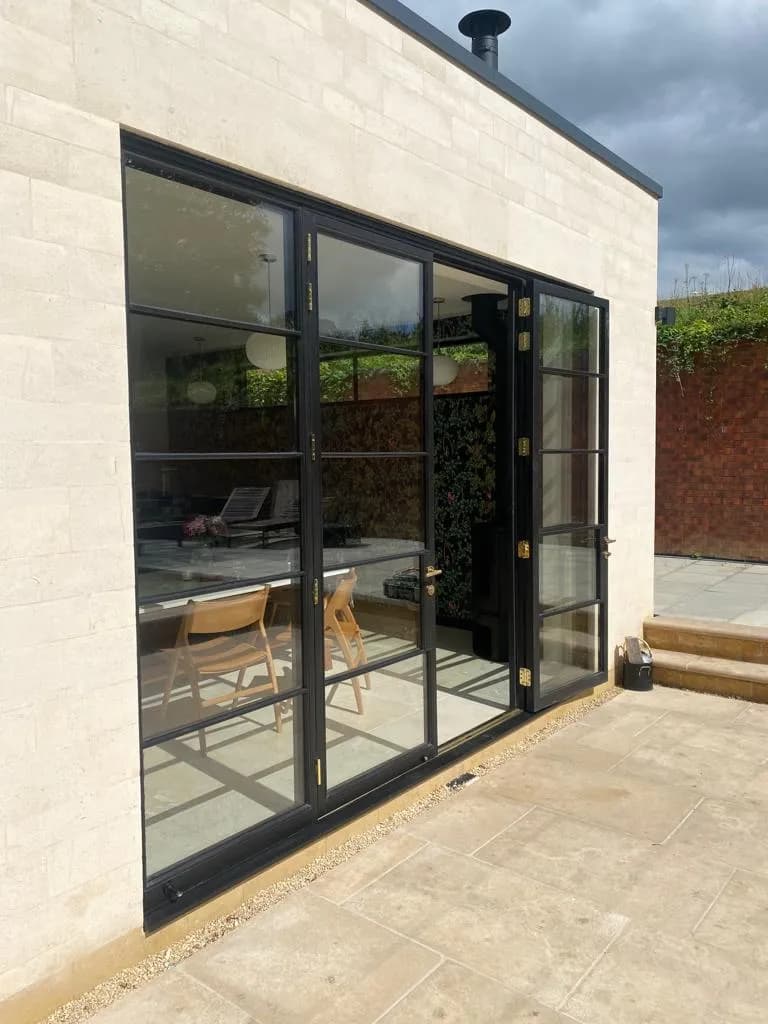
A contemporary stone extension within the Cotswolds AONB, glazed with slim steel-look timber casements — a modern architectural language held to a sensitive landscape.
Project Facts
- Location
- Oxfordshire
- Property
- Period Stone Property with Contemporary Extension (Cotswolds AONB)
- Scope
- Architectural Timber Windows (steel-look casements), Bespoke Door Sets (bifolds)
- Materials
- Accoya, slim dark-grey steel-look profiles, natural Cotswold stone
- Year completed
- 2023
Architectural Context
A period stone property in the Oxfordshire Cotswolds, within an Area of Outstanding Natural Beauty, extended with a contemporary stone addition that wanted an unapologetically modern glazed language. The pairing is a familiar tension: a protected landscape and a planning context that resists pastiche in both directions — neither mock-period detailing nor an aggressive glass box that ignores the stone it grows from.
The architectural ambition was a steel-look elegance — the slim black sightlines of a Crittall-style window — without the thermal compromise and maintenance burden that genuine steel brings to a domestic building. Achieving that look in timber is a specification problem: the sections have to be drawn fine enough to convince at a glance, in a material that performs in a damp, exposed Cotswold setting and holds its finish over years rather than months. Get the section too heavy and the steel reference is lost; too fine and the timber cannot do its job. The whole project turned on resolving that one tension correctly.
The setting set the limits. In an AONB the glazing reads at distance against stone, so the proportion of frame to glass, the depth of the reveals and the consistency of the dark finish all carry more weight than they would in a town. The extension had to look quietly inevitable from the garden and unobtrusive from further off. At distance the eye stops noticing the glass and starts noticing the rhythm of the frames, which is why an uneven frame line is the detail that gives a contemporary extension away in open country. Getting that rhythm right mattered more here than any single window.
Studio Response
The windows were specified as slim-profile timber casements in Accoya, drawn to a fine section and finished in a deep, even dark grey to read as steel. Accoya was the deliberate choice over steel: it gives the slim modern sightline the architecture wanted while performing thermally and weathering well in an exposed AONB setting — the look of the period revival without its drawbacks. The glazing-bar grid was set to a regular contemporary rhythm rather than a period pattern, so the windows read as modern by intent, not by default.
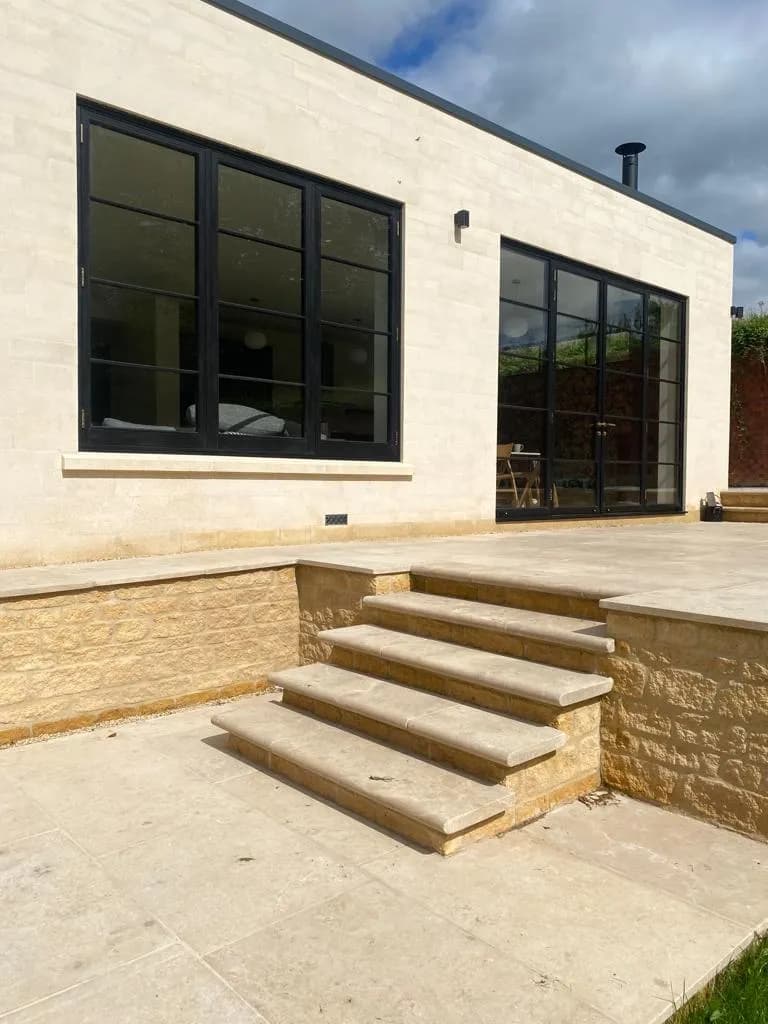
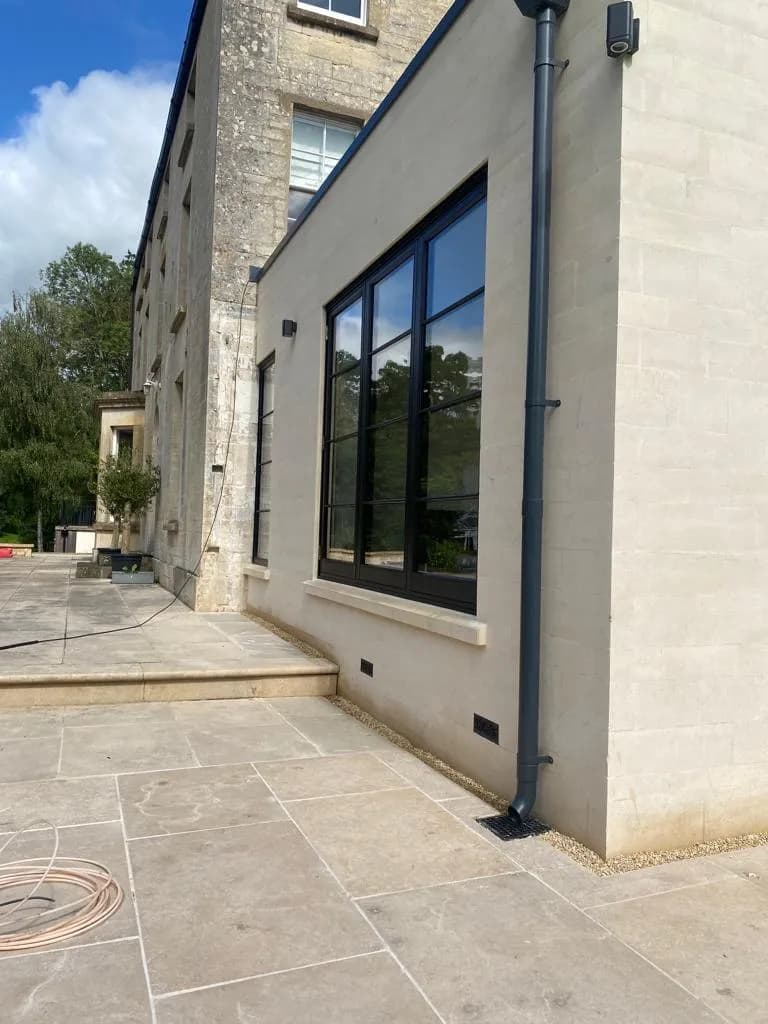
Across the extension the dark frames were held to a single finish and a consistent reveal depth, set back into the stone so the glazing sits within the wall rather than on it. That discipline matters most at distance: against pale Cotswold stone, an inconsistent frame line is the detail that gives a contemporary extension away, and keeping it even is what lets the addition sit quietly in the landscape.
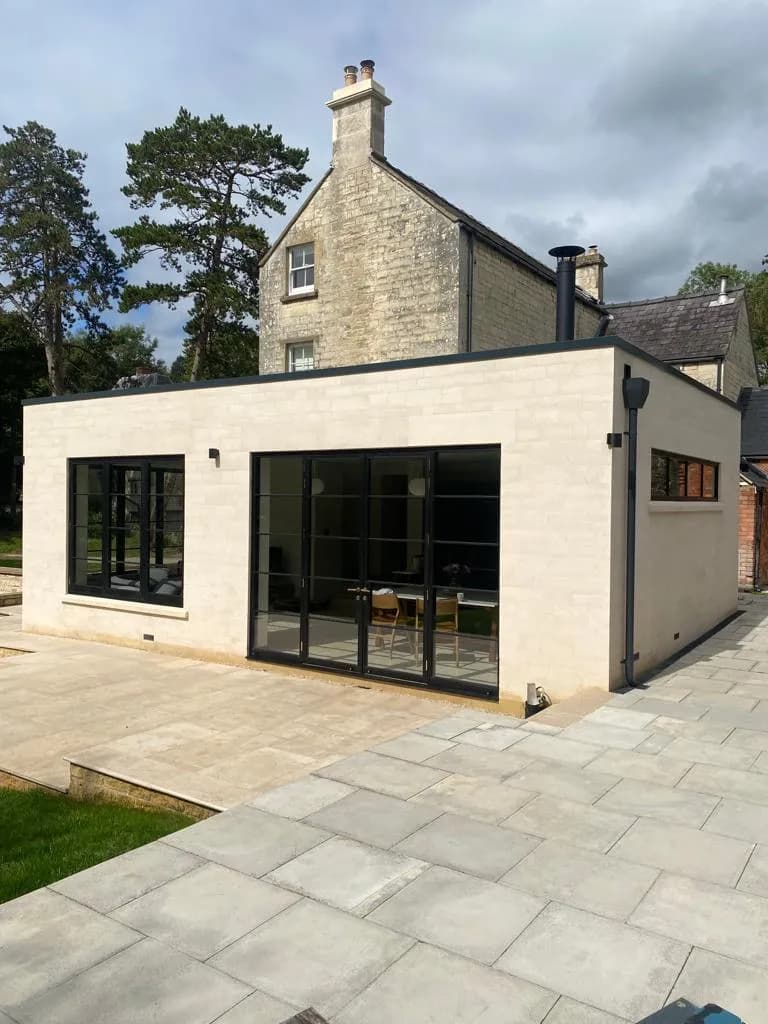
To the garden, a bifold set in the same steel-look language opens the principal room onto a stone terrace, its sections matched to the casements so the whole elevation reads as one system rather than windows-plus-doors. The threshold was detailed to sit as flush as the weatherproofing allows, so the floor reads continuously from inside to terrace and the opening feels like a removed wall rather than a set of doors. Specifying the casements and the bifold together meant the sightlines aligned across the elevation — frame depths, glazing bars and finish continuous from window to door. The result is a contemporary intervention that earns its place in a protected setting: modern, slim-lined, and quiet enough that the stone remains the thing you notice first.
Element Breakdown
A single steel-look language across windows and doors so the contemporary elevation read as one system, slim-lined and consistent enough to sit quietly in a protected landscape:
- Architectural Timber Windows
Slim Accoya casements drawn to a fine section and finished in a deep, even dark grey to read as steel, set back into the stone reveals with a consistent depth — the look of the period revival without its thermal and maintenance drawbacks.
- Bespoke Door Sets
A steel-look bifold opening the principal room onto a stone terrace, its sections matched to the casements so the whole elevation reads as one system rather than windows plus doors, and set into a reveal of the same depth so the door line continues the window line exactly across the elevation.
- Urban Designed
A contemporary architectural register held to a sensitive AONB landscape — modern by intent rather than by default, the glazing-bar grid set to a regular modern rhythm rather than a period pattern, and the whole kept quiet enough that the stone remains the thing you notice first.
Related Reading
Read further on the thinking behind this category in the Journal.
Considering a project of your own?
Related Projects
SHROPSHIRE
Bespoke Oak Doors & Casement Windows
Bespoke Door Sets & Windows
CHESHIRE
Oak-Framed Garden Room & Orangery
Architectural Oak
Featured Elements
Architectural Timber Windows | Bespoke Door Sets